
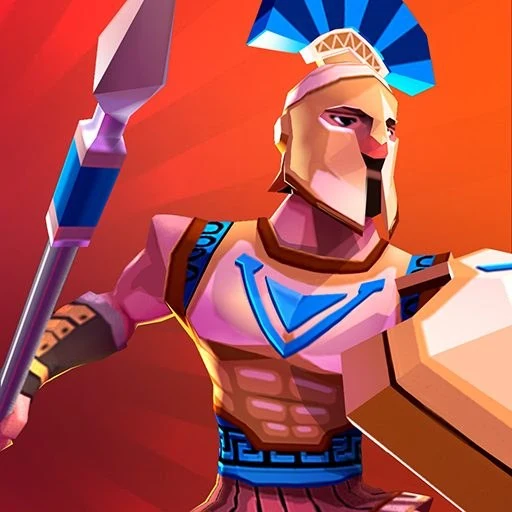
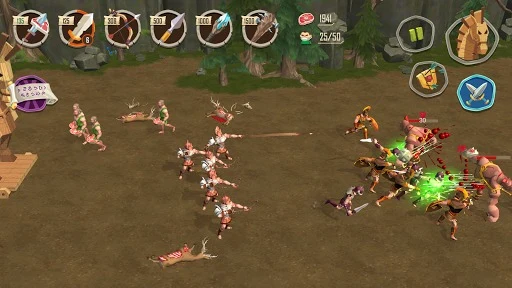
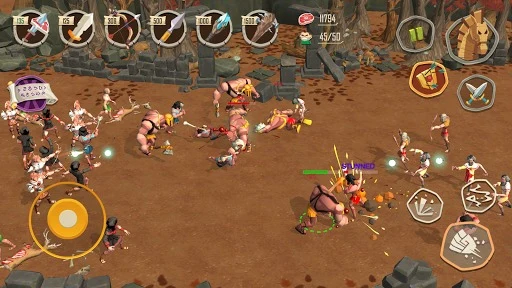
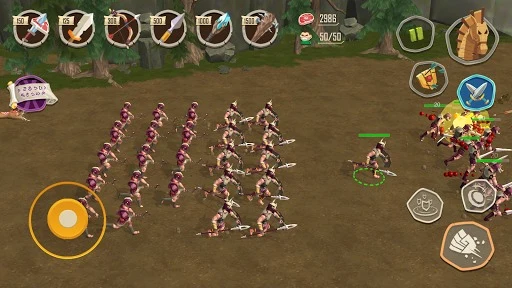
Trojan War places players in command of Spartan warriors within a setting drawn from Greek mythology. The game combines real-time strategy with role-playing progression, allowing users to assemble squads, assign units, and direct forces against opponents. Resource allocation becomes central because meat must be balanced carefully to recruit and sustain troops while also funding upgrades. Special skills and energy management add layers to each encounter, and five divine artifacts can alter equipment abilities during combat. Tournaments run on weekly and monthly schedules, providing rewards that support further advancement. These systems together encourage deliberate planning rather than rapid expansion.
Strategic Troop Management
Command flags determine how groups of soldiers behave on the field, and touch controls let individual units activate unique skills at chosen moments. Troop composition matters because heavy hoplites, agile archers, and other types each fill distinct roles. The Trojan Horse mechanic introduces infiltration options that can shift momentum when timed correctly. Players divide forces to create flanks or defend key positions while monitoring energy levels that limit both unit deployment and hero actions.
Progression Through Equipment and Spells
Equipment upgrades raise base statistics, and the twelve Olympian spells stored in magic books offer timed effects that can turn battles. Artifacts attach additional powers to armor once equipped. As territories are taken on the campaign map, new resources become available to support these improvements. The interplay between leveling individual soldiers, fitting them with better gear, and choosing appropriate spells forms the core loop of long-term development.
Game Modes and Tournament Play
Story mode follows a campaign path toward the conquest of Troy. Olympus challenge pits forces against protected golden warriors, endless mode continues without retreat once started, and online PvP tournaments award gold prizes to successful competitors. Each mode changes the required approach to unit selection and resource use, so players adapt tactics according to the scenario rather than applying a single strategy everywhere.
Resource Balance and Tactical Choices
Meat serves as the primary currency for purchasing troops, so overspending early can leave an army understrength later. Upgrading soldier power, adding armor and weapons, and selecting suitable formations for each map help maintain momentum. These choices connect directly to success in both single-player modes and competitive events, where efficient spending determines how quickly forces can be reinforced.