

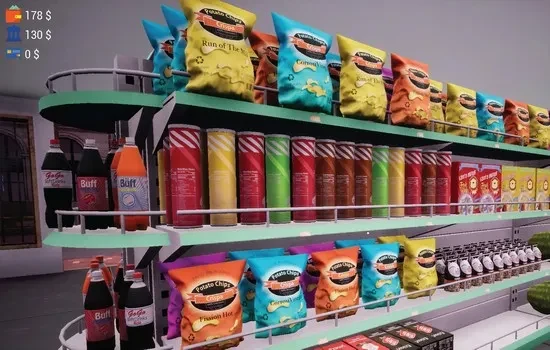

Trader Life Simulator is a supermarket-management simulation in which you start a shop and work toward stable profits and business growth. The central loop involves purchasing goods, restocking and displaying them, setting prices, and making sales. Managing more than 100 products gives the shop a broad range of items to handle, while business and personal-life systems add responsibilities beyond selling.
Running and growing the supermarket
Stocking and selling are connected to the game’s pricing and billing systems. Item prices update daily, so the prices you set are part of managing the shop rather than a fixed decision. Shops are described as restocking automatically, and your business also has employees, with wages included among the management considerations. These systems sit alongside the goal of building profits and expanding the business.
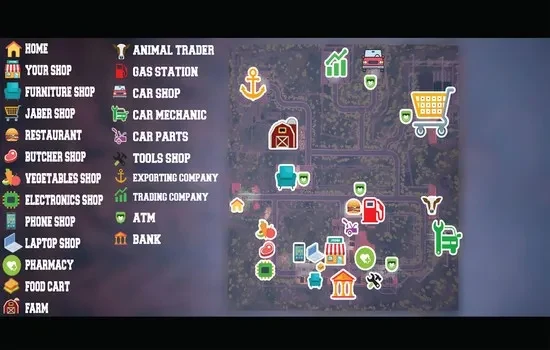
The wider economy includes banks, loans, ATMs, and credit cards. Together with the billing system, these features place shop operations within a larger financial setting. The game also includes other shops around the city that you can visit and buy items from, extending activity beyond your own store.
Customization and everyday needs
Shop customization includes furniture and other options, while the home can be furnished with items such as furniture and computers. Mobile phones and laptops are also available to buy and use. The game describes TV watching and exploring other places as additional activities, alongside the work of running the supermarket.
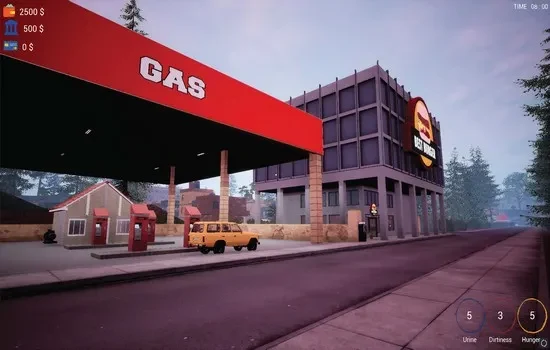
Personal needs affect the routine: hunger, fatigue, and dirt are among the survival elements, and the health system can make the player sick if needs such as eating and bathing are neglected. These mechanics make looking after the character another consideration while managing stock, prices, staff, and shop finances.
Progress through connected systems
Progress centers on operating the shop, handling its products and costs, and gradually expanding the business. Product variety, daily price updates, employees, and financial systems create several linked management tasks, while home customization and personal needs add separate activities to balance with the business. The available description does not specify a level structure or distinct game modes.