

The Walking Dead: Michonne is an action-adventure RPG in which players control Michonne, a survivor in a post-apocalyptic setting. The core activity combines narrative decisions in conversations with quick responses to on-screen prompts during action sequences.
Story Focus and Timed Dialogue Choices
The source describes a story that explores why Michonne left her group, including her separation from Rick and Ezekiel, and the circumstances that led her to return. Dialogue is the main place where player choices appear. Response options are shown as subtitles, and the player must choose before the speaking character finishes. The source presents this time limit as adding pressure to make split-second decisions.
Reaction Prompts and Button Sequences
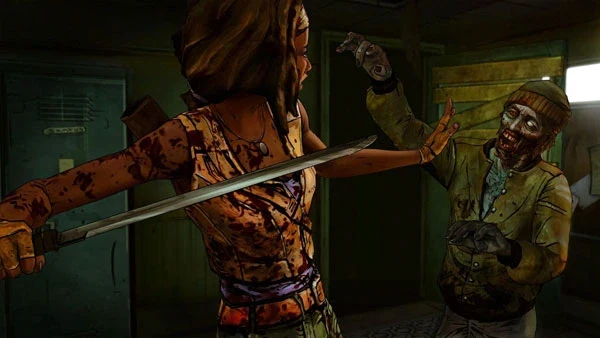
Action sequences ask players to press specific buttons quickly. The source notes that some moments require a sequence of up to three different buttons pressed in rapid succession. The opening part of the game is designed to introduce the basic controls, and the source says the early tension eases as the game continues.
Prompts use a visual style that distinguishes action types. According to the source, essential actions appear as black or grey buttons, while other actions appear as single white buttons. Dialogue options are highlighted, mostly in white, and different speakers are identified by color coding.
Opening Episode Structure
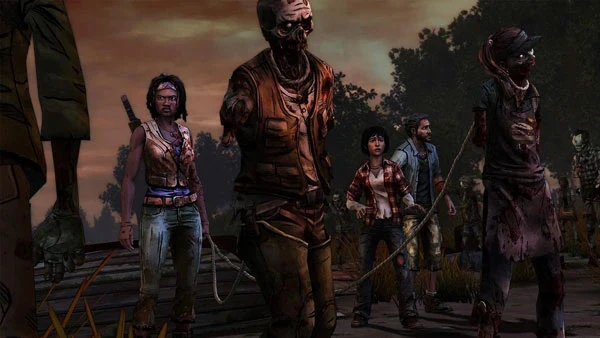
In the first episode, 'In Too Deep', Michonne boards the sailboat The Companion and joins Pete and his crew as they search the coastline for survivors and supplies. After they respond to a distress signal, they discover the aftermath of a brutal massacre, which leads them to Monroe, a survivor community that may be connected to the attack. The source also describes an opening sequence in which Michonne subdues two zombies to use as cover.
Presentation and Pacing
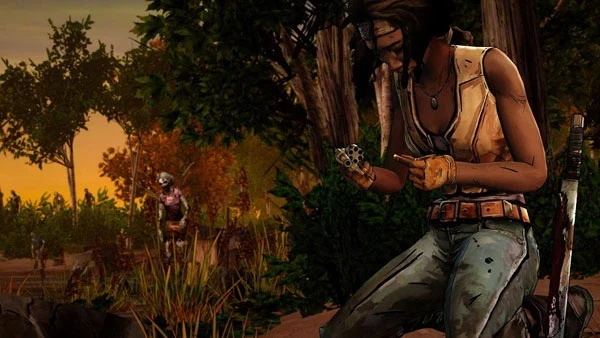
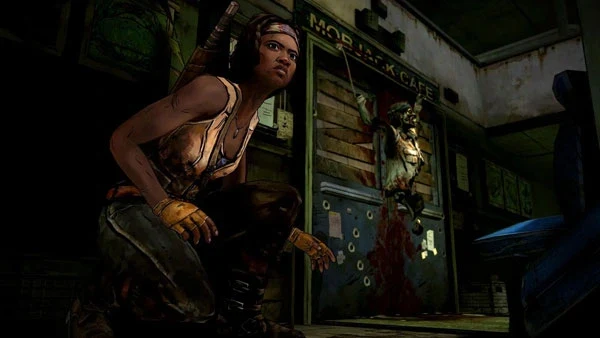
The source describes a visual style that blends animation with realism, with interactive objects and characters moving naturally in their surroundings. Facial expressions and body language are highlighted, and blur effects are used at times to emphasize perspective. The source compares the experience to watching a stage play, with the player taking the role of an observer. It also says the voice acting, background music, and environmental sound support the atmosphere during key story moments.
Series Context and Limitations
The source places the game within the Telltale series and says it stays close to earlier entries. It states that established gameplay mechanics, signature features, and a 'Charge Mode' have been retained, while no major improvements in other areas are reported. The source also notes that the first episode is relatively brief and that the overall experience may feel somewhat incomplete, even though the storyline is compelling.