
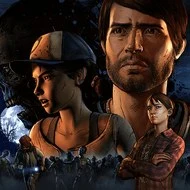
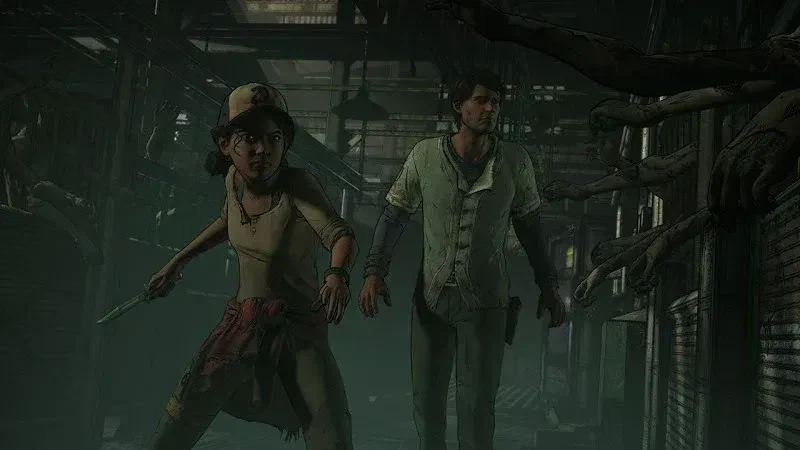
The Walking Dead places you in a post-apocalyptic adventure told through the perspectives of Javier Garcia and Clementine. As society struggles to recover from the walker outbreak, the two protagonists face hostile survivors, dangerous ruins, family conflicts, and decisions with lasting consequences. The game is useful for players who prefer narrative-led experiences in which conversation and judgment matter as much as direct action. Rather than presenting a single fixed route, it lets responses, discoveries, and split-second reactions influence the journey across its episodes.
Two protagonists, one connected journey
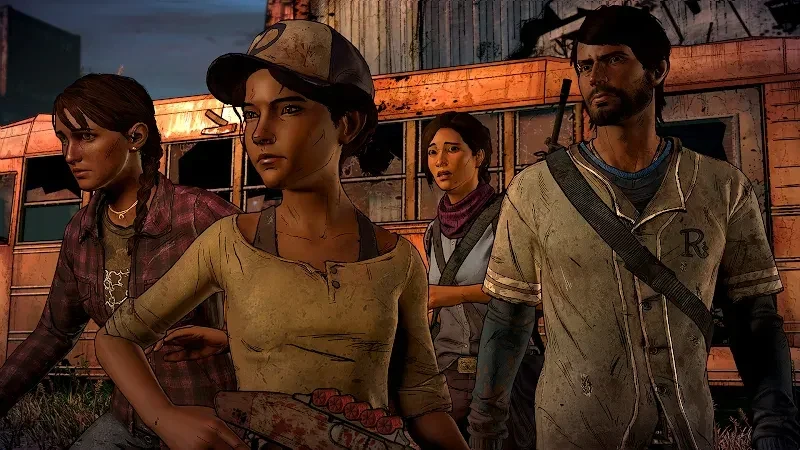
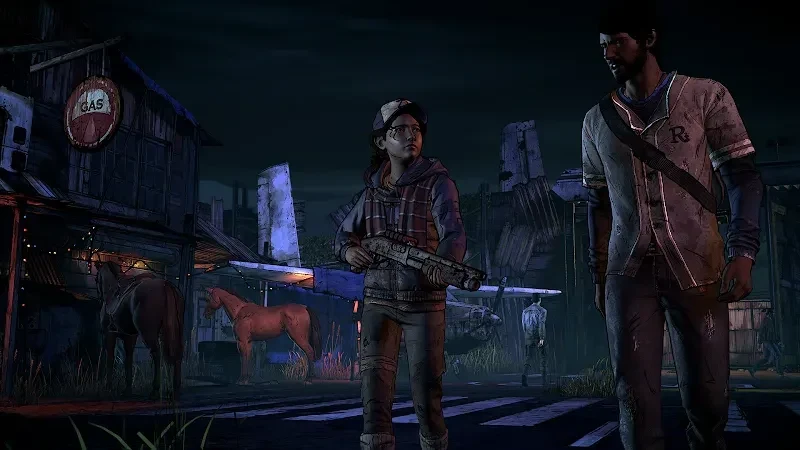
The story uses a dual-protagonist structure. Javier, a former professional baseball player, is living with his sister-in-law Kate and her children, Gabe and Mariana, when the events of the game bring him into a wider struggle for survival. Clementine, now a young teenager, is trying to protect herself while also looking after Alvin Jr., the child connected to the previous season. The player primarily controls Javier, while decisions made during Clementine’s parts influence what happens to her.
This arrangement gives the narrative two different perspectives on the same unstable world. Javier’s family responsibilities and Clementine’s experience of surviving with limited support create separate pressures, while their stories intersect as the season develops. Other important figures include Kate, Gabe, Mariana, David, Paul “Jesus” Monroe, Tripp, Eleanor, Conrad, and members of the New Frontier. Depending on decisions made in the previous season, Kenny or Jane may also return, giving earlier choices a continuing role in the broader story.
Point-and-click exploration on Android
The mobile version follows a point-and-click adventure format. Instead of freely walking characters through the environment as in the console versions, you generally point to a destination and watch the character move there. This makes movement part of a straightforward tap-based interaction system, with attention focused on examining the surroundings, finding relevant objects, and choosing how to respond to other characters.
Items can be picked up and equipped through the same general interaction style. The game does not provide an inventory that can be opened and used at any moment; objects are instead intended for particular areas or situations. An item discovered earlier may therefore become useful when the story reaches a specific location, rather than functioning as a universally available tool. This structure keeps object use tied to the scene and the progression of each episode.
Decisions that change relationships and outcomes
Dialogue choices range from immediate replies to decisions that have consequences beyond the current conversation. Some choices affect how characters understand Javier or Clementine, while others can determine whether a character survives after a particular scene. The source describes consequences extending across episodes, with multiple possible endings rather than one unchanging conclusion.
That system makes small exchanges relevant alongside major turning points. A response that seems minor may influence a later relationship, while a more serious decision can alter the group’s situation or determine who remains part of the story. The game’s central questions concern trust, family, responsibility, and the limits of survival. Its conflicts also examine loss, betrayal, redemption, leadership, and whether protecting one group can come at the expense of others.
Quick-time action against walkers and survivors
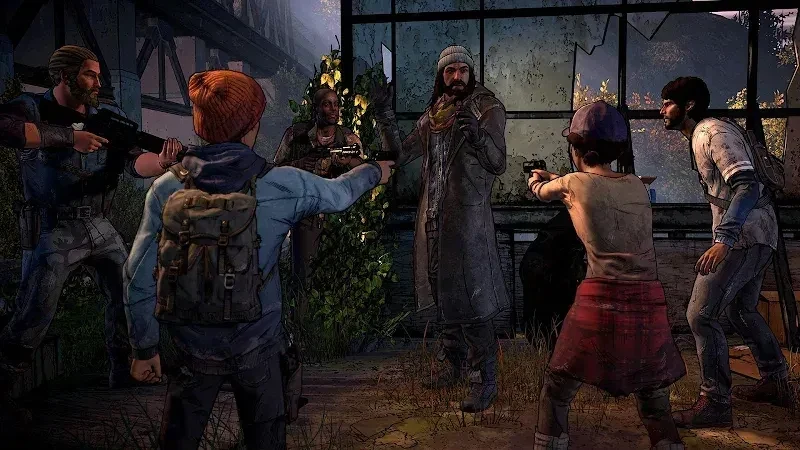
Although the game is primarily an interactive story, it includes direct action sequences. Walkers and hostile humans can create sudden confrontations, and the player must respond to on-screen prompts during quick-time events. These encounters are presented as cinematic battles that connect rapid input with the surrounding narrative rather than separating combat into a conventional standalone system.
Quick reactions are especially important when a scene turns dangerous without much warning. The same post-apocalyptic setting that supports exploration and conversation can therefore shift into a brief struggle for survival. Action sequences work alongside the choice system: the player is not only deciding what a character should say or believe, but also responding when an immediate threat requires fast input.
Discovering the world and its survivors
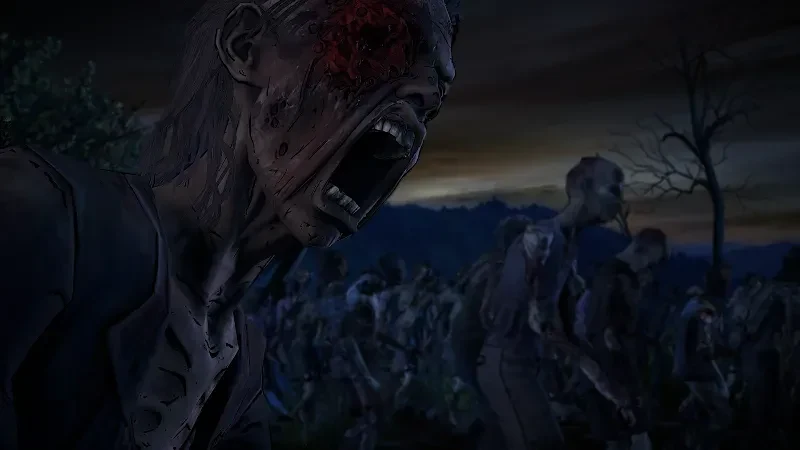
The setting takes place after a zombie apocalypse in which people who are bitten or die can become walkers. The story is primarily set about four years after the outbreak began and roughly two years after the second season. Javier’s group encounters Prescott and its survivors before coming into contact with the New Frontier, a larger organization whose leadership includes Joan, Dr. Paul Lingard, Clint Barnes, and David.
Exploration helps reveal more about this changed world. Clues found in ruined locations and survivor camps can provide information about the outbreak, the people who lived through it, and the history of the communities encountered during the journey. The setting is not only a backdrop for walker attacks; it also shows how groups rebuild, organize resources, establish authority, and sometimes become dangerous through rigid or corrupt leadership.
Visual presentation and mature themes
The game uses the series’ graphic-novel-inspired “Graphic Black” visual style and an upgraded game engine described in the source as supporting improved traversal and animation. Its tone is serious and sometimes emotionally difficult. Loss, betrayal, family conflict, survival, and redemption are central subjects, while characters are placed in situations that challenge their morals and their ideas about what is justified.
The narrative also addresses practical and personal realities of life after social collapse, including care for children, family obligations, and everyday hygiene. These details sit alongside larger questions about whether individuals can be sacrificed for a perceived greater good and how far a group should go to protect its own members. Players looking for a light adventure should be aware that the story is built around grim circumstances and emotionally heavy decisions.
Android availability
The supplied listing identifies version 1.07 and states that the game requires Android 4.4 or later. Because the source does not provide further device specifications or performance information, compatibility beyond that minimum operating-system requirement cannot be confirmed here.