
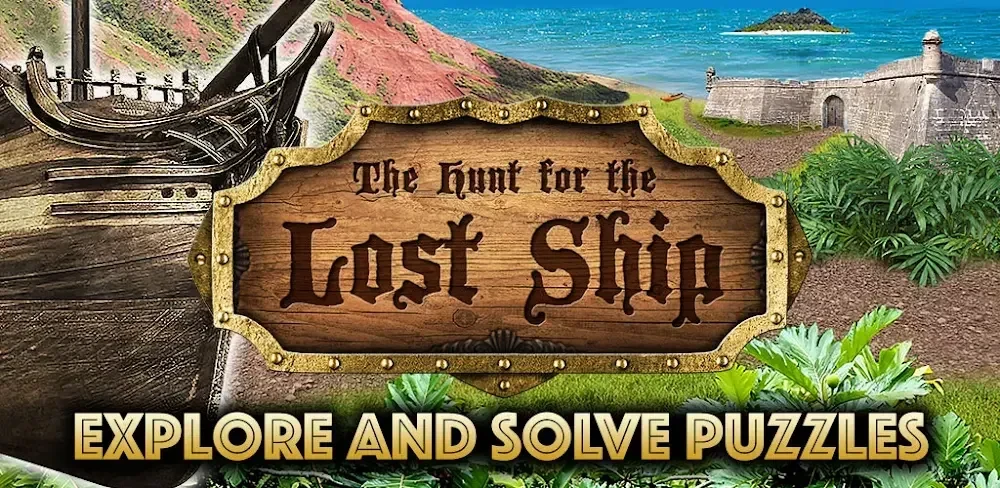

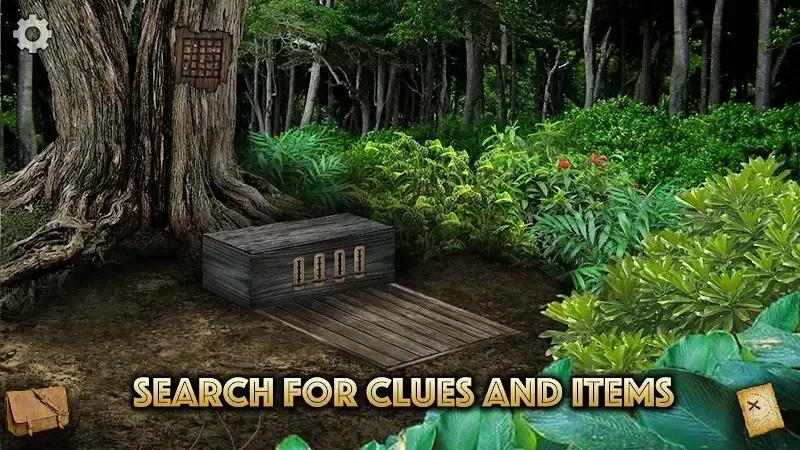
The Lost Ship is a point-and-click adventure in which the player searches for a treasure map connected to a missing pirate ship. The central objective is to explore an island, find structures left behind by the wrecked crew, and solve the island's puzzles until the treasure can be reached.
Exploring the island
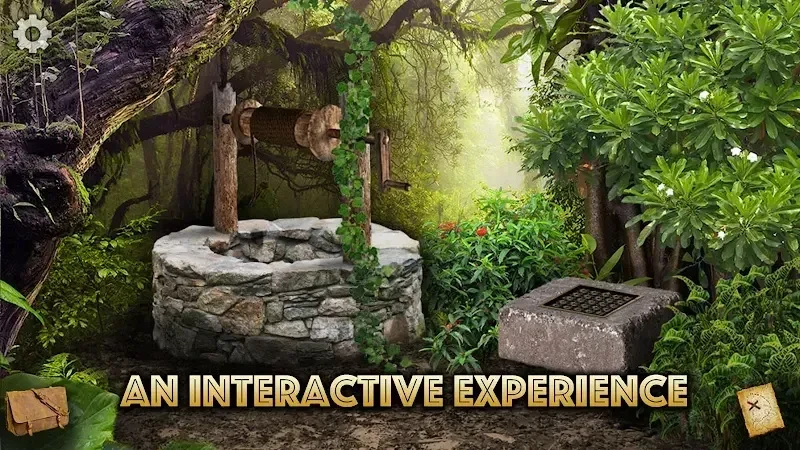
Exploration takes place across a series of locations that the source refers to as scenes. A dynamic map lets the player save the points they have already visited, which helps avoid covering the same ground twice. The map is described as large, with more areas to investigate as the player moves outward. A minimap displays exploration progress in real time, so the player can see how much of the island has been covered.
Movement is handled through smart movement on the map, which the source says helps save time. The same fast movement feature is also described as useful when deciphering codes, suggesting that navigating quickly between locations is part of the puzzle-solving routine rather than a separate activity.
Gathering and using clues
The quick camera is the main tool for collecting information. When the player finds an item that may be a clue, such as a carving on a tree, a symbol on a wall, or a tablet, they can photograph it. Saved images can be reviewed later, and the source states that this allows players to revisit hints and solve puzzles at any time. The listing also notes that clear, high-quality images help when working through codes.
Puzzles depend on material gathered earlier. Items found in one place can be applied in another: a tool used to clear a blocked route opens access to a new area, a clue read from a carving can solve a puzzle elsewhere that yields a key, and that key can open a chest holding further items. The walkthrough in the source follows this pattern, with objects such as a hatchet, crowbar, firewood, flint and steel, a bomb, and a barrel being collected and then used in other scenes to clear paths, open doors, or reach higher areas. Because each discovery can feed a later decision, the player's progress is tied to what has been gathered and where it has been applied.
Puzzle variety and difficulty
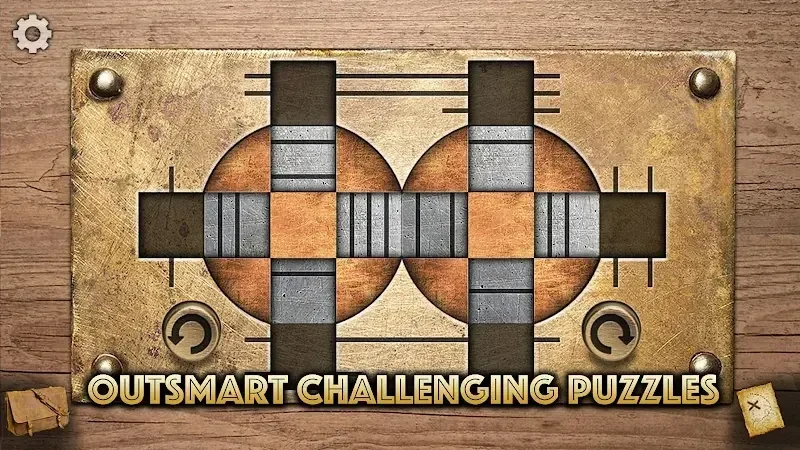
The game presents dozens of puzzles of varying difficulty. According to the source, difficulty increases as each level is completed, and the variety of question types adds to the challenge. Player comments describe the puzzles as largely graphic and inventory-based, with some tests of memory, while still being logical. One commenter found that the controls for each puzzle were easier to understand than in some similar games, and another said one area's solution was quite specific but still manageable without hints.
Hints are not described as a fixed system in the source, but one player comment reports that asking for help can produce optional prompts, such as a reminder that a clue is meant for a particular scene or that a puzzle in another scene remains unsolved. That same commenter also noted an inventory issue, where an item tied to a code stayed in the inventory after being used. The source does not clarify whether this was resolved.
Presentation and story
Background music is presented as an important part of concentration, and the source says engaging music can encourage players to continue. Player comments describe the art, music, and sound effects in favorable terms, though these remarks come from individual reviewers and are not independent verification. The story is framed around a family connection, beginning with a letter from Uncle Harry and a postcard, and places the player in an archaeological setting where clues must be interpreted to reach the treasure before someone else does.
Player feedback on length is mixed. One commenter felt the game was short and had a quick ending, while another reported that a free expansion made the ending more fulfilling. The source does not provide details about that expansion beyond the commenter's report. The listing shows version 5.0 and assigns the game to the Adventure category.