
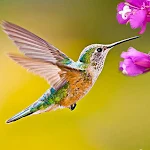
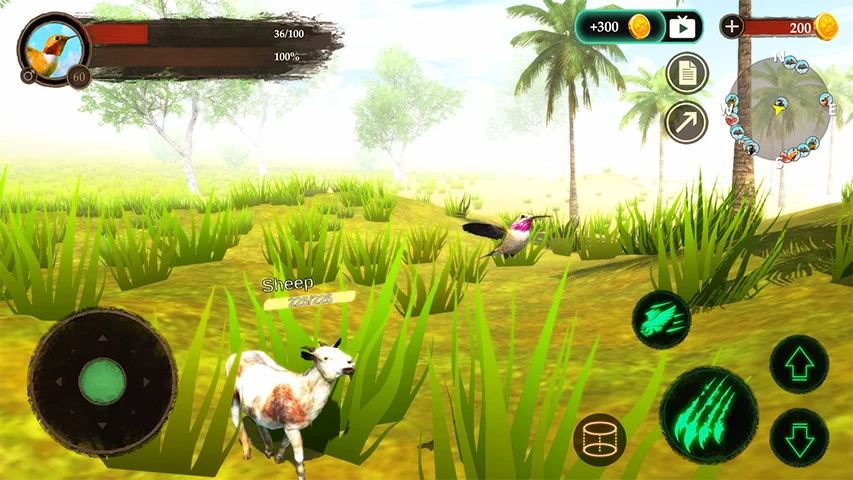
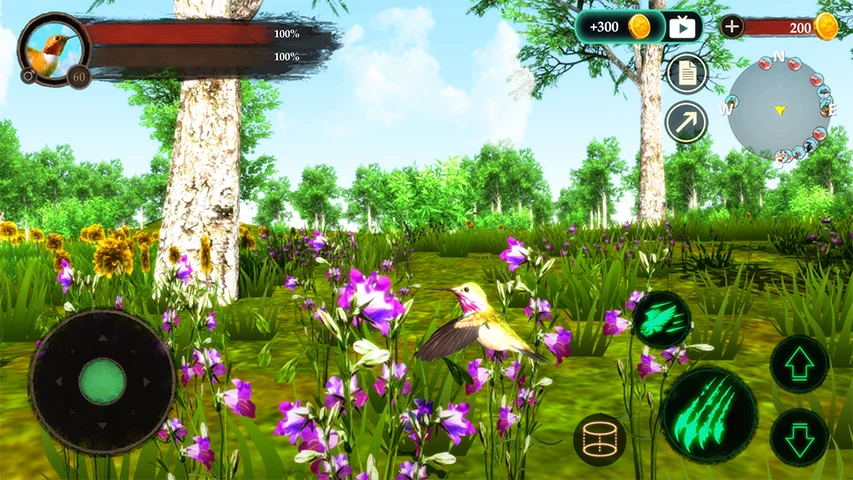
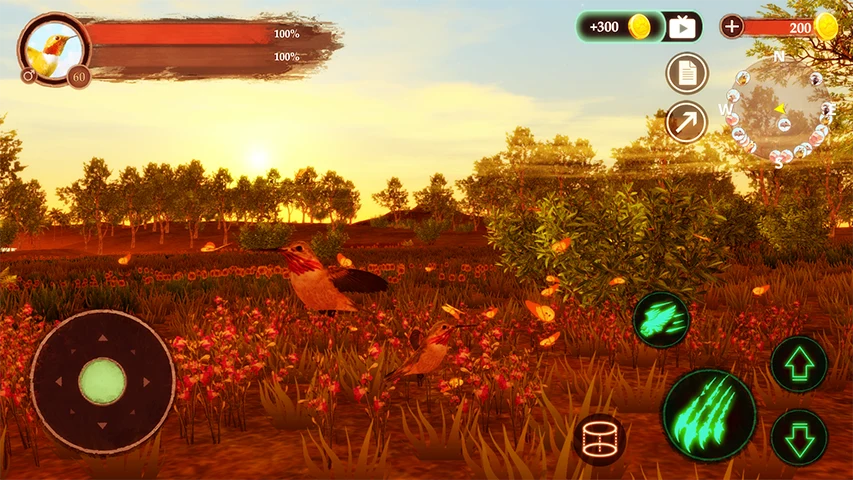
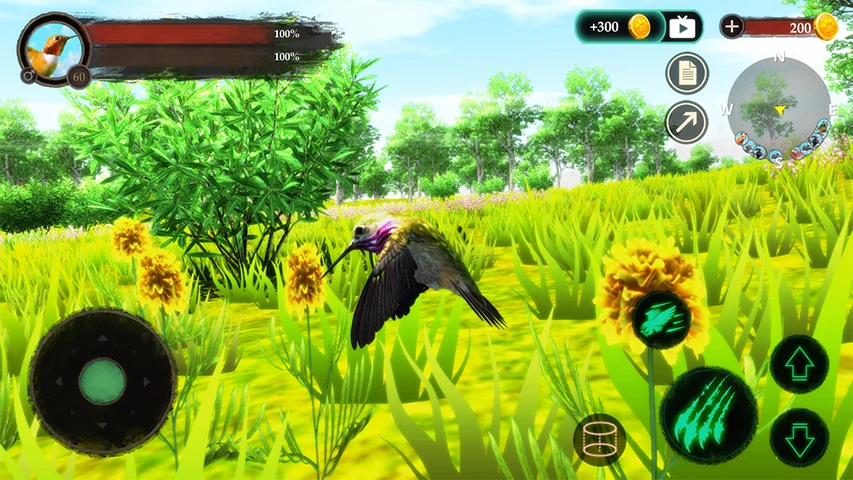
The Hummingbird puts you in control of a small bird moving through a large 3D forest. Its main appeal is the ability to hover, fly backward, change elevation, and hold position while exploring an open-world environment. Players can feed on nectar, spread pollen, interact with wildlife, and observe a forest that changes with weather and the time of day. These systems create a free-form experience for people who enjoy animal simulators, nature-focused exploration, and flight mechanics that reward careful control rather than following tightly structured levels.
Flight Built Around Hovering
The game focuses on hummingbird movement rather than conventional forward-only flight. You can fly up and down, remain in place, and move backward, giving aerial navigation a distinctive feel. The realistic flight behavior and hummingbird sound effects are designed to make controlling the bird central to exploration. Managing elevation and hovering can also help you approach areas of the forest and investigate the environment from different positions.
A Living Forest to Explore
The open-world map is populated by a range of animals, including foxes, deer, rabbits, stags, rats, and raccoons. Colorful butterflies also appear throughout the forest, adding more wildlife to discover as you travel. Rather than presenting a sequence of narrowly defined stages, the game uses a broad environment for free-form exploration and survival-style play.
Nectar and Pollen in the Hummingbird’s Routine
Feeding on nectar and spreading pollen give the bird natural activities to perform during its travels. These actions connect the flight mechanics with the forest setting: movement is not only about reaching another location, but also about taking part in the hummingbird’s role within the environment. Wildlife encounters and exploration provide additional reasons to move through the map.
Weather, Light, and Atmosphere
A dynamic weather system introduces storms, clouds, and sunshine, while the game also includes changing daytime and nighttime conditions with stars. These shifts alter the atmosphere during exploration and provide visual variety as you revisit or cross different parts of the forest. The single forest setting may feel repetitive to players who prefer frequent changes of scenery, and the open-ended survival format may not suit those looking for linear objectives or tightly structured levels.