
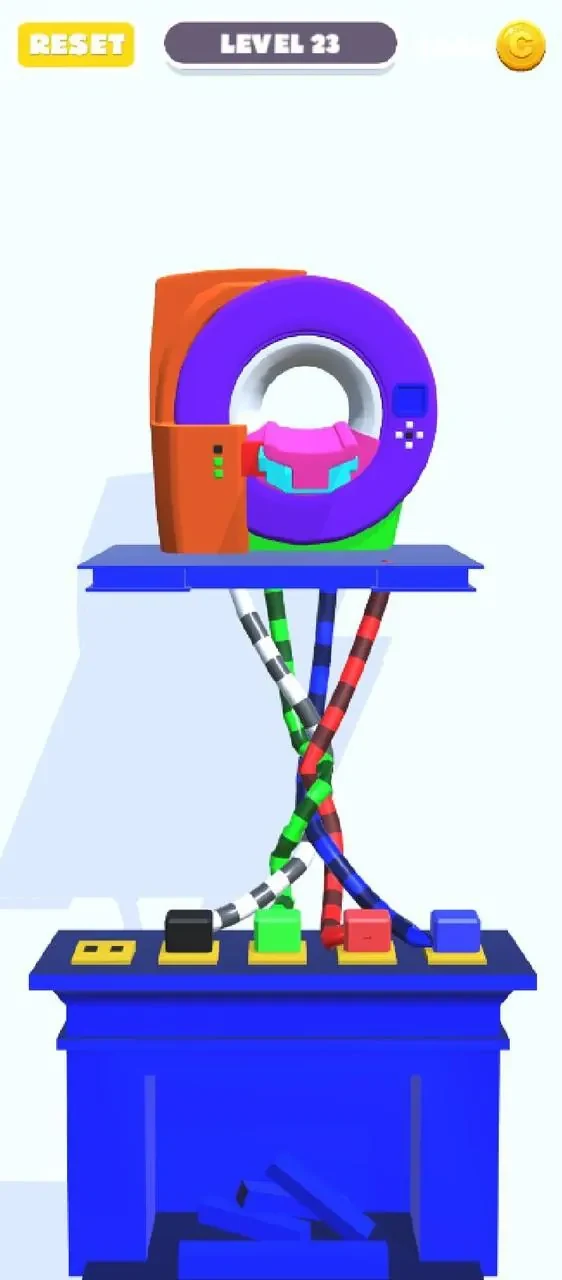
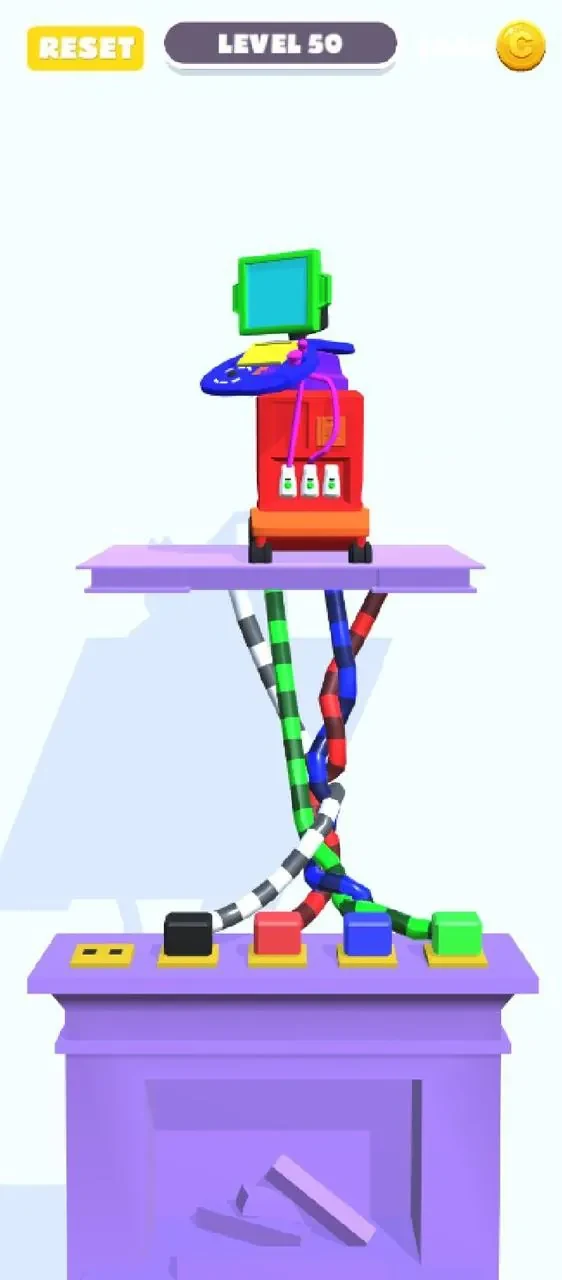
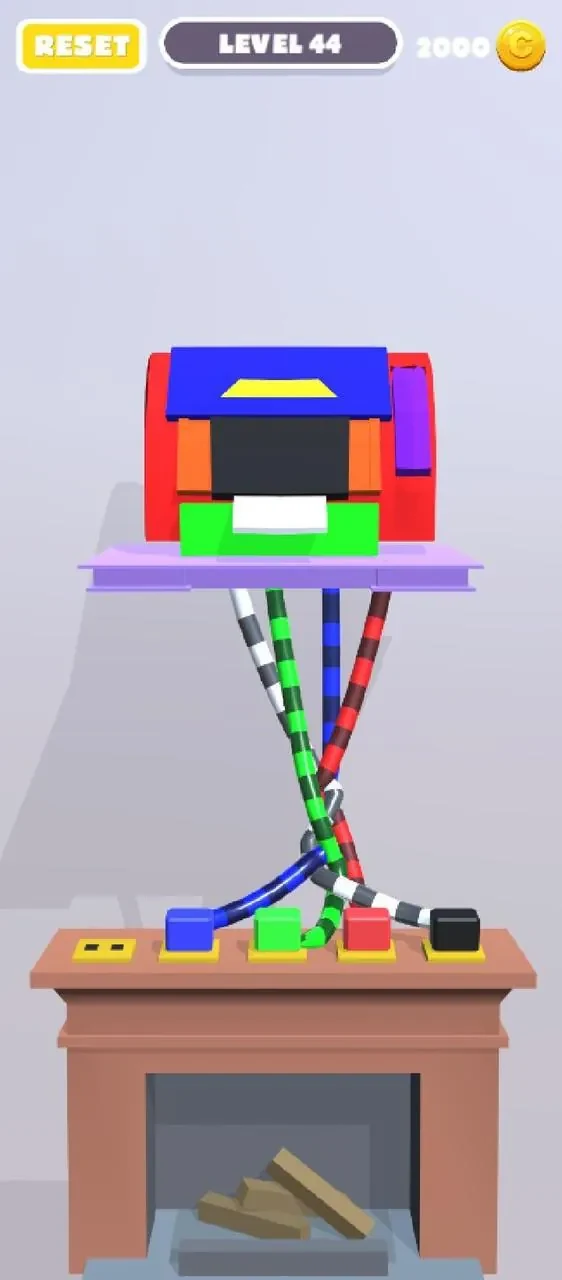
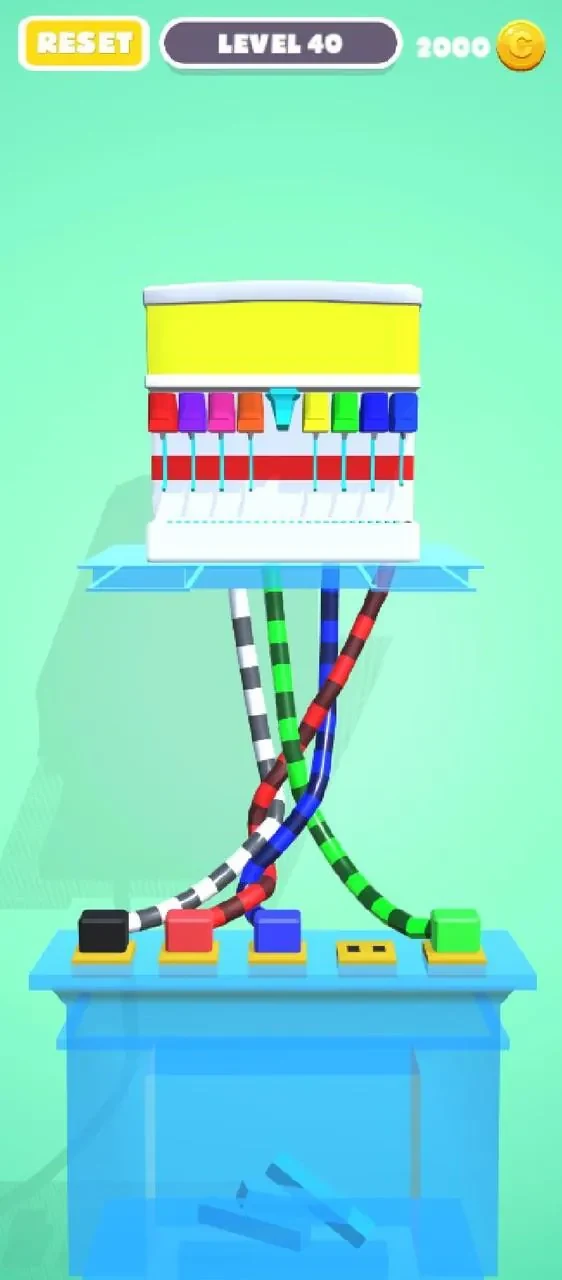
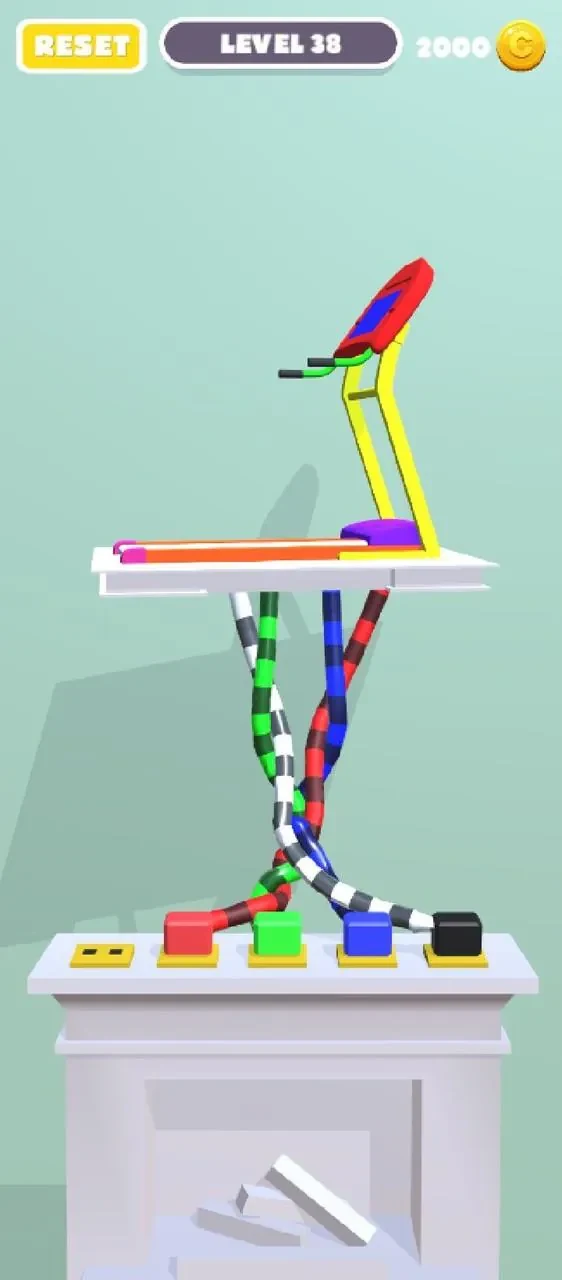
Tangle Master 3D is an Android 3D puzzle game where you rotate, untangle, and realign clusters of interlocking blocks so a small ball can reach its goal. Its main task is to solve compact spatial layouts by opening channels, avoiding hazards, and choosing the right order for each move. Swipe-driven controls make the basic interaction easy to understand, while later puzzles introduce timing and layered mechanics. The clean presentation keeps attention on the playfield, making the game suitable for quick sessions as well as longer problem-solving runs.
How do the puzzles work?
Each stage presents a group of connected pieces that must be manipulated to create a continuous route. Swiping rotates groups of blocks, while taps and releases activate particular mechanisms. You may need to open a channel, align a pathway, or release the ball at the right moment so it can travel through the maze without meeting a hazard.
Spatial manipulation is central to the experience. A single rotation can open a route or block progress, so the game encourages you to observe the arrangement before acting. Gravity and momentum help carry the ball along the path, turning each level into a small experiment in positioning, sequence, and timing.
Which mechanics appear as you progress?
The early stages introduce the fundamental interactions at a measured pace. Later puzzles combine them with moving rails, trapdoors, one-way gates, timed switches, sliding pieces, and other changing behaviors. Intermediate stages add timing windows, moving obstacles, and sequence puzzles that require both planning and quick reactions.
Progression eventually asks you to chain several mechanics together rather than solve one isolated action at a time. The game also mixes curated levels with randomized arrangements, so the structure can teach the basics gradually while continuing to present new configurations. An endless progression model adds further permutations for players who want an ongoing series of puzzles.
Can you solve levels in more than one way?
Many levels allow multiple solutions instead of requiring one fixed sequence. This gives you room to experiment with different rotations, releases, and routes, and it supports returning to earlier puzzles to search for a faster or more elegant solution.
Optional time-based challenges and precision tasks add extra objectives for players who enjoy optimizing their runs. Completion time and route efficiency can therefore become part of the challenge, while the underlying mechanics remain predictable enough to support repeated attempts.
What controls and visual options are available?
The control scheme uses swipe gestures to rotate groups of pieces, with taps and releases for specific mechanisms. Gesture sensitivity and smoothing are designed to make movement predictable when timing matters, and gentle haptic feedback can confirm key actions.
High-contrast coloring separates active and inactive parts, while colorblind-safe palettes are considered to improve legibility. You can adjust the camera zoom and angle, choose from several color themes, and enable visual aids such as alignment guides or subtle outlines around interactive pieces. Short levels and forgiving checkpoint behavior also make the game more approachable for players with limited mobility or shorter attention spans.
Is the presentation suited to short sessions?
Tangle Master 3D uses simple 3D models, soft lighting, and clear color coding to keep movable parts and hazard zones easy to identify. Its restrained visual style reduces clutter, and the limited HUD keeps decisions focused on the puzzle itself rather than on surrounding effects.
Fast load times, concise menus, and tidy transitions support both brief drop-in play and longer sessions. The game is also suited to offline play, allowing progress without a constant connection and conserving bandwidth. Overall, it may be useful for players looking for a thoughtful puzzle experience built around spatial reasoning, timing, experimentation, and dexterity, with adjustable presentation options and replayable challenges.