
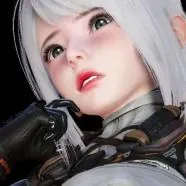
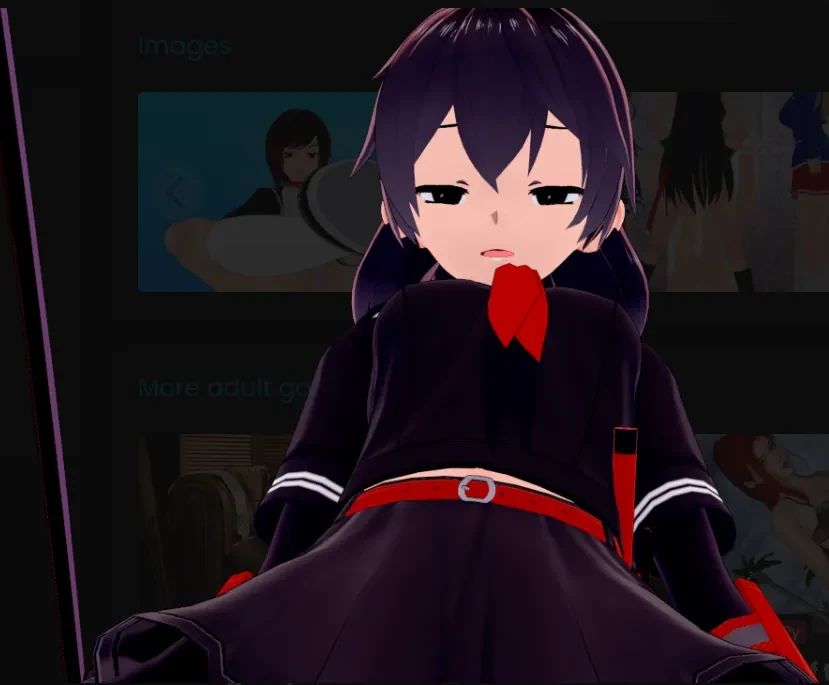
Slave Of The Female Knights places the player in a compact medieval setting where a council of female commanders oversees a fortified town and nearby enclaves. The game focuses on short narrative scenes, clear decisions, and changing relationships, making it suitable for players who prefer a story that can be experienced in brief sessions. Its mature themes include authority and consent, but the supplied description presents them without explicit descriptions of sexual acts. Choices can affect alliances, reputation, dialogue, and access to later parts of the story.
Choice-driven encounters in a fortified town
The main structure combines visual novel storytelling with light roleplaying. Players read a scene, select from several responses, and then see how the characters react. The cast consists of distinctive commanders with defined personalities and evolving responses to the protagonist. The setting includes the castle town, knight quarters, hidden passages, and a post-game area called the Rec Room. The Rec Room becomes available after the main story and adds further scenes and challenges.
Decisions, relationships, and Obedience Points
Progression is shaped by a resource called Obedience Points. These points can unlock alternate dialogue, restricted tasks, and some late-game branches, while decisions can cause the total to rise or fall. Some outcomes can be reversed through particular choices, but others remain permanent so that decisions retain consequences. The game also tracks relationships with individual commanders. Reputation can change the tone of conversations and determine whether secret locations are accessible, linking social choices with exploration and story progression.
Simple controls for short sessions
Interaction is designed around tappable dialogue choices and on-screen buttons for menus and save slots, with support for both touch and mouse input. The interface keeps attention on text, character portraits, and background art while showing which choices are available or locked. Scenes are generally short, and save-and-resume functionality lets players return to an interrupted route. Multiple save slots also make it possible to experiment with decisions without immediately losing earlier progress.
Character setup and visual presentation
At the beginning, players can customize the protagonist’s appearance and select a few backstory elements. These choices influence initial reactions and some available dialogue, giving character creation a role in the opening relationships rather than serving only as a cosmetic step. The visual presentation uses character portraits, dialogue boxes, and background illustrations to establish the town and the knights’ quarters. Instead of using open levels, the game arranges scenes as connected vignettes, emphasizing focused encounters and atmosphere over extended exploration.
Replay routes and accessibility
Branching paths, multiple commander storylines, alternate outcomes, and the Rec Room provide reasons to revisit the narrative. Because decisions can affect scene access and endings, replaying can reveal routes that were unavailable during an earlier run. The game is designed for offline play, with progress and save data stored locally. Adjustable text size and a simple control layout are included for readability and reduced interface clutter, including on smaller screens. Light challenge moments also add occasional tests of timing or selection alongside the dialogue choices.
Scope and potential limitations
The experience is brief and relatively linear compared with larger visual novels, so players seeking extensive exploration may find its structure limited. Some scenes and optional content are harder to trigger, which may be frustrating for completion-focused players. Individual sections may also feel familiar to people who regularly play similar visual novel titles. Overall, the game is aimed at players who want a concise, scene-driven narrative with mature themes, relationship changes, and meaningful branching decisions rather than a large open-ended roleplaying experience.