
Red Fire is a strategy game about commanding military forces in conflicts centered on Southeast Asia, with the source describing its setting as 1925. Players direct armies against enemy forces, making decisions about unit positioning, resources, and the use of different branches of the military. The game also describes historical and fictional campaigns, though it does not specify their structure or how players move between them.
Commanding forces and choosing tactics
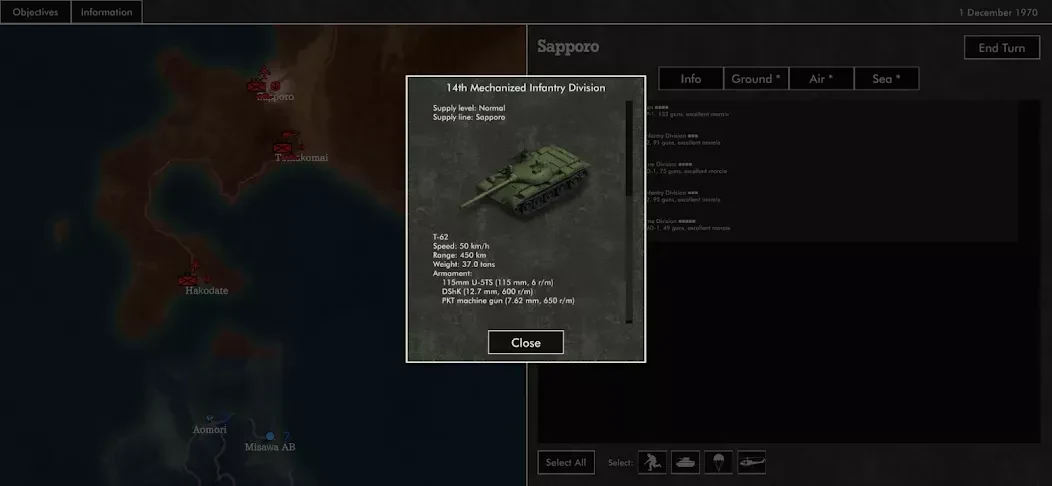
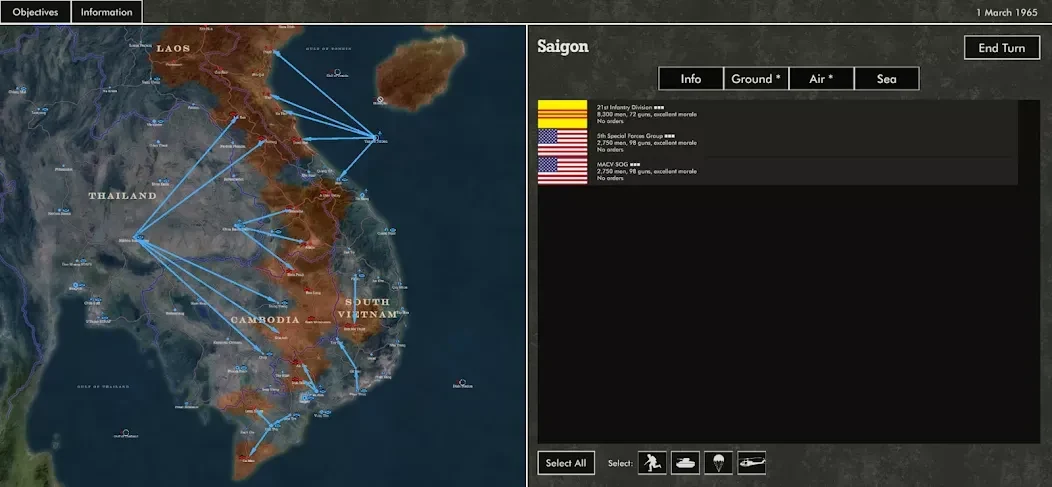
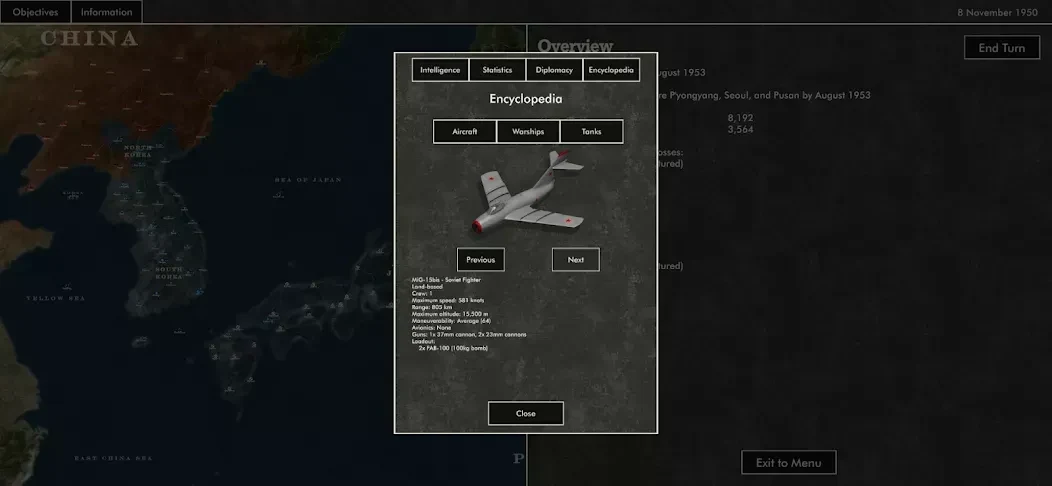
Command can include infantry, tanks, air forces, and warships. The source says that forces from multiple nations are available, including the United States, the Soviet Union, China, North and South Korea, and North and South Vietnam. It describes armies as distinct in their weapons and organization, with each faction bringing different strengths to the battlefield. Players can also use advanced weaponry and gadgets, although the specific equipment and its effects are not detailed.
One example connects a force’s identity to its tactics: when leading the Vietnamese army during the Vietnam War, players can use jungle-based guerrilla tactics and the Ho Chi Minh Trail system. This illustrates how the game presents historical military context alongside decisions about how to deploy forces. The source also says players can team up with others, but does not explain the format or rules for cooperative play.
Reading the map and directing units
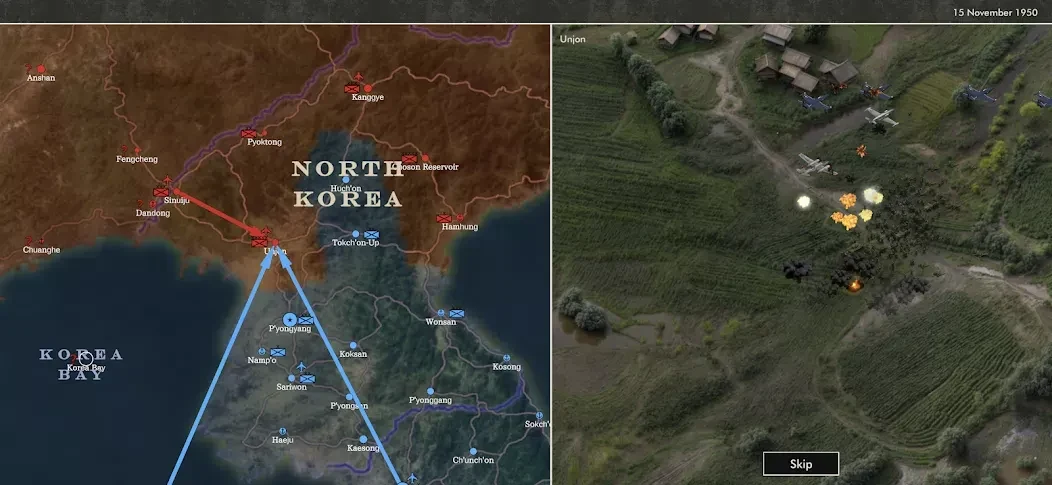
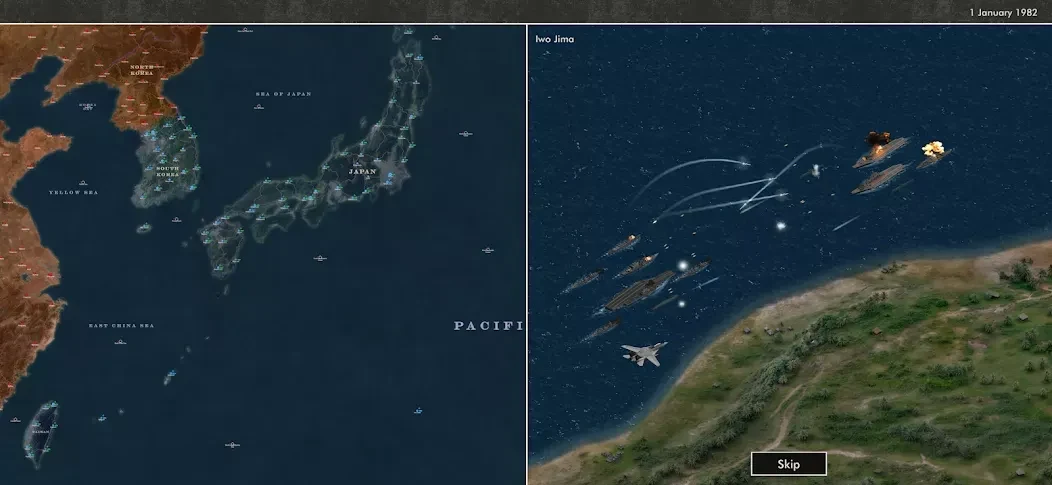
The described battlefield view centers on a large military map. Its terrain includes features such as mountains, plains, and sea, which the source says affect attacks and the use of troops. Players therefore need to consider both the forces they command and the landscape when deciding where to position them. Resource management and unit positioning are identified as parts of strategic command, but no specific resource types or management procedures are provided.
Red Fire describes its opponents as using adaptive AI that changes tactics in response to the player. This means the stated strategic challenge is not limited to choosing an initial arrangement: players are expected to reconsider their approach as enemy tactics change. The source encourages developing solutions independently, but does not document particular victory conditions, battle stages, or a fixed sequence of actions.
Campaign themes and presentation
The campaign descriptions span historical conflicts and fictional or “what-if” scenarios. The available information does not name particular missions or explain how campaigns differ in their rules. It also characterizes the game as combining strategy with shooting mechanics and gunfight effects, without explaining how those elements connect to map-based command.
The game is described as using 3D graphics and fluid animations to depict battle scenes. Its listed version is 1.4.1b. No reliable minimum Android version is given in the supplied product details.