
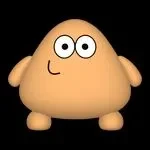
Pou 3D is a casual virtual-pet game in which players look after an alien companion by meeting its needs, playing mini-games, and customizing its appearance and home. Care affects Pou’s development, with the game describing different evolution levels according to how it is raised. The activities are organized around rooms in Pou’s house, so players move between care tasks, play, and decoration as needed.
Daily care and development
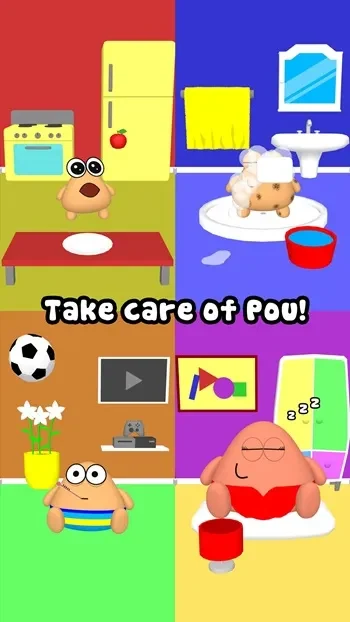
Players begin by choosing a nickname and setting Pou’s initial appearance. In the kitchen, they can check the pet’s hunger and feed it; when food is needed, simple items can be bought with coins. Bathing takes place in the bathroom, while the bedroom is where players put Pou to sleep as its energy falls. These needs give the care routine a practical sequence: check on the pet, respond to its condition, and return to other activities when care is complete.
Pou’s reactions provide visual cues about its state. The description associates bright eyes and lively movement with happiness, slow blinking and a limp posture with tiredness, and a curious expression with exploring a room. Movement can also change slightly while Pou waits for attention. Feeding, bathing, and sleeping are presented with animated responses, including chewing and splashing effects.
Mini-games and currency
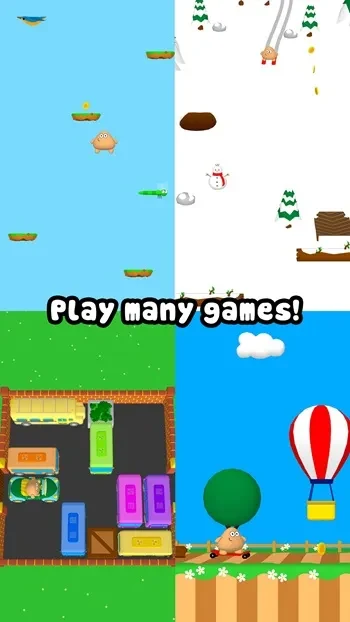
The game room offers mini-games, including cliff-jump and puzzle challenges. Playing them earns coins and gems, connecting the recreational part of the game to its care and customization systems. Coins can be used to buy food, while in-game currency is also used for customization and upgrades. The source does not specify the individual rules or controls for each mini-game.
Clothing, home decor, and social features
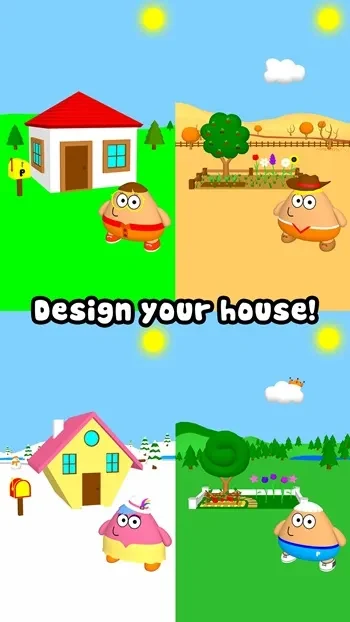
A wardrobe lets players change Pou’s clothes and accessories, and a home editor is used to arrange furniture and decorations. The rooms are presented in a three-dimensional setting, with depth and perspective as part of the game’s visual style. Players can link an account to enable cloud saving and social features. The described social activity includes visiting friends’ profiles to see their Pou and compare pets.
Overall, play moves between looking after Pou, earning currency in mini-games, and using that currency or the available editors to customize the pet and its surroundings. The source also describes care as shaping Pou’s evolution, giving the routine a development aspect alongside its room-based activities.