

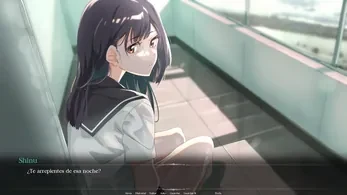
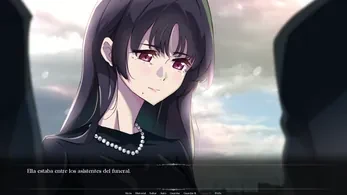
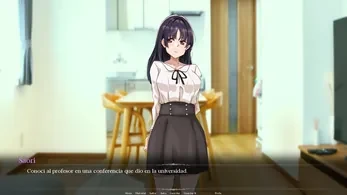
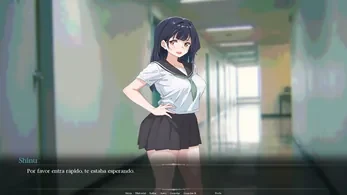
Nuestro Último Verano follows Shinu Amemiya through the final days of class as players piece together what happened on a mysterious summer night. The game is built around a compact, emotionally focused story rather than demanding mechanical challenges, making its approximately three-hour runtime suitable for one extended session or shorter reading periods. Spanish and English text options broaden its accessibility, while carefully paced scenes, character relationships, and atmospheric details keep attention on the plot and the emotional information revealed about its cast.
A story-led structure
The narrative is arranged in chapters covering the final days and the pivotal summer night. Scene transitions and narrative checkpoints guide progression instead of levels, unlock trees, or other traditional advancement systems. Each chapter connects to the next to maintain a concentrated dramatic arc, so the experience is shaped primarily by discovering clues, interpreting character motives, and following the measured pace of the revelations.
This structure also supports different reading habits. Players can complete the story in a single extended sitting, or use save points and chapter markers to return to particular scenes without replaying everything from the beginning. The compact format keeps the focus on the central story while still leaving room for reflection between important moments.
Touch controls and narrative choices
As in many modern visual novels, the main interaction is advancing text by tapping or tapping and holding. An optional auto-read mode can move through dialogue automatically, while skip mode is available when returning to familiar passages. A backlog provides access to earlier lines, which is useful when reviewing a conversation or checking a detail from a previous scene.
Choices appear during key parts of the story and affect dialogue and character interactions. These decisions create modest branches and alternate reactions rather than completely separate storylines. The multiple-slot save and load system lets players bookmark scenes, try different answers, and compare how particular exchanges develop.
Atmosphere and presentation
The visual design prioritizes mood over spectacle. Backgrounds and character sprites are combined with changes in color and lighting to suggest the time of day and emotional tone of a scene. Expressive portraits support dialogue, while subtle transitions and occasional CG-like illustrations draw attention to moments with greater emotional significance.
Text presentation separates dialogue from narration, helping distinguish spoken exchanges from internal monologue. Together, the readable layout, scene art, and ambient presentation support a story in which character dynamics and atmosphere are more important than complex systems or difficult action.
Language and reading options
Players can select Spanish or English text, allowing the story to be read in either language. The option may also suit readers who are learning Spanish or English and want to follow the narrative at their own pace. Adjustable text speed provides further control over how quickly lines appear, while auto-read and the backlog accommodate readers who prefer hands-off progression or want to revisit earlier passages.
Audio settings include controls for background audio and voice tracks. These options let players adjust the sound balance while keeping the text and visual presentation central to the experience. The straightforward interface is designed around reading, reviewing dialogue, and moving through scenes without unnecessary complexity.
Replay value and offline play
The main story is short, but returning to earlier chapters can reveal different lines, choices, and character reactions. Small branches encourage a second reading for players interested in comparing outcomes or noticing emotional details that were easy to miss initially. Because the story’s variations are focused rather than extensive, replaying specific scenes does not require committing to a completely different long-form campaign.
Nuestro Último Verano is designed for single-player offline play after installation, so a persistent internet connection is not required. Its lightweight assets support quick loading and responsive taps on typical Android phones and tablets. This makes it practical for reading during a commute or in other places with limited connectivity, while its narrative-first design keeps the challenge centered on interpretation and emotional engagement rather than conventional gameplay difficulty.