

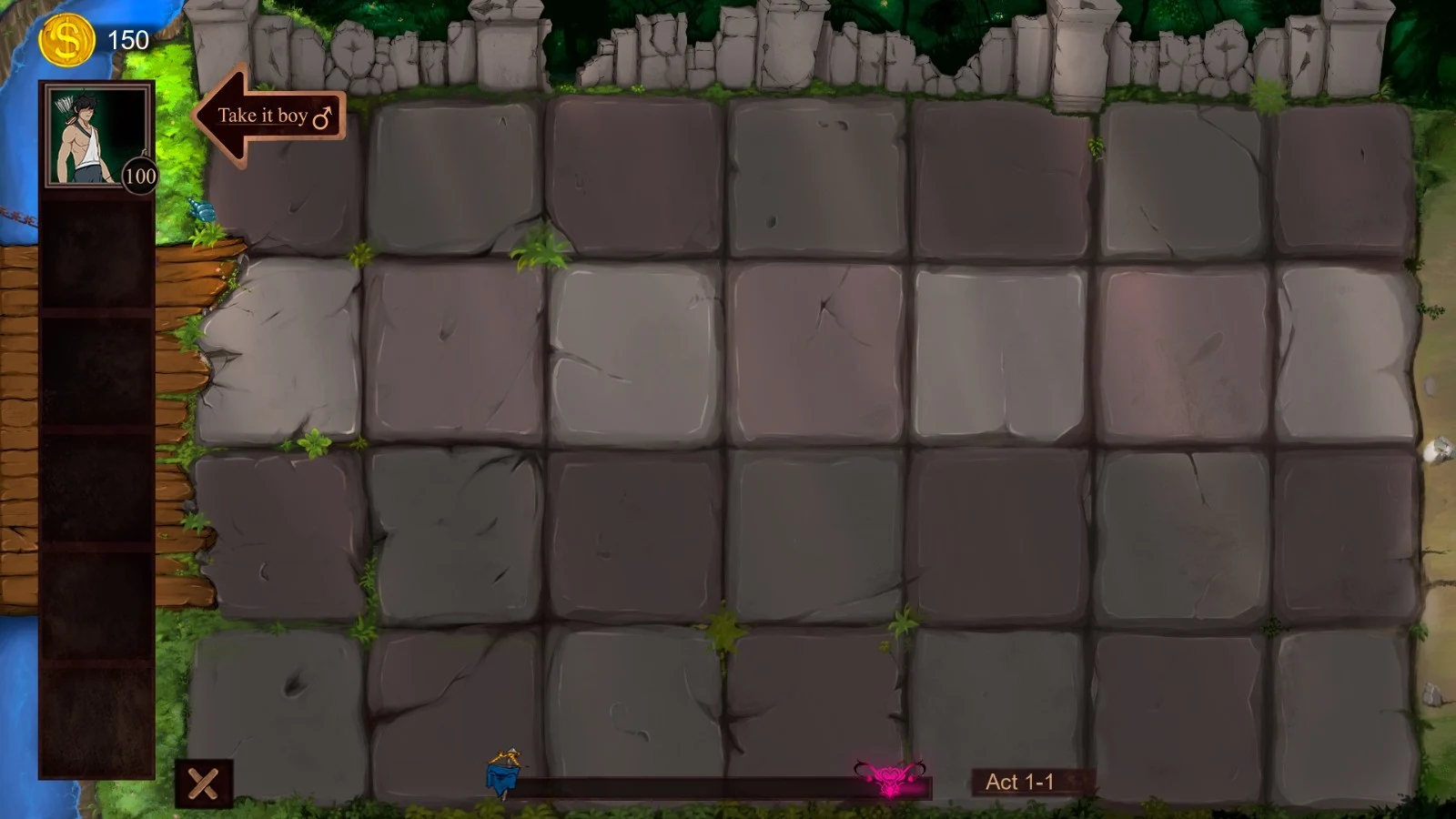

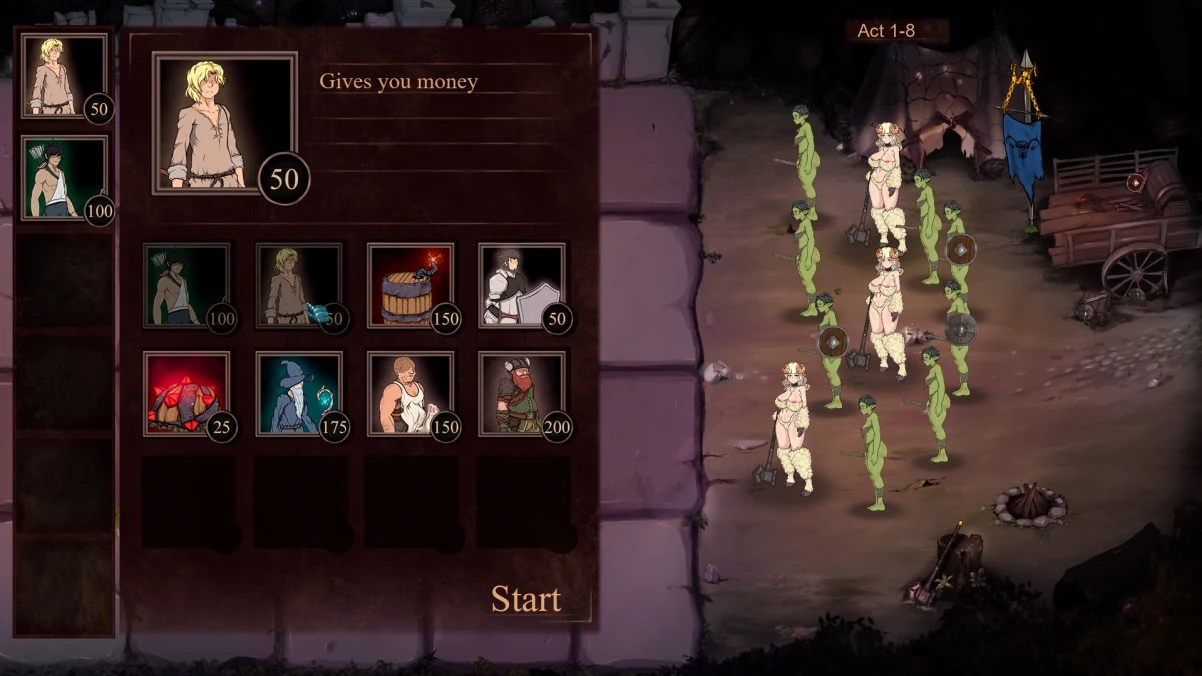
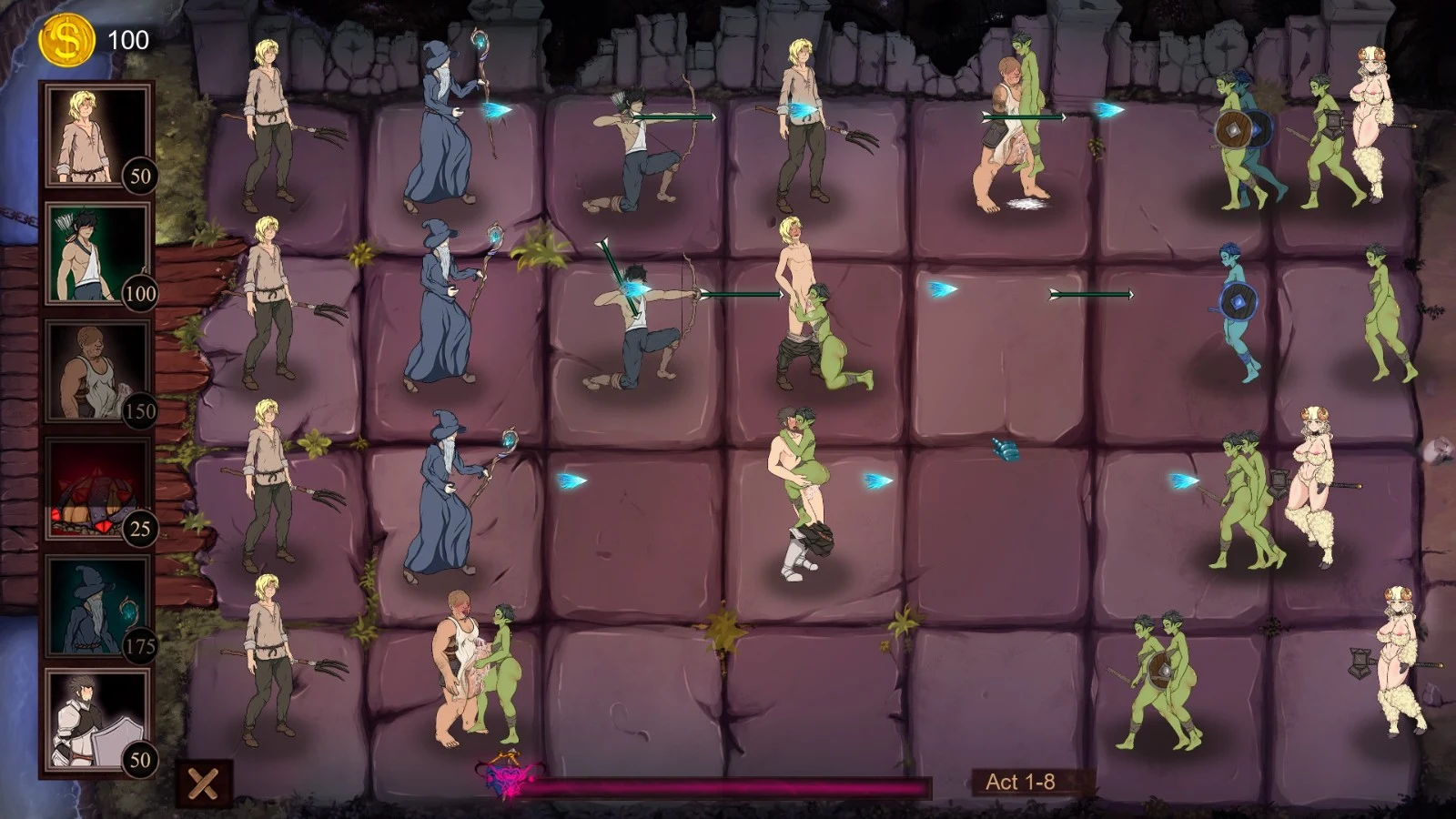
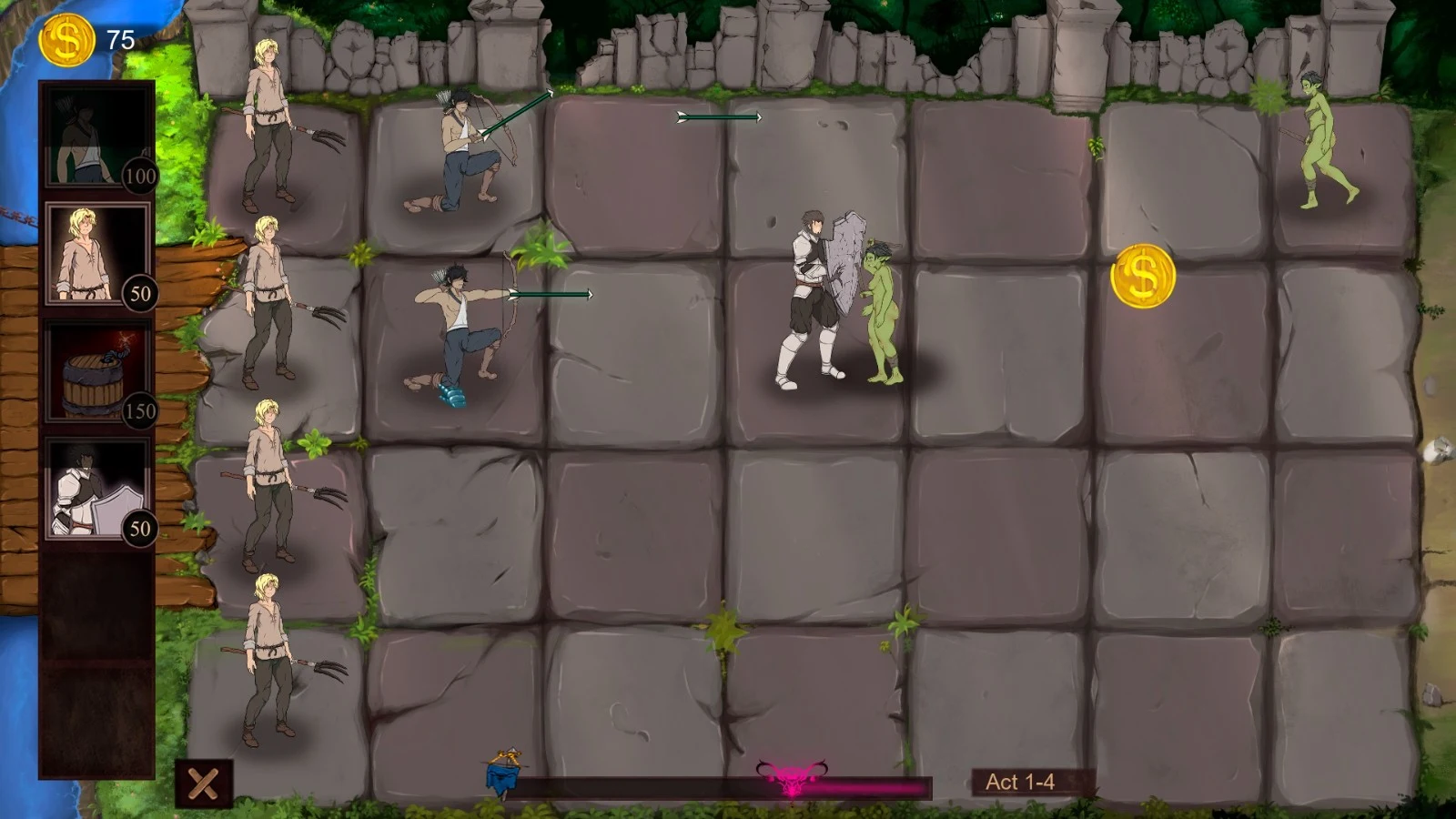
Monster Girl Assault! places you in the role of humanity’s last king, defending against invasions by deploying soldiers across different directions. The game combines lane-based tower defense with RPG-style combat, giving each level both an immediate positioning challenge and longer-term progression. Starting coins are limited, so early decisions matter: players must establish a workable defense, collect coins dropped during attacks, and use those resources to improve their forces. As new monster girls and tougher encounters appear, upgrading warriors and adapting the formation become central to completing later stages.
Building a defense with limited resources
The defensive structure is built around deciding where to place available soldiers and how to reinforce vulnerable directions. Coins earned during a level can be put back into the defense, allowing the player to expand or strengthen the formation rather than relying only on the initial deployment. This creates a straightforward tactical loop: establish coverage, respond to incoming attacks, gather dropped coins, and invest those gains before the next threat becomes overwhelming.
Real-time combat and varied abilities
Alongside its tower-defense foundation, the game describes real-time battles involving attacks, dodges, and skill combinations. Monster girls have different specialties, including healing, elemental magic, and physical strength, so encounters are not presented as identical exchanges. Boss fights are intended to require quick decisions and changes in strategy during the battle. This combat layer gives the defensive planning a more active counterpart, particularly when a powerful enemy demands a different response from the usual formation.
Progression through equipment and bonds
Experience points support level progression, while weapons, armor, and magical artifacts can be upgraded to improve a character’s capabilities. The game also includes hidden skills that become available through bonding with monster girls. These systems connect combat performance with longer-term development: successful encounters provide experience and opportunities to improve equipment, while character relationships can open additional abilities rather than serving only as a visual element.
Exploration and story choices
Exploration extends beyond the individual defense stages. The listed environments include enchanted forests, haunted ruins, and celestial towers, with hidden treasures and secret quests available to discover. Random events can present choices that affect the storyline, adding a decision-making layer to the progression. The combination of different locations, optional discoveries, and branching event outcomes gives the game more variety than a sequence of identical defensive battles.
Enemies, animations, and development notes
Different monster girls receive individual defeat CGs and animations as levels are completed. The source also describes enemy-specific animations and changes as enemies take damage. The changelog records a final boss for the third act, the addition of the Succubus enemy, an increased Knight passive damage return from 30% to 70%, and a fix for that ability not working in Act 3. It also notes a fix for an Android crash when losing to the Vampire boss, changes to the wizard’s attack sound, and other bug fixes.
Difficulty and reported issues
Player feedback describes the game as challenging, particularly for people unfamiliar with its tower-defense style, while other comments praise the animations and the variety of enemy defeat scenes. One player reported that stage 1-6 did not complete after all enemies had been defeated on an early playthrough and needed to be replayed. This is a player-reported issue rather than a stated limitation of every version, but it is relevant context when considering the available feedback.