
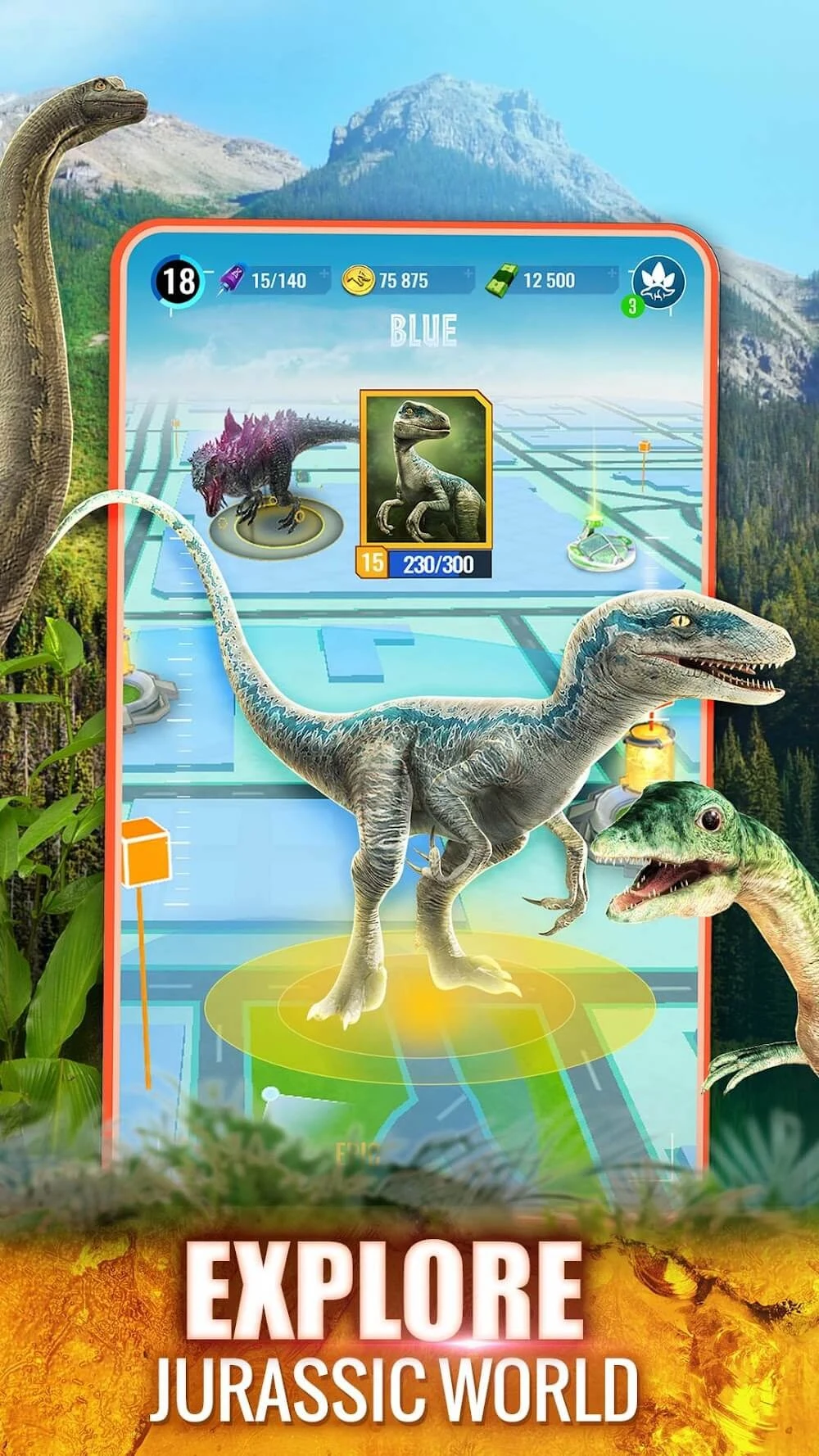
Jurassic World Alive is a casual dinosaur simulation and collection game built around exploring a map, gathering DNA, and creating a team for battles. Players encounter dinosaurs in real-world locations, use collected samples to develop new creatures, and work toward completing a dinosaur encyclopedia. The game combines location-based discovery with laboratory creation, team building, turn-based combat, and events that add new collection goals.
Exploring the map and collecting DNA
The main play loop begins with exploring the game map in search of dinosaurs and resources. When a dinosaur appears, players can use darts to collect DNA samples. The source describes aiming and firing repeatedly during these encounters, while also noting that DNA becomes increasingly important as dinosaurs advance. Nearby encounters can appear even when a player is stationary, although moving around the map is useful for finding additional content and loot boxes. Locations such as landmarks, parks, and areas with larger crowds are identified as places where players may find more activity.
Collected DNA supports several parts of progression. Players can use it to create new dinosaurs, strengthen existing ones, and improve their abilities and traits. The game includes more than 200 dinosaur species according to the supplied description, with creatures presented using detailed animations. This collection system gives exploration a direct connection to laboratory development and team preparation.
Creating, evolving, and combining dinosaurs
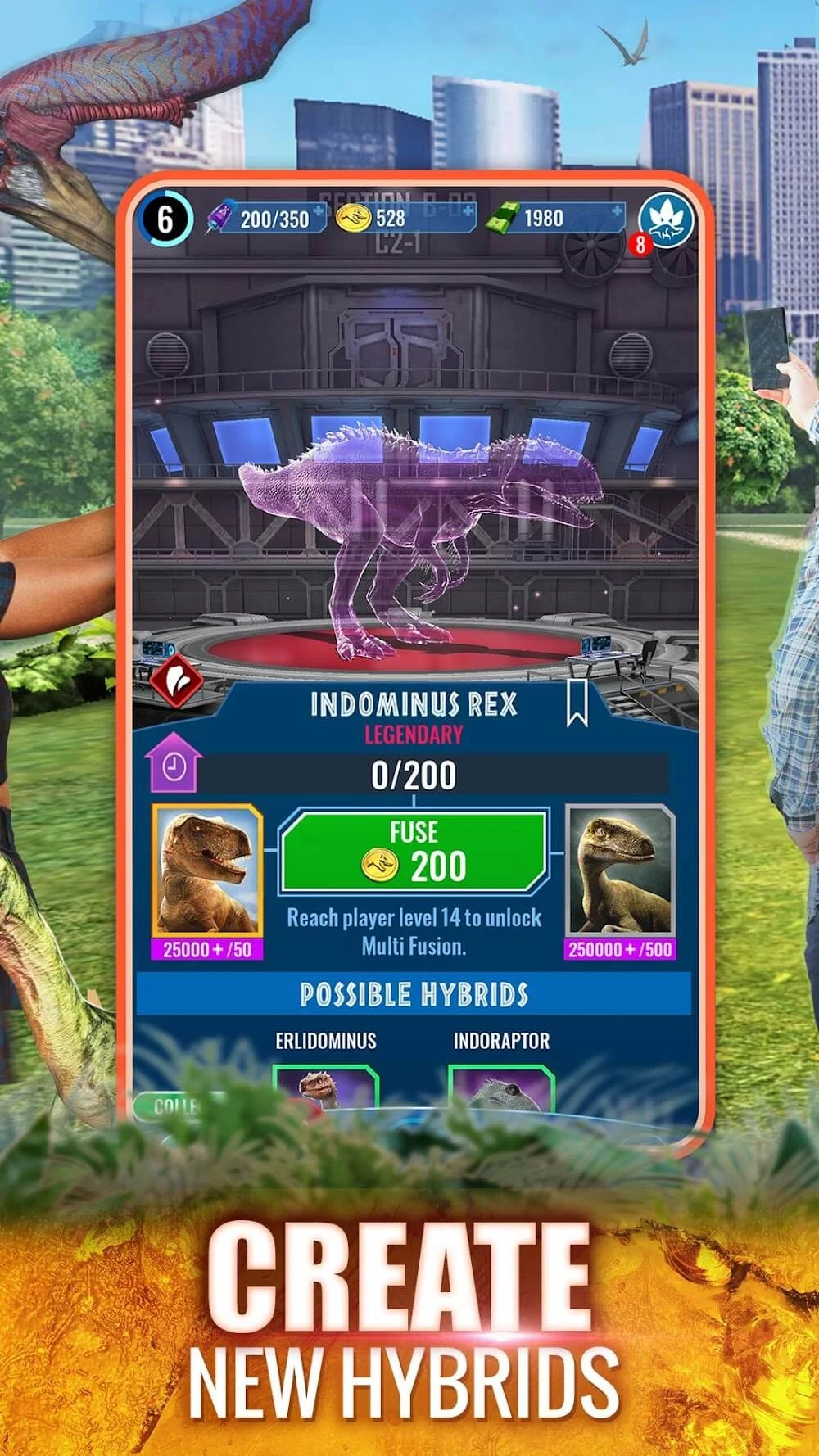
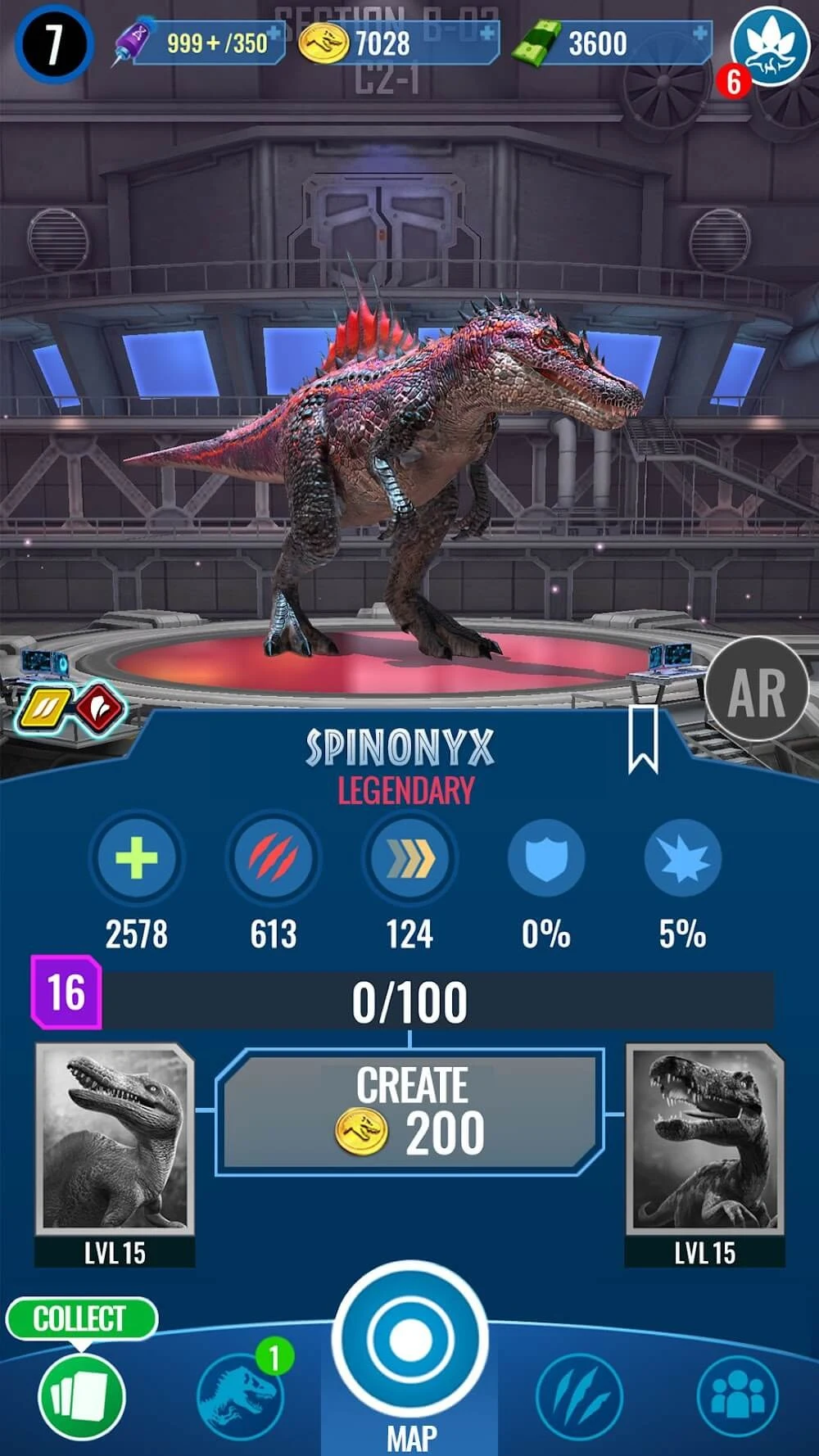
Jurassic World Alive includes a laboratory-focused creation system. DNA from different dinosaurs can be used to create species, including combinations that produce creatures not previously available in the laboratory. Players can evolve dinosaurs to increase their strength and can fuse eligible creatures to pursue rarer or Legendary dinosaurs.
Research also contributes to development. Players can investigate genes to improve dinosaur abilities and characteristics before assigning the resulting creatures to a battle team. Because DNA is needed for creation, evolution, and fusion, encounters in the wild and rewards from in-game boxes both contribute to the same progression system. Building a stronger collection therefore involves deciding how to use limited samples across new species, upgrades, and combinations.
Team building and turn-based PvP
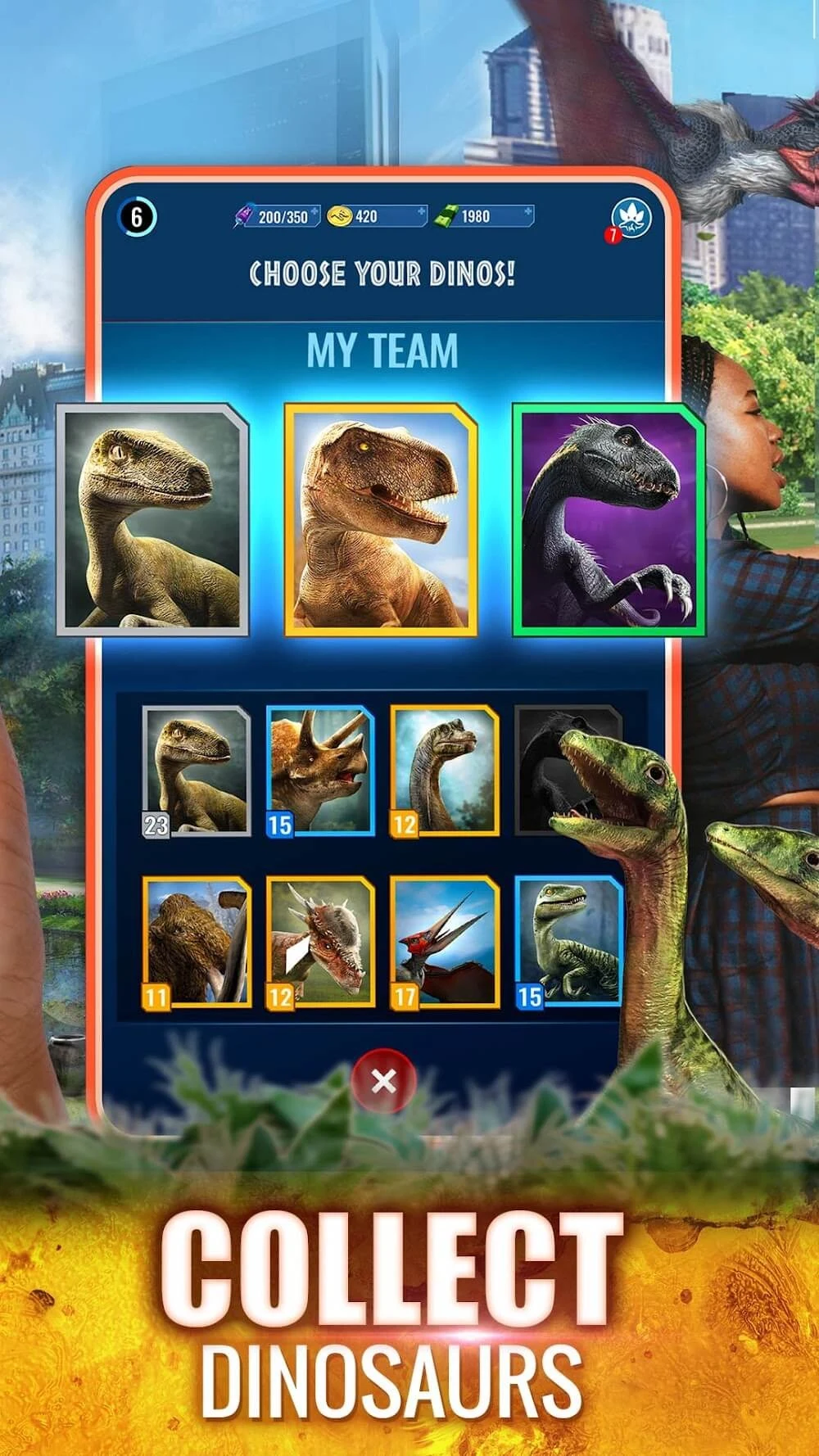
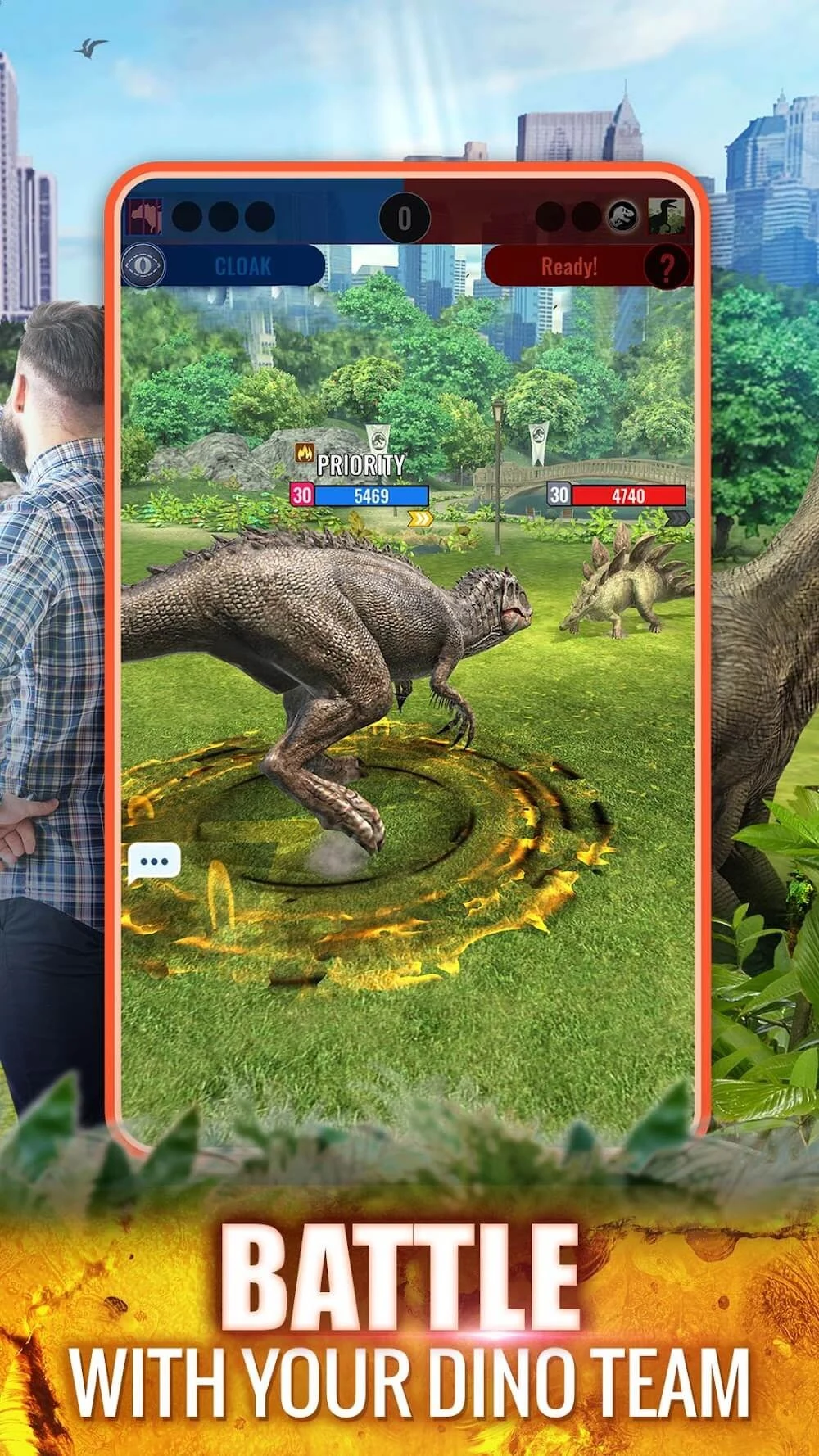
Players assemble dinosaur squads and assign creatures to different positions based on their characteristics. Battles against other players are turn-based, requiring choices about moves and the use of each dinosaur's abilities rather than relying only on collection size. The supplied information describes PvP matches against players worldwide, with victories providing rewards, raising rank, and opening further opportunities for dinosaur upgrades.
Team composition is connected to the development systems: evolving a dinosaur, researching its genes, and selecting creatures with different characteristics can all affect how a squad is used in battle. The objective is to choose suitable dinosaurs and tactics while working toward stronger and rarer members of the collection.
Events, quests, and community activities
Daily and weekly events provide additional objectives and can award special rewards, bonuses, and useful items. Missions and quests give players tasks beyond ordinary map exploration and collection. The game also features community activities that connect regional dinosaur availability with trading and cooperation.
The documented Continental Commons events distribute certain Common dinosaurs to specified real-world continents for limited periods. The supplied changelog describes a Megaraptor event for Europe, an earlier Centrosaurus release across North and South America, and planned distribution for Asia and other regions. It also describes a community objective involving Megaraptor DNA, with players droning, caring for, sharing, and trading creatures to reach shared milestones. These details show how some collection goals can depend on location, coordination, and exchanges with other players.
AR presentation and social features
Augmented reality features allow players to place virtual dinosaurs in real-world surroundings and capture screenshots or videos of them. These images and videos can be shared through social media. The game also describes community interaction through connections with other players, discussion, shared experiences, gifts, alliances, and dinosaur trading. These features extend the collection beyond the personal encyclopedia by giving players ways to present creatures and cooperate on event objectives.
Membership, GPS, and ongoing content
The core game is described as free-to-play, with an optional membership priced in the source at $9.99 per month. The membership is presented as providing additional benefits and increased rewards. The game uses GPS in the background for its location-based features, and the source warns that this can reduce battery life. Players may therefore need to manage device settings while using the map and encountering dinosaurs.
The supplied changelog states that new dinosaur species, events, and regional collection activities are planned over time. Together with the existing encyclopedia, research, quests, and PvP progression, these additions give the game several connected ways to collect DNA, develop dinosaurs, and compete with other players.