


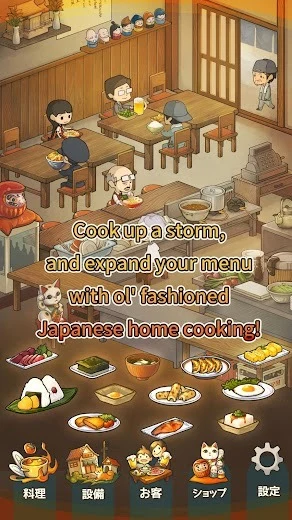
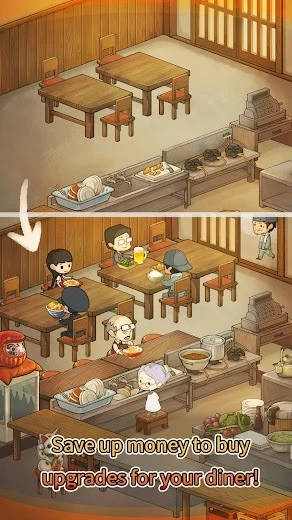

Hungry Hearts Diner is a restaurant simulation about preparing traditional Japanese food and serving customers in a small diner on the outskirts of a city. Players work with an elderly couple who run the modest restaurant, handling food preparation while meeting patrons whose experiences and memories become part of the game’s narrative.
Preparing dishes in the diner kitchen
The central activity is cooking a range of meals for restaurant visitors. The documented dishes include rice balls, dumplings, and tempura, along with other traditional Japanese foods. The source also describes kitchen actions such as chopping vegetables and cooking meat on a griddle, giving the preparation process a tactile, everyday character rather than presenting the diner as a fast-paced food service challenge.
More dishes become available as progress continues. The game also introduces players to traditional Japanese food and cooking techniques through its focus on familiar recipes. The available information does not explain exact preparation sequences, timing rules, scoring, or recipe requirements, so the cooking system is best understood as a progression-based collection of dishes rather than a set of documented precision challenges.
Serving customers and hearing their stories
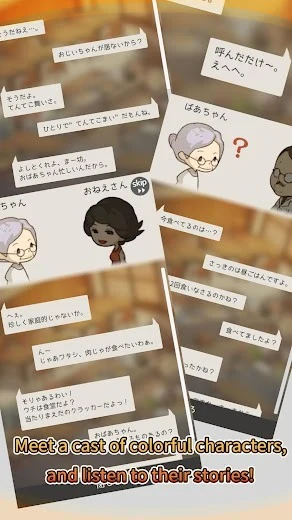
Customers arrive with different backgrounds, problems, and life experiences. Serving them connects the food activity with the game’s narrative: patrons come to eat, then may talk about their successes, failures, memories, or difficult pasts. The source presents these conversations as a continuing part of the restaurant experience, with each customer associated with personal stories and memorable food.
This structure makes the diner more than a place to prepare meals. The elderly woman who manages the restaurant listens to customers when she is not occupied, while the food provides the setting for conversations to unfold. The game describes these encounters as including emotional moments, surprises, and plot developments, but it does not specify a branching dialogue system or player-controlled story outcomes.
Managing work around the elderly owner
The restaurant is operated by an elderly couple, with the woman taking orders, making deliveries, and talking with customers while the man works in the kitchen. Another story description places the older woman at the center of the restaurant while her husband is in the hospital. Together, these details frame the player’s activity around helping an aging household maintain its family business.
The source specifically notes that long-distance food orders can use more of the older woman’s energy and that customers may wait longer when she is away. It also describes a grocery-shopping task that introduces players to new non-player characters. These details connect errands and deliveries with both the restaurant’s daily operation and the introduction of additional stories.
Food as a path into the narrative
Some story material links particular dishes with nostalgia and personal memories. The source also mentions bringing warm bowls of miso soup to strangers as a way to begin conversations. This presents cooking and serving as the route through which players encounter characters, rather than treating recipes as an isolated minigame separate from the plot.
The narrative follows an elderly woman caring for the restaurant and includes the customers’ individual histories, as well as unexpected turns in the plot. The available description does not identify a precise chapter structure or state how many story episodes are included, but it consistently presents continued service as a way to learn more about the people visiting the diner.
A quiet Showa-era setting
Hungry Hearts Diner takes place in Japan during the Showa era, in a small restaurant located in an unnamed town. The setting emphasizes ordinary routines: cooking at the stove, listening to kitchen sounds, serving villagers and passersby, and making space for conversation. Background sounds such as chopping vegetables and meat sizzling on a pan are specifically highlighted as part of the atmosphere.
Rather than describing frantic action or imported fast-food service, the source presents the game as a gentle change of pace centered on traditional dishes, regular customers, and a modest family business. Its documented appeal comes from the connection between preparing food, assisting with the diner’s work, and gradually encountering the personal stories associated with the people who visit.