

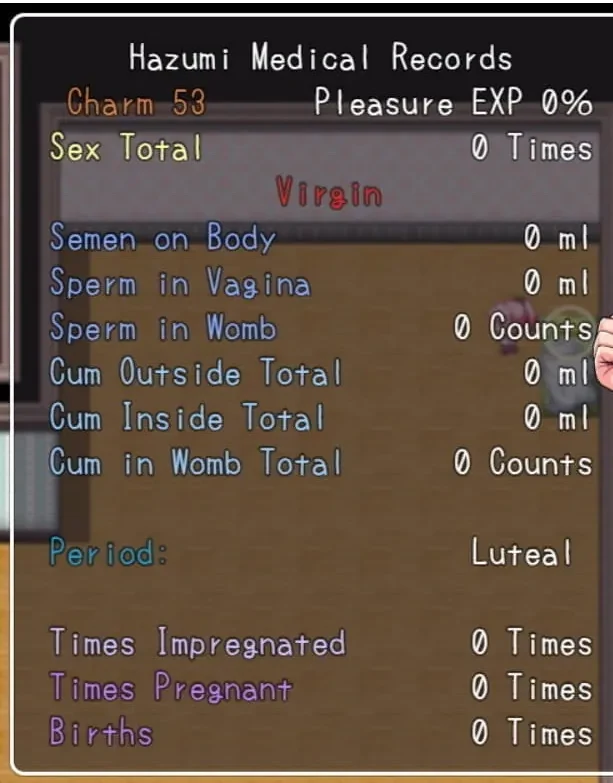
Hazumi and Pregnation places players in control of a mature protagonist navigating difficult personal circumstances, relationships, and the recurring pregnancy and childbirth cycles that drive story progression. The title functions as a choice-driven life simulation for consenting adults, focusing on character development and measurable consequences rather than explicit imagery. Early scenes establish the stakes and introduce the core systems used to balance work, personal needs, and social pressures throughout each chapter.
Narrative Decisions and Relationship Systems
Gameplay centers on selecting dialogue responses that steer immediate outcomes and longer-term effects on financial stability and social reputation. Resource management and daily scheduling interact directly with relationship metrics such as trust and affection, determining which new story branches become available. Pregnancy cycles function as structural progression tools that alter Hazumi's available activities and shift family dynamics over time.
Touch Controls and Daily Scheduling
Interactions rely on simple menu navigation and clear on-screen prompts suited to short or extended sessions. Players tap to choose dialogue options, swipe through journal entries, and open panels for inventory or relationships. Time-sensitive decisions around work shifts and personal needs are presented through event cards that keep the interface approachable while supporting deliberate planning across multiple days.
Chapter Progression and Branching Outcomes
Progress occurs through narrative checkpoints rather than traditional levels, with each chapter covering a series of days or weeks that contain specific goals. Successive pregnancies create structural changes to available scenes and character interactions. Completing objectives and managing relationships unlock new chapters, broadening the overall story without relying on a linear ladder system.
Customization, Visual Style, and Accessibility
Modest customization of wardrobe and domestic settings provides visual feedback tied to player choices and story results. The presentation uses illustrative portraits, atmospheric backgrounds, and readable text supported by occasional event art. Adjustable text size and high-contrast options accommodate varied players, while full offline functionality after installation removes any need for persistent connectivity. Branching narratives and multiple save slots encourage repeated playthroughs to explore alternate family structures and economic situations.
Challenge Through Resource Balance
Difficulty arises from the need to plan around changing constraints such as altered work availability and added family responsibilities introduced by each pregnancy cycle. The systems reward thoughtful trade-offs and provide clear feedback on the results of decisions, allowing experimentation across different paths while maintaining consistent consequences throughout the experience.