

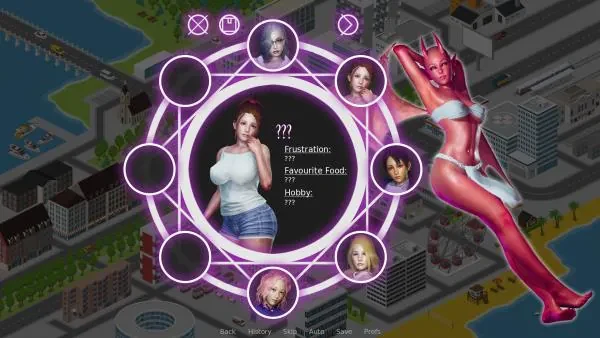


Frustration is a compact, story-driven game about a hero awakened after centuries of slumber and compelled to serve his Mistress. The central task is to guide this protagonist through narrative challenges, duties, and decisions shaped by his sudden revival and the unusual relationship at the heart of the story. Rather than focusing on expansive systems, the game centers on character drama, atmosphere, and moral choices. Players can explore themes of duty, memory, loyalty, and servitude while deciding how the hero responds to orders and faces the consequences of those choices.
What is the story of Frustration?
The game follows a singular hero who wakes after a long sleep and finds himself bound to serve his Mistress. This setup creates a tense and mysterious power dynamic, with the protagonist’s past, revival, and obligations forming the basis of the narrative.
The relationship between the hero and his Mistress gives the story its emotional focus. Encounters invite interpretation as the player considers what duty and loyalty mean within this master–servant arrangement.
How do choices shape the experience?
Frustration presents narrative challenges and moral choices that affect how the hero responds to orders. These decisions are connected to consequences, giving the player a role in shaping the protagonist’s conduct and understanding of his situation.
What kind of gameplay does it emphasize?
The game prioritizes atmosphere and storytelling over expansive systems. Its compact, character-led design focuses attention on the protagonist, his relationship with the Mistress, and the themes surrounding his awakening.
Who may find this game suitable?
Frustration may interest players who prefer focused, story-centric experiences built around character drama and interpretive themes. Its unusual premise offers a different kind of narrative hook, while the emphasis on duty, memory, loyalty, and servitude gives the player material to consider beyond the immediate events.
Public details about the game’s specific mechanics and length are limited, so the exact scope of the experience may be difficult to determine in advance. The master–servant theme is also specialized and may not suit every audience.