
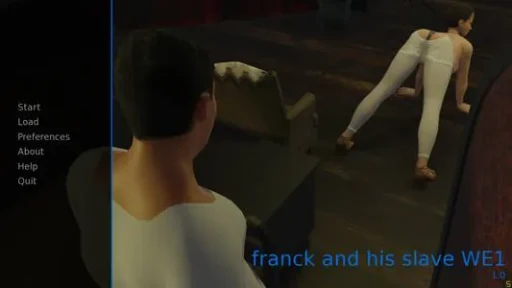
Franck and his slave is a compact, single-player narrative game about the evolving relationship between two central characters. Its main activity is reading scenes, observing details and choosing responses that influence conversations and later encounters. Short chapters reveal backstory and consequences while keeping sessions manageable for brief sittings. Rather than relying on action-heavy mechanics, the game builds its experience around mood, interpersonal tension and character reactions, making the unfolding relationship the central reason to continue through the story.
How do dialogue choices shape the relationship and story?
Each scene combines dialogue, environmental details and occasional interactive prompts. You select responses and decide how to guide encounters forward, with choices affecting conversations and potentially opening or closing subsequent scenes. Earlier decisions can also change the options available later. The resulting branching structure connects small decisions with shifts in relationship dynamics, additional scenes and alternative conclusions.
The challenge comes primarily from moral dilemmas and reflective decisions rather than intricate controls or inventory management. Some prompts are timing-sensitive, but these can be turned off to preserve a more leisurely reading pace.
What controls and reading settings can you adjust?
The touch-first interface uses taps to advance text, on-screen buttons for choices and swipe gestures to navigate chapters or skip text you have already read. A compact display provides scene progress and basic context cues. Long-press and hold options let you review recent dialogue, helping you refer back to an exchange before continuing.
Reading preferences include adjustable text size and speed, subtitle toggles and a contrast-friendly interface mode. Content warnings and a scene-preview toggle provide ways to manage exposure to sensitive themes. Together with the option to disable timed prompts, these settings give players control over both presentation and pacing.
How do chapters, saves and replay options work?
Progression follows short, self-contained scenes that unlock sequentially, with clear entry and exit points for each episode. The game autosaves at scene boundaries, while a chapter map lets you revisit particular encounters and return to choice points. This structure supports stopping between scenes and exploring different decisions on later playthroughs.
Replay content includes alternate dialogue branches, endings and character details tied to your choices. Optional unlockables add scene variations and context notes, rewarding exploration without requiring external online features. The progression centers on discovering narrative differences rather than grinding through repeated tasks.
What gives the scenes their atmosphere?
The presentation uses restrained color palettes, character portraits and moody backgrounds to reinforce the story’s tone. Close-ups and conversational framing draw attention to facial expressions and body language, keeping the focus on the two central figures. Subtle animation, layered sound design, ambient audio and understated sound cues support the emotional mood of individual scenes rather than shifting attention toward spectacle.
Who is this offline narrative game suited to?
The game is designed for offline single-player play, so the story does not require a continuous internet connection. Its mobile-focused design emphasizes a compact installation, short transitions between scenes and a simple control scheme. The source does not provide a specific installation size or minimum Android version.
Players interested in character studies, consequential conversations and replaying scenes for different reactions may find its structure useful. Brief episodes accommodate shorter sessions, while the reading controls support a slower pace. Its main rewards are narrative nuance, relationship changes and alternative outcomes, rather than action or traditional difficulty progression.