
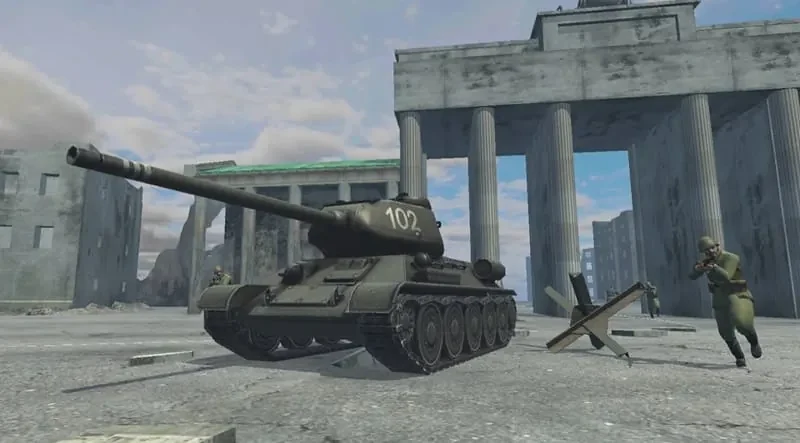
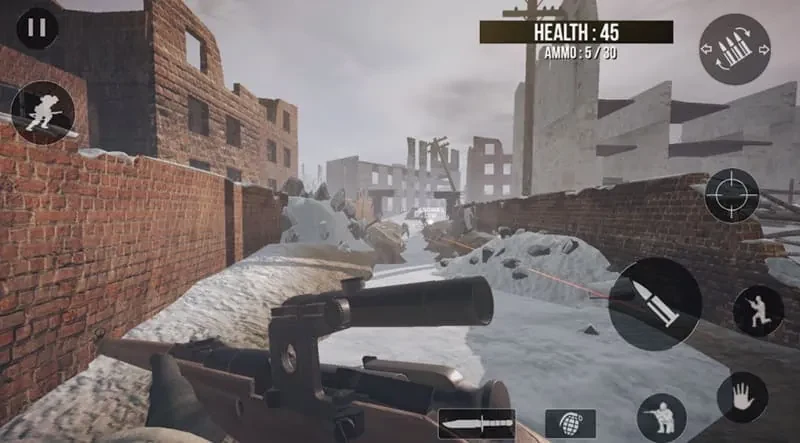
Europe Front: Remastered puts players in first-person combat across a historically themed mid-20th-century European theater. Its concrete focus is a series of mission-driven encounters rather than open-world exploration, including trench assaults, ruined-city fighting, reconnaissance patrols, and movement across frozen plains. Cover, positioning, situational awareness, and careful timing influence how engagements unfold, while cinematic lighting, dynamic physics, and layered sound create an atmospheric setting. The game presents Soviet and German forces in a fictionalized campaign context, using period-inspired equipment and tactical choices without presenting itself as a documentary.
Campaign missions with varied objectives
The single-player campaign is organized around focused missions with clear goals. Depending on the scenario, players may need to hold a defensive line, conduct a stealth reconnaissance, or extract a squad under fire. Levels are relatively compact, keeping attention on the immediate operation rather than broad exploration. Layered objectives can create different moments within the same mission, and choosing a flanking route instead of a frontal assault may affect the immediate difficulty and the resources available.
Weapons, cover, and battlefield decisions
Weapons have different handling characteristics, so bolt-action rifles, submachine guns, sidearms, and melee tools do not behave identically. Recoil, reload timing, and effective range all contribute to how equipment is used. Grenades and environmental hazards add further choices during an encounter, while destructible cover, debris, and projectile physics influence the battlefield. Combat can move between intense close-quarters exchanges and slower engagements where preparation, leaning, cover, and reload timing matter as much as accuracy.
Touch controls and adaptable settings
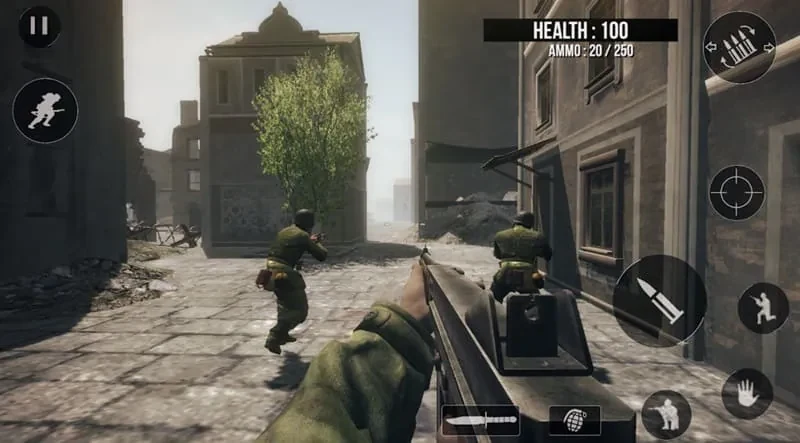
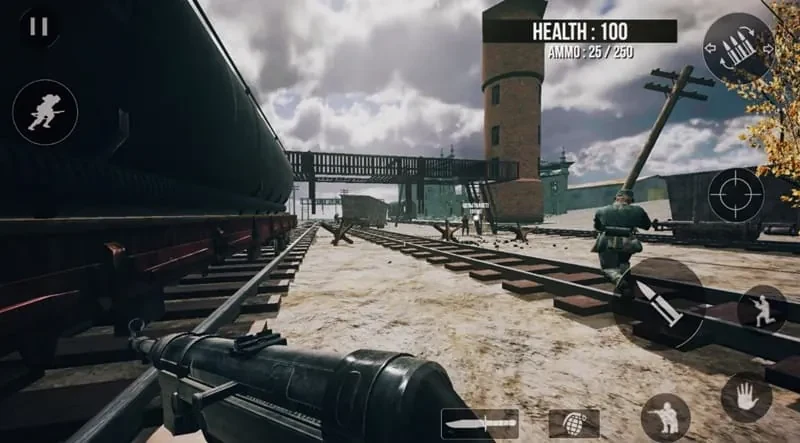
The control system is designed for touchscreen play and includes contextual on-screen controls, a configurable HUD, and sensitivity sliders for aiming and camera movement. Players can use a single-thumb navigation style or a two-thumb scheme, and adjustable aim-assist settings provide another way to balance accessibility and challenge. Mission briefings outline objectives and recommended gear, while in-mission indicators keep important information visible without filling the screen with unnecessary detail.
Mission-based progression and loadouts
Progression follows the campaign mission by mission. Completing primary objectives and optional secondary tasks can unlock new loadouts, weapon attachments, and incremental equipment-related stat improvements. Advancement is earned through gameplay and mission replay rather than online tiers or battle passes. Loadout selection lets players balance mobility, protection, and firepower, while cosmetic weapon options and minor visual upgrades provide additional personalization without changing the core balance. Attachments can affect recoil patterns, sighting options, and magazine capacity within the single-player framework.
Replayability and challenge options
Multiple mission variants and difficulty tiers provide reasons to revisit completed operations. Higher challenge settings can change enemy behavior, resource scarcity, and objective constraints. Optional modifiers are available for players who want more demanding tactical situations or practice with particular skills, such as stealth movement and long-range engagement. A mission challenge system records goals related to time, accuracy, and completion style, with successful runs providing additional equipment options and in-game recognition.
Atmosphere, accessibility, and offline use
The visual style aims for cinematic realism through lighting, weather effects, ruined architecture, supply caches, and other environmental details. Audio logs and carefully designed soundscapes reinforce the period atmosphere and can help players notice enemy movement or surrounding danger. Subtitle controls, color-contrast aids, adjustable control schemes, and aim-assist toggles are included for accessibility. The game is playable offline after installation, with saved progress stored on the device, so the campaign can be continued without network access.
Performance and suitable players
Performance presets allow players to reduce render detail and physics intensity on older hardware. Because the game uses detailed graphics and physics, performance may vary on low-spec devices, and lower presets may be useful if slowdowns occur. The game contains realistic wartime violence and is aimed at mature players who prefer tactical shooters with historical themes, focused objectives, and replayable single-player scenarios over arcade-style action.