


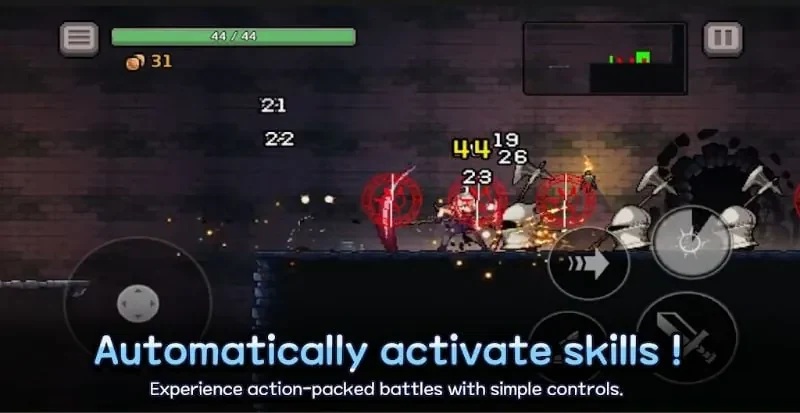
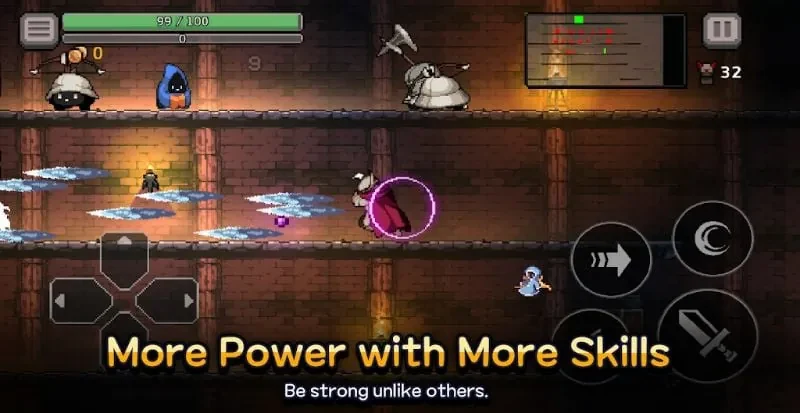
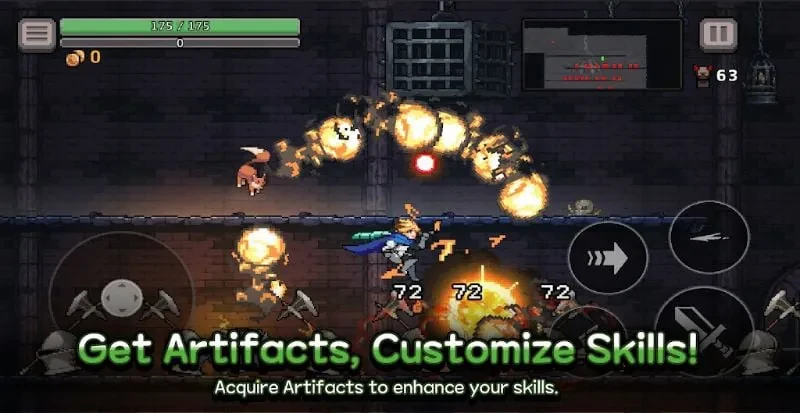
Dungeon Slasher: Roguelike places players in the role of a red-cloaked knight moving through torchlit prison halls filled with demons and youkai. The game blends classic 2D hack-and-slash combat with roguelike progression, creating repeated runs in which corridor layouts, enemy placements, and rewards change each time. This structure supports players who want mobile sessions that reward observation, timing, and resource decisions across multiple attempts rather than a single linear story. Gems serve as collectibles that fund upgrades, while weapons, armor, and pet companions introduce new options as runs continue, giving the experience steady forward momentum without demanding constant internet access.
Combat Mechanics and Enemy Encounters
Players enter rooms, defeat groups of foes, gather resources, and select upgrades that influence the remainder of the current run. Enemy types range from small nimble youkai to larger sentinels and sub-boss waves, each presenting distinct attack patterns that reward positioning and short combos. Special skills such as explosive strikes or dual-blade techniques add tactical choices during fights. A mini-map displays cleared rooms and nearby threats, helping players plan efficient routes through the interconnected prison complex.
Mobile Controls and Accessibility Options
Virtual movement and action buttons manage attacks, dodges, and skill activation, with context-sensitive prompts for interacting with items or pets. Sensitivity settings and button placement choices accommodate different hand sizes. Visual clarity and audio cues highlight incoming enemy attacks, while adjustable difficulty levels allow newcomers to ease into the systems and experienced players to retain the intended challenge.
Persistent Progression and Pet Companions
Gems and stones function as currencies that unlock abilities, enhance weapons, and improve pet performance between runs. Equipment upgrades add passive effects such as faster attack chains or higher critical chance, and cosmetic items like capes and hats follow the same progression. Pets provide varied support: some increase damage output, others collect currency or restore health, altering priorities between combat focus and exploration during a run.
Level Design, Visuals, and Replayability
Interlinked prison halls balance short action sequences with tense boss encounters. Randomized enemy placement and occasional dense sub-boss waves test crowd control and movement. Atmospheric medieval visuals feature torchlit corridors and stylized stonework that remain clear during play. The roguelike structure uses randomized rewards and equipment drops to keep sessions distinct, while skill gates and gem upgrades create long-term goals that require repeated runs. Boss fights scale in complexity and encourage learning attack windows, supporting continued play for players who value experimentation with gear and pet combinations.
Performance, Offline Access, and Session Length
Short pick-up-and-play runs suit brief mobile sessions, with organized menus and minimal load times. Most modes function without an internet connection. Graphic detail and frame-smoothing options help maintain performance across a range of devices, including older hardware, so players can focus on run strategy rather than technical interruptions.