

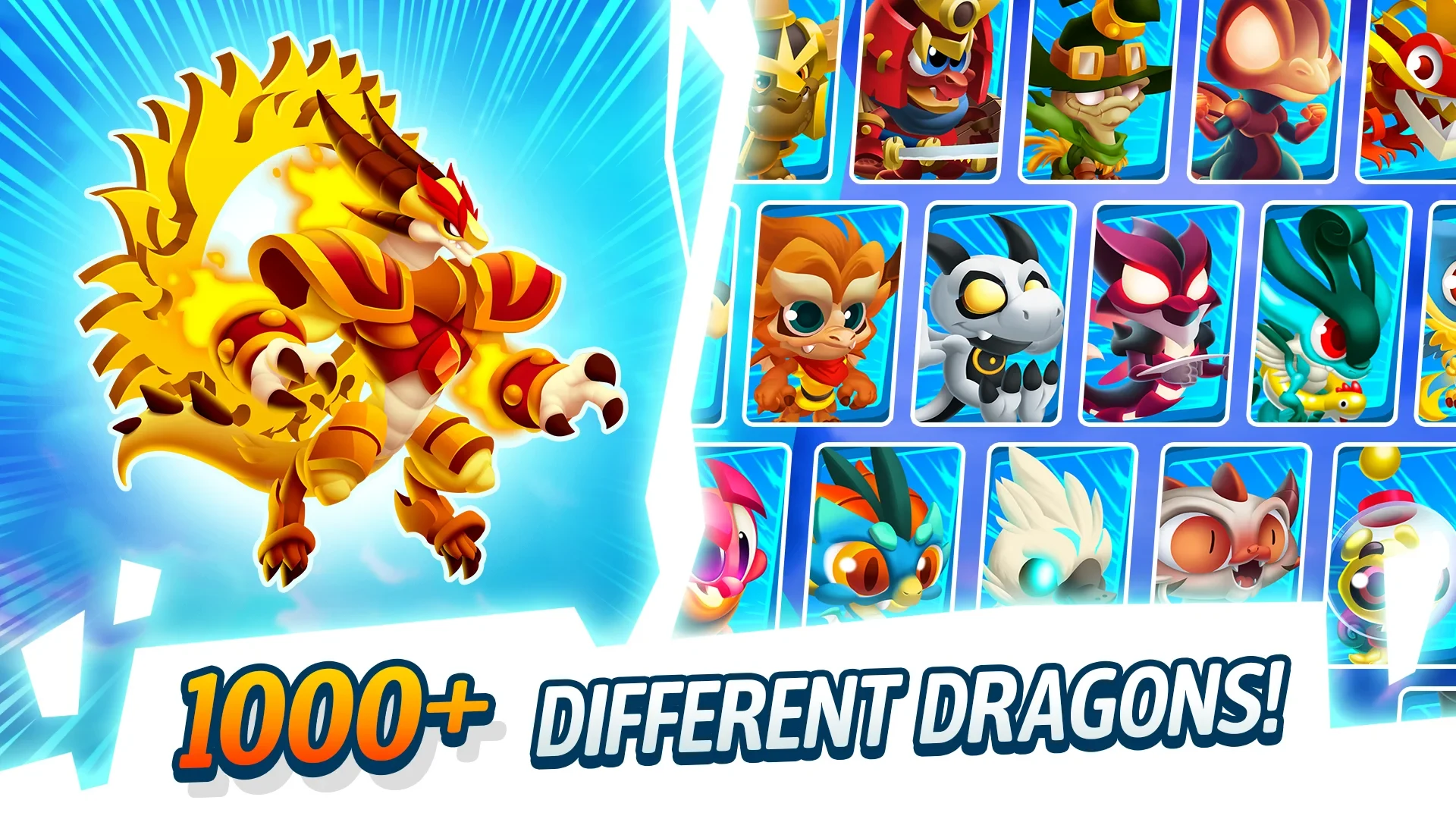
Dragon City:Mobile is a simulation game about building floating islands and raising dragons for collection, development, and battle. Players begin with dragon eggs, hatch them, provide food, and improve their dragons while expanding a city of habitats, farms, and support buildings. The city produces resources that connect construction with dragon care, while breeding, events, and battles provide additional ways to continue developing a collection.
Build a floating city for dragons
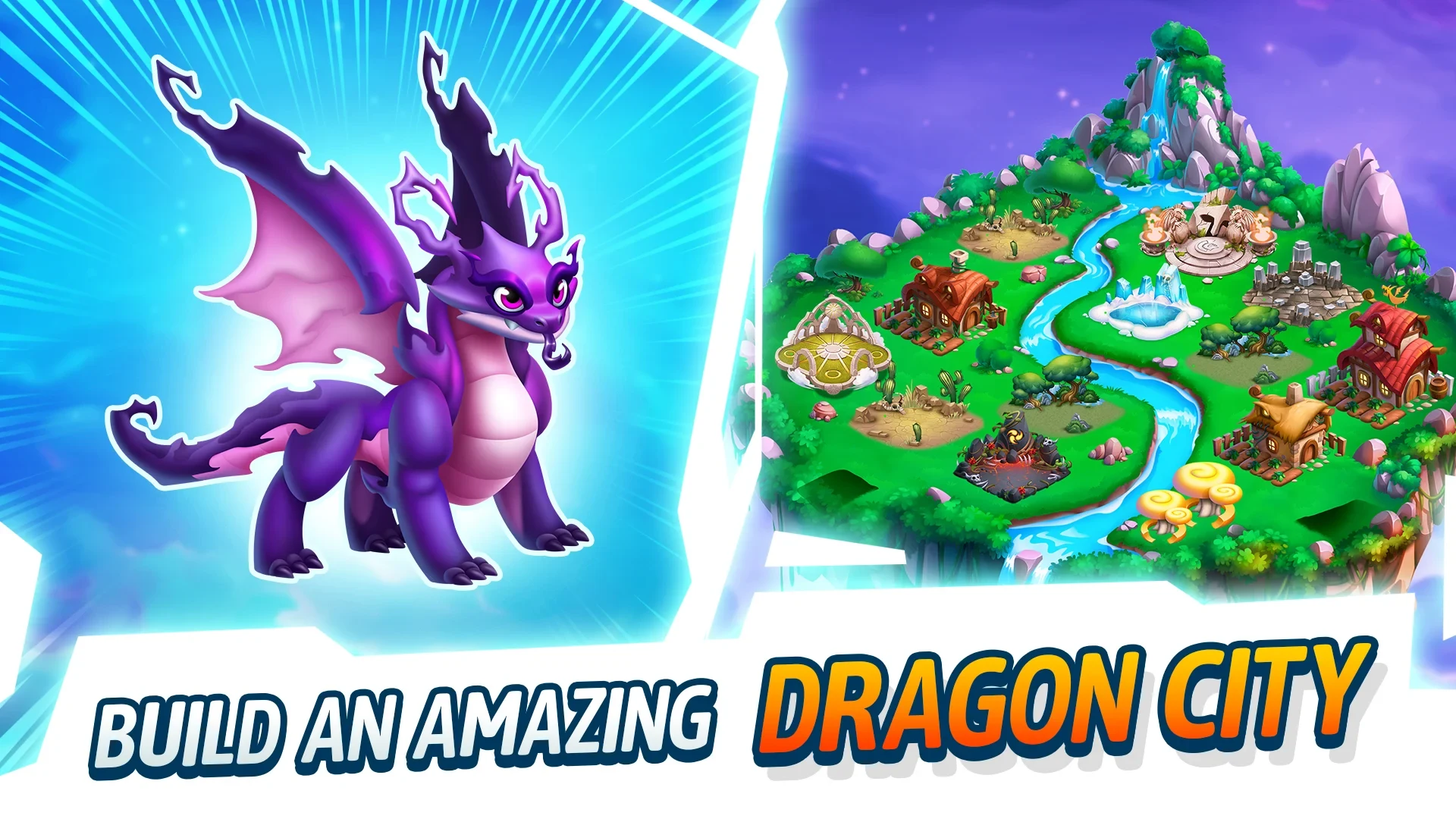
The city is arranged across floating islands with habitats and other buildings placed to support the dragon population. Dragons generate Gold, and that Gold can be used to buy and upgrade buildings and habitats. Farms grow Food, which is used to level up dragons. Raising a dragon can improve its strength, with the result affected by its rarity, and higher development can also increase the Gold it produces.
Structures can be rearranged, allowing the island layout to change as the city develops. Cosmetic skins are also documented as a way to personalize the collection. These building actions provide the management side of the game: habitats house dragons, farms supply food, and the resulting resources support further upgrades and care.
Hatch, feed, breed, and evolve dragons
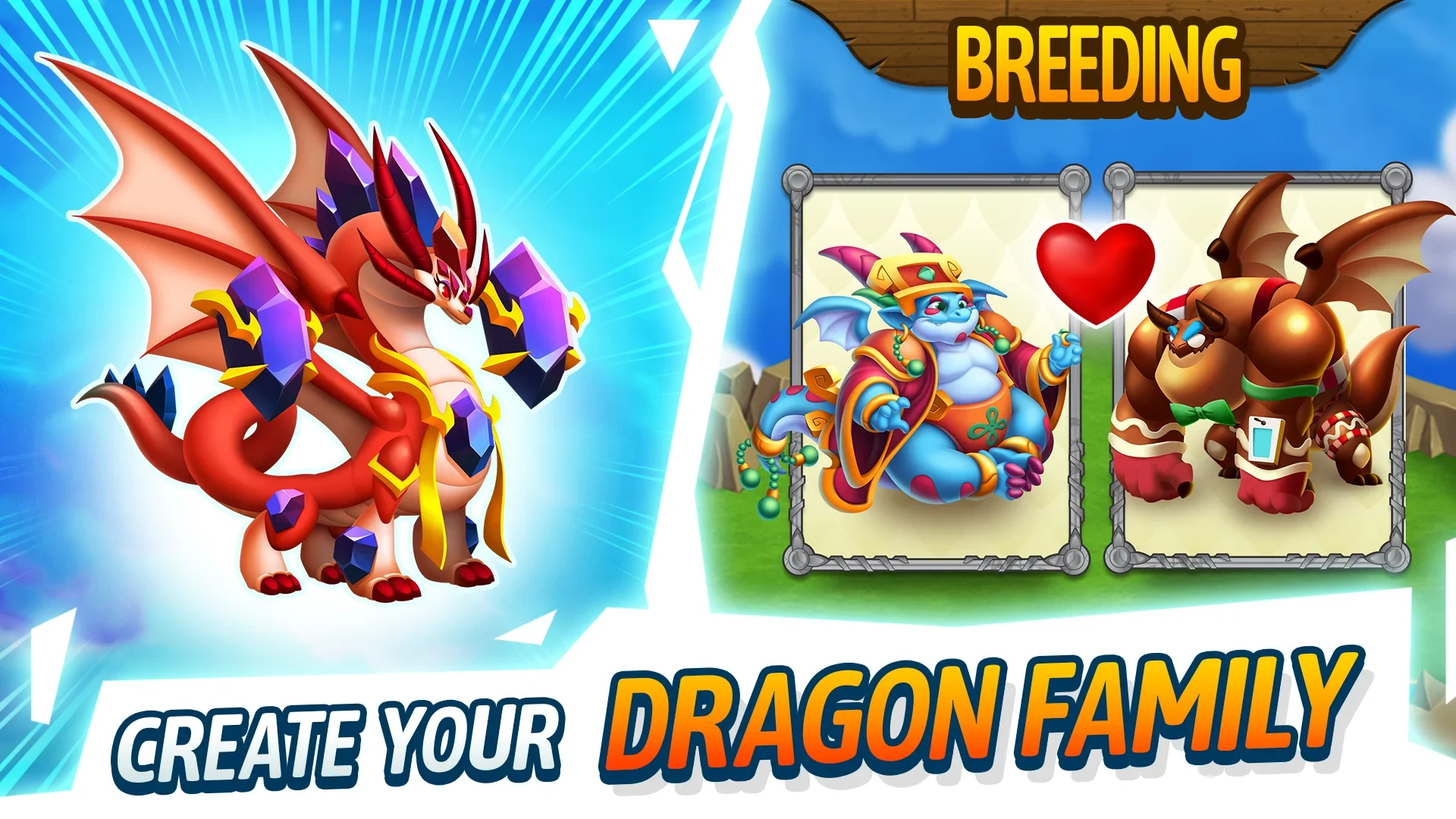
Dragon development starts with eggs that can be hatched into dragons with different elements and rarity levels. Feeding raises dragons through levels and improves their strength. Players can then continue developing their collection by combining dragons through breeding. Two dragons that are at least Level 4 can be bred together to produce a new hybrid dragon, and the resulting species and elements may vary.
The game documents 22 elements in total. Regular elements include Terra, Flame, Sea, Nature, Electric, Ice, Metal, Dark, Light, War, Pure, Legend, Primal, Wind, and Time. The Ancient World adds Ancient, Beauty, Magic, Chaos, Happy, Dream, and Soul. A dragon can have up to four elements and can learn moves associated with those elements, giving breeding and development a direct connection to the dragons used in battles.
Other progression systems are also referenced in the supplied information. Orbs can be collected to empower dragons through the Tree of Life, while the Guardian Dragon Towers and other special areas add further advancement objectives. The documented details do not specify every rule for these systems, but they are presented as additional parts of the broader dragon-development structure.
Use developed dragons in battles
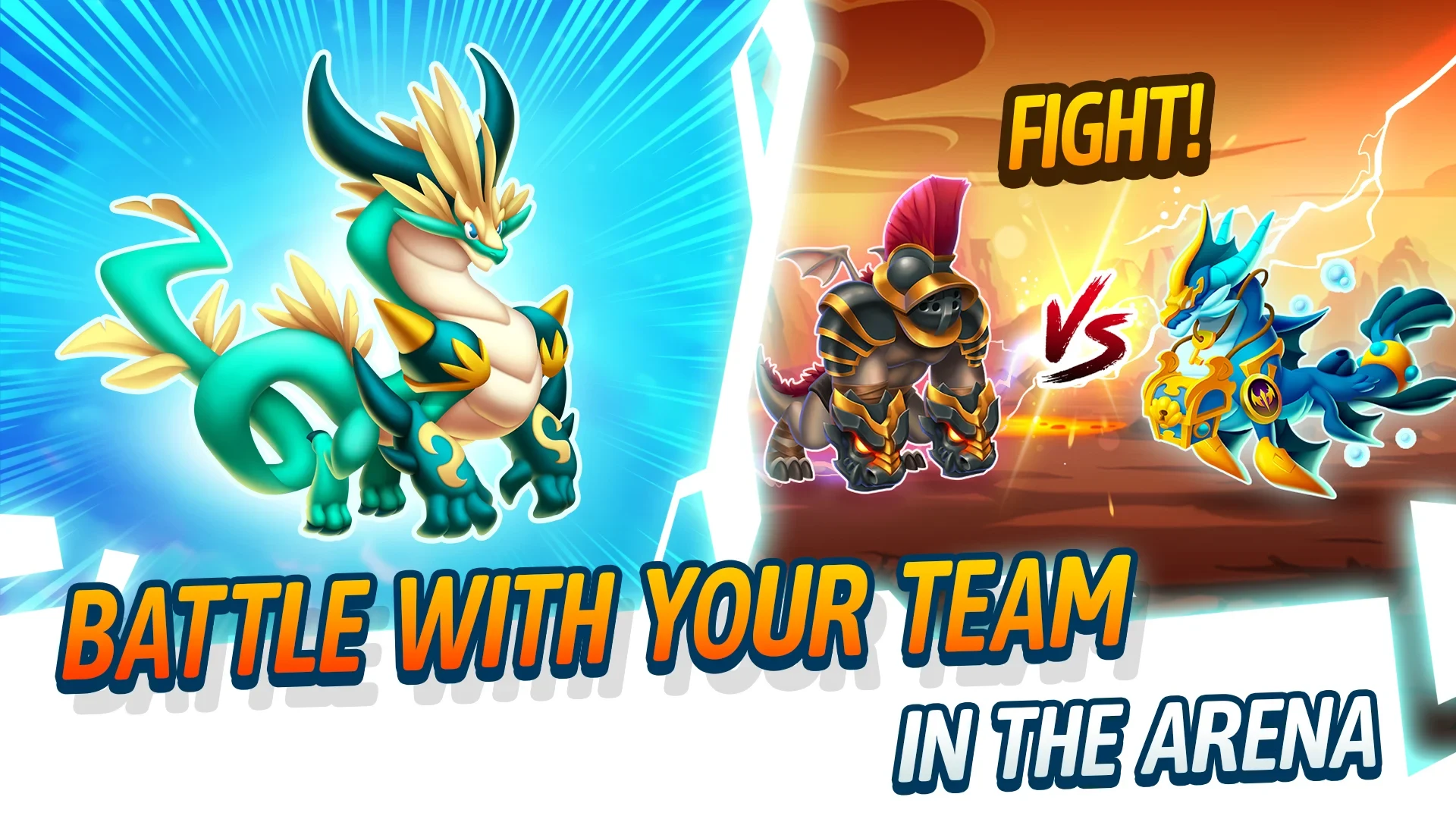
After raising dragons, players can take them into League Battles against other players' dragons. Battle results can provide resources such as Gems and Food, which can help accelerate further development. The source also describes PvP arenas, leaderboards, and rotating challenges, although the exact rules of each arena are not specified.
Dragon strength, elemental variety, and team selection all matter within the documented battle-focused progression. The supplied guidance refers to forming a strong team, understanding a dragon's weaknesses, and planning attacks around an opponent's weaker points. It also mentions live matches as a way to obtain a unique or rare dragon. These details describe the competitive objective without establishing a particular battle interface or turn sequence.
Take part in events and collection activities
Limited-time events provide another route to new dragons. Events can have different requirements for their rewards, and some are described as offering exclusive dragons. Quests and special maps are also listed as recurring targets for play, while rotating challenges and reward chests are associated with the competitive feature descriptions. Because each event has its own requirements, the available objective and reward can change between events.
Players can also join or create Alliances through the Trading Hub. The documented Alliance activities include chatting, trading Orbs, obtaining Alliance Chests, and exchanging shared gifts. These features connect individual dragon collection with group participation. The source states that coordinated activity can contribute to rewards, but it does not define a single required Alliance routine or a fixed cooperative battle format.
Enter the Ancient World at Level 27
Reaching Level 27 unlocks the Ancient World, a separate area with its own resource cycle. In this area, Gold can be exchanged for Crystals, including ruby, sapphire, topaz, emerald, onyx, and diamond. Mines provide these crystals, which can be used to summon and evolve Ancient Dragons.
The crafting station combines lower-tier crystals with Platinum to create better crystal tiers. Ancient Dragons generate Platinum in a way that is comparable to regular dragons generating Gold. The Ancient World contains six unique habitats, corresponding to the Ancient elements and their associated Ancient dragons. Each Ancient dragon has the Ancient element plus one regular element.
Ancient Dragons have a defined limitation: they cannot be used in combat or brought outside the Ancient World. This separates their summoning, evolution, habitats, and Platinum production from the regular dragon battle system. The result is a distinct later progression area rather than an unrestricted extension of the main combat collection.