

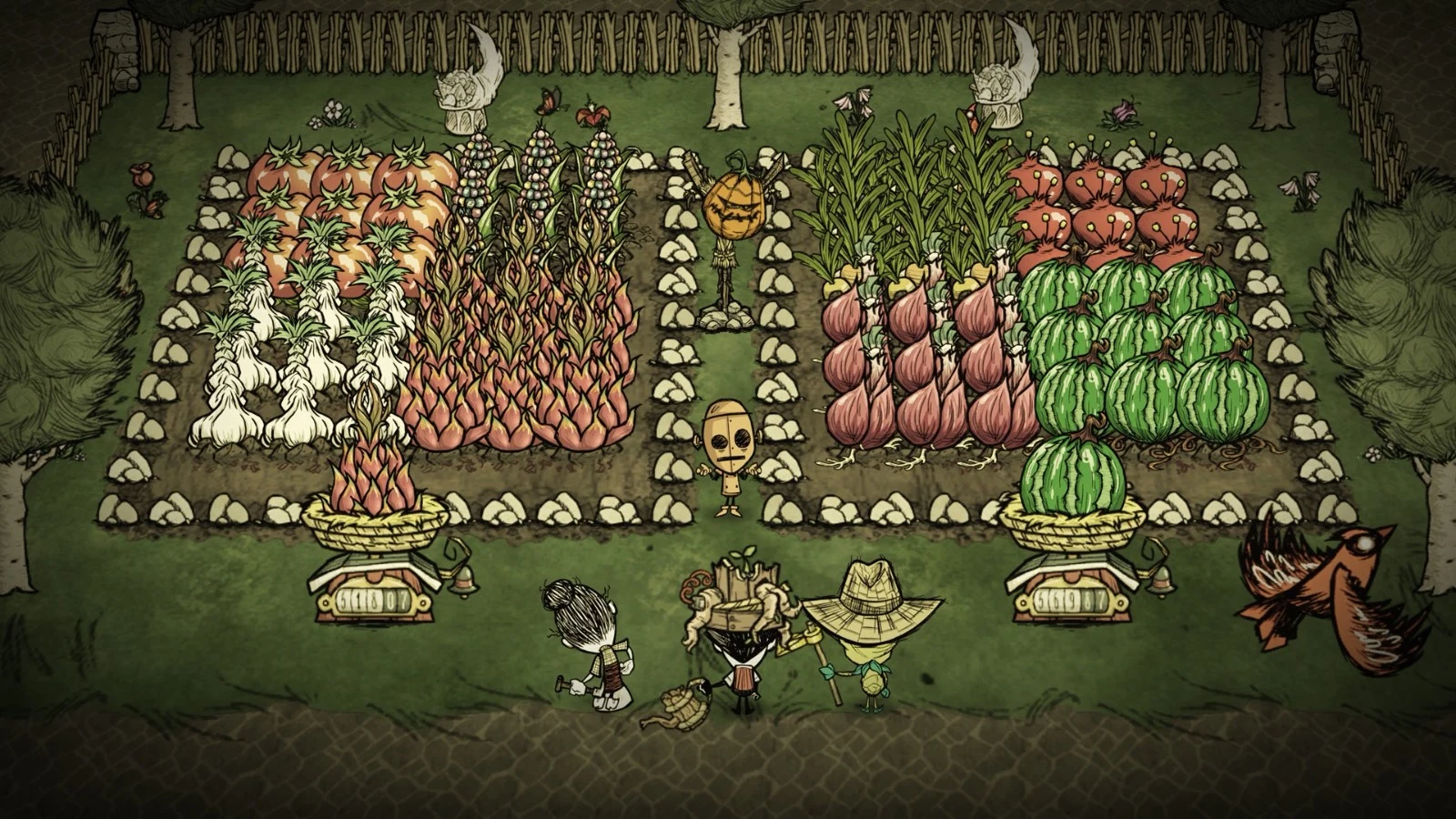
Don't Starve Together is a survival adventure game centered on exploring a randomly generated world, collecting materials, crafting useful items, and staying alive through changing conditions. Players manage hunger, health, and sanity while deciding how to spend daylight, where to establish shelter, and which resources to preserve for later. Characters also have distinct skills that can be unlocked with experience points, giving the roster documented differences without changing the game's central survival focus.
Managing survival statistics
Three statistics shape the basic survival loop: hunger, health, and sanity. The source states that death occurs when these values reach zero, so ordinary activities are tied to maintaining more than one condition at a time. Gathering food addresses the need to eat, while avoiding threats protects health. Remaining calm is also part of survival because sanity is treated as a separate value that must be maintained rather than ignored.
Resources are described as limited, which makes each decision consequential within a run. Food, firewood, and other generated materials are available for collection, but the source emphasizes careful management rather than unlimited access. Perishable food can be dried or preserved to extend its usable life, connecting food preparation with longer-term planning. The game therefore presents survival as an ongoing sequence of choices about what to collect, what to craft, and what to save.
Using the day-night cycle
The day-night cycle determines when different activities are safer or more dangerous. During the day, players can explore, gather food and firewood, and search the world for other generated resources. Recipes allow these materials to become crafted items, so daylight can be used both for movement through the world and for preparing equipment or supplies.
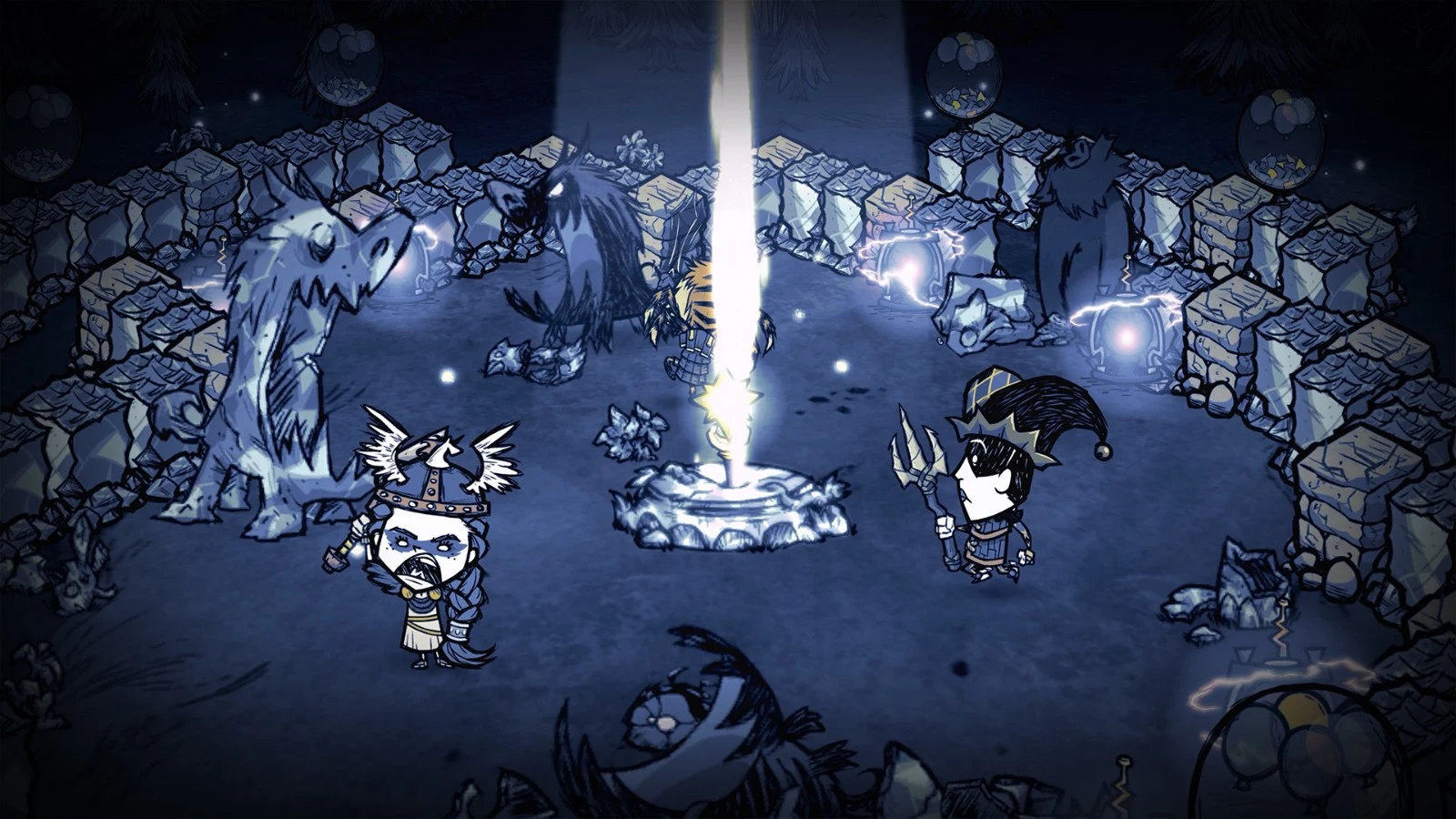
Night changes the immediate priorities. The source describes monsters and other threats appearing after dark, while darkness itself becomes dangerous. Players must build shelter and remain near light sources for protection. This creates a clear relationship between preparation and timing: exploration and collection take place in daylight, while shelter, fire, and other protective arrangements become important as night approaches.
Crafting, science, and alchemy
Crafting lets players create items for the survival process, from basic tools to more advanced equipment and structures. Axes, pickaxes, and shovels are specifically identified as early tools that help with gathering resources. The source also describes a Science Machine that enables research into advanced crafting recipes and structures. This gives the crafting system a documented progression from basic collection tools toward more developed construction options.
Alchemy adds another crafting-related layer. Players can brew potions that provide temporary boosts to a character or help fight certain threats. The source does not define the exact effects or recipes for these potions, but it presents alchemy as a way to prepare for dangerous situations. Crafting is therefore connected not only to gathering and shelter, but also to preparation for environmental and hostile challenges.
Exploring varied environments
The world includes different environmental biomes, with jungles, grasslands, and frozen lands given as examples. These areas are described as having their own characteristics, so exploration is not limited to a single uniform landscape. The world also contains secrets, rare items, and codes to discover according to the supplied description. These elements place discovery alongside basic survival: players search for resources while also investigating what the generated environment contains.
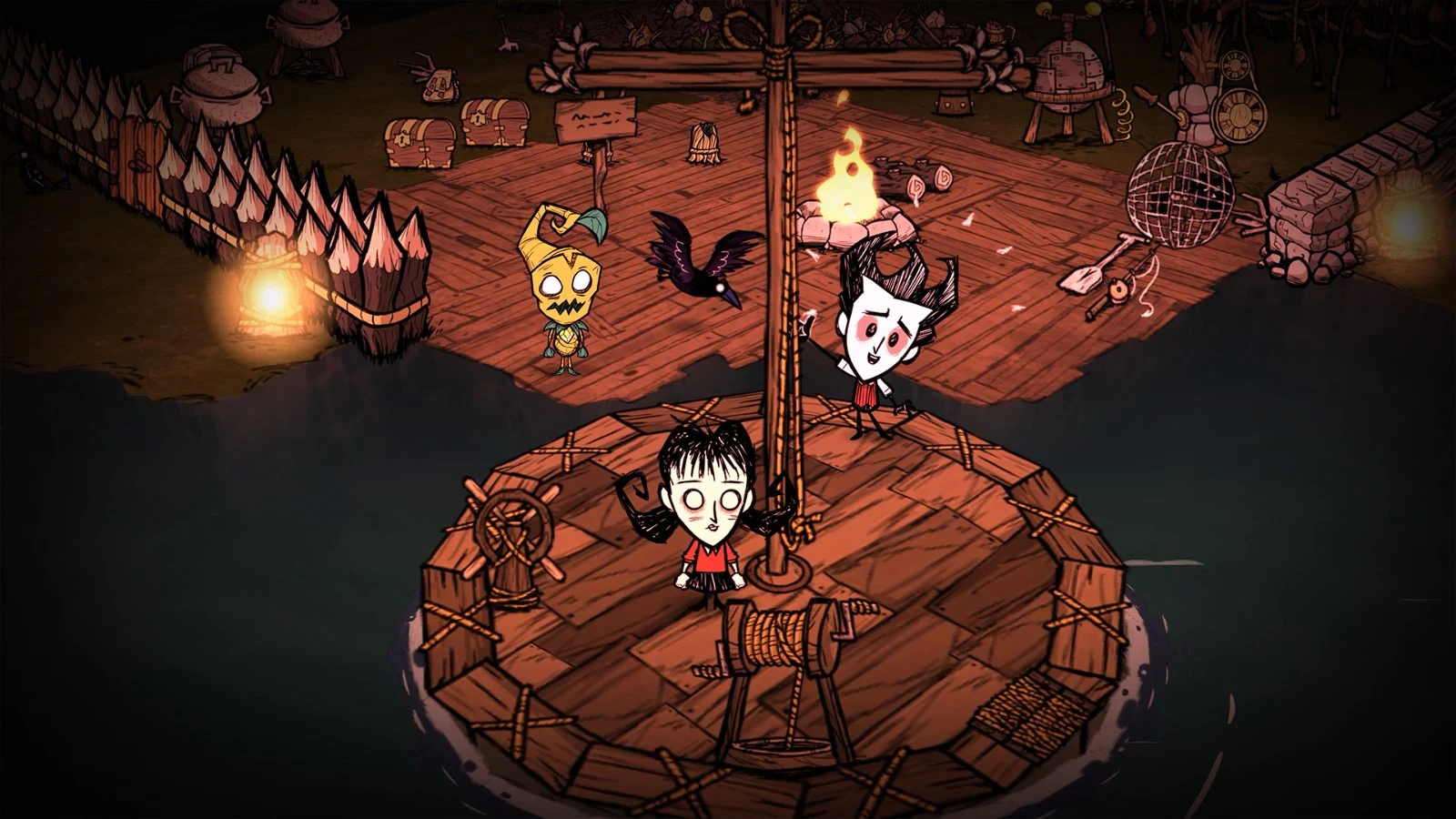
Travel and base placement are presented as practical considerations in the source. Players can note locations rich in particular resources and plan a camp that supports further exploration. A functional base can bring crafting stations, chests, and farms close together, making those facilities easier to access. These are documented planning approaches rather than guaranteed optimal designs, and their value depends on the resources and conditions encountered in a given world.
Seasonal conditions and preparation
Seasonal changes introduce additional environmental concerns. Spring is associated with gathering resources and planting crops, but rain may put out campfires. Summer brings intense heat and the possibility of wildfires; the source names summer hats and endothermic fires as preparations for the heat and warns that unchecked fires can spread toward a base.
Fall is described as a time to organize a harvest, preserve crops, and stock food for winter. Storms, rain, and wind can also damage structures during this period. These seasonal details make preparation part of the survival rules: food preservation, fire management, shelter planning, and attention to weather all affect how players approach the changing year.
Modes and consequences of death
Don't Starve Together includes several documented modes with different rules for danger and recovery. Relaxed mode reduces threats, prevents death from starvation, freezing, overheating, or darkness, reduces damage to survivors, and keeps resurrection available through the Florid Postern. Survival mode is the default and is described as a cooperative, more difficult mode. In it, dead players become Ghost Characters, and if every player is dead, a 120-second timer begins; without a revival during that period, the world resets.
Endless mode is similar to Survival mode but does not reset the world. It also allows Ghost players to resurrect themselves at the spawn portal after death, with the source stating that they may do so repeatedly. Wilderness mode uses a different structure: players spawn at random locations, and a dead player returns to character selection to respawn as a new character in a new random location. That death removes the player's map progress, resurrection items do not exist in this mode, and the world never resets.
These mode rules determine how much continuity a run retains after death. Relaxed mode softens several survival penalties, Survival places the whole world at risk when nobody remains alive, Endless preserves the world while allowing repeated self-resurrection, and Wilderness treats death as a return to a new character and location. The result is a set of documented ways to experience the same core activities with different recovery rules.
Combat and character choices
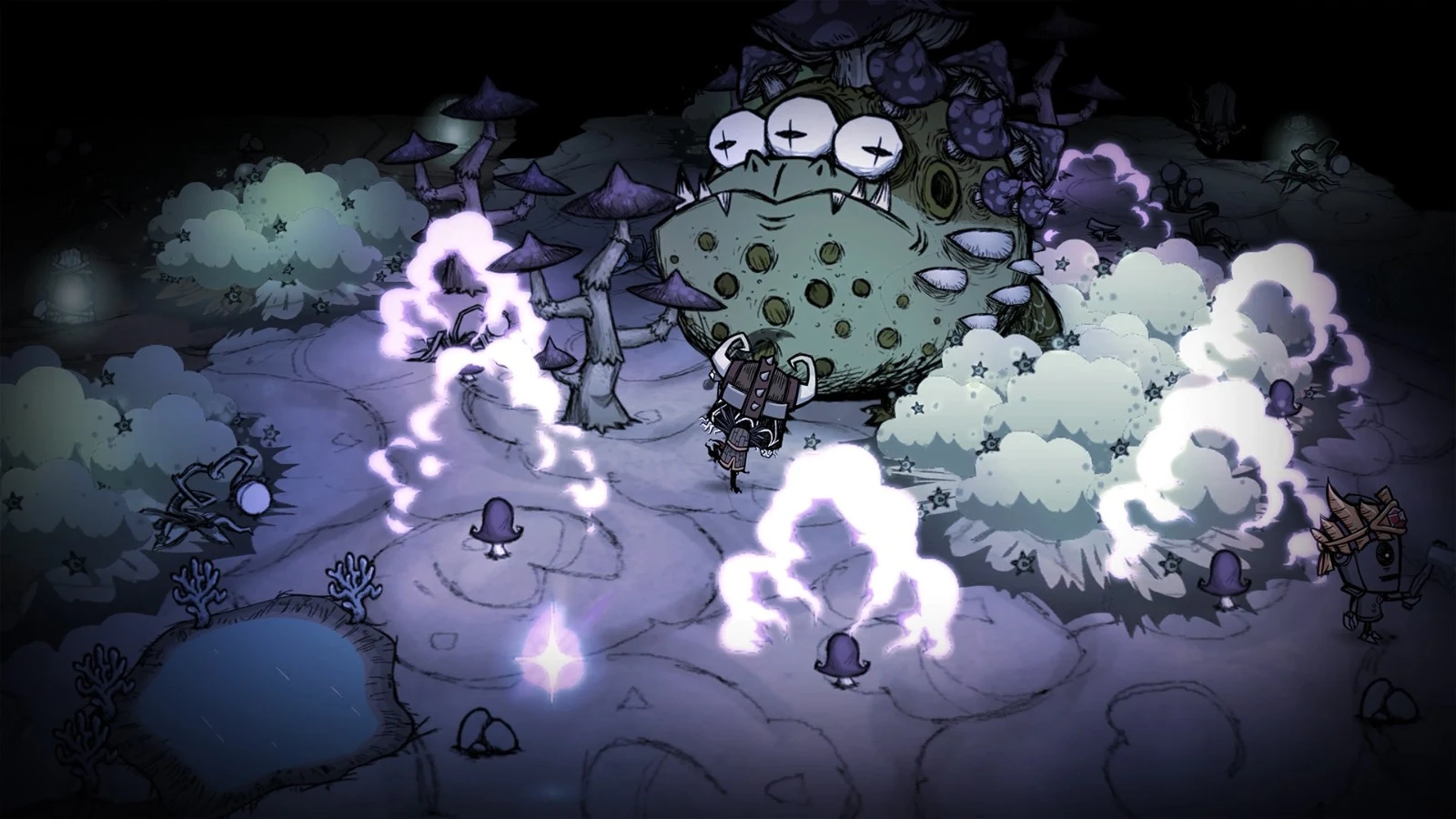
Hostile creatures make combat part of the survival cycle, although the source does not provide damage formulas or detailed enemy behavior. It identifies spearmen, bowmen, and armored fighters as combat roles or equipment approaches used against hostile beasts and possible competitors on PvP servers. Players therefore need to account for fighting as one of the situations that can interrupt gathering, travel, or base preparation.
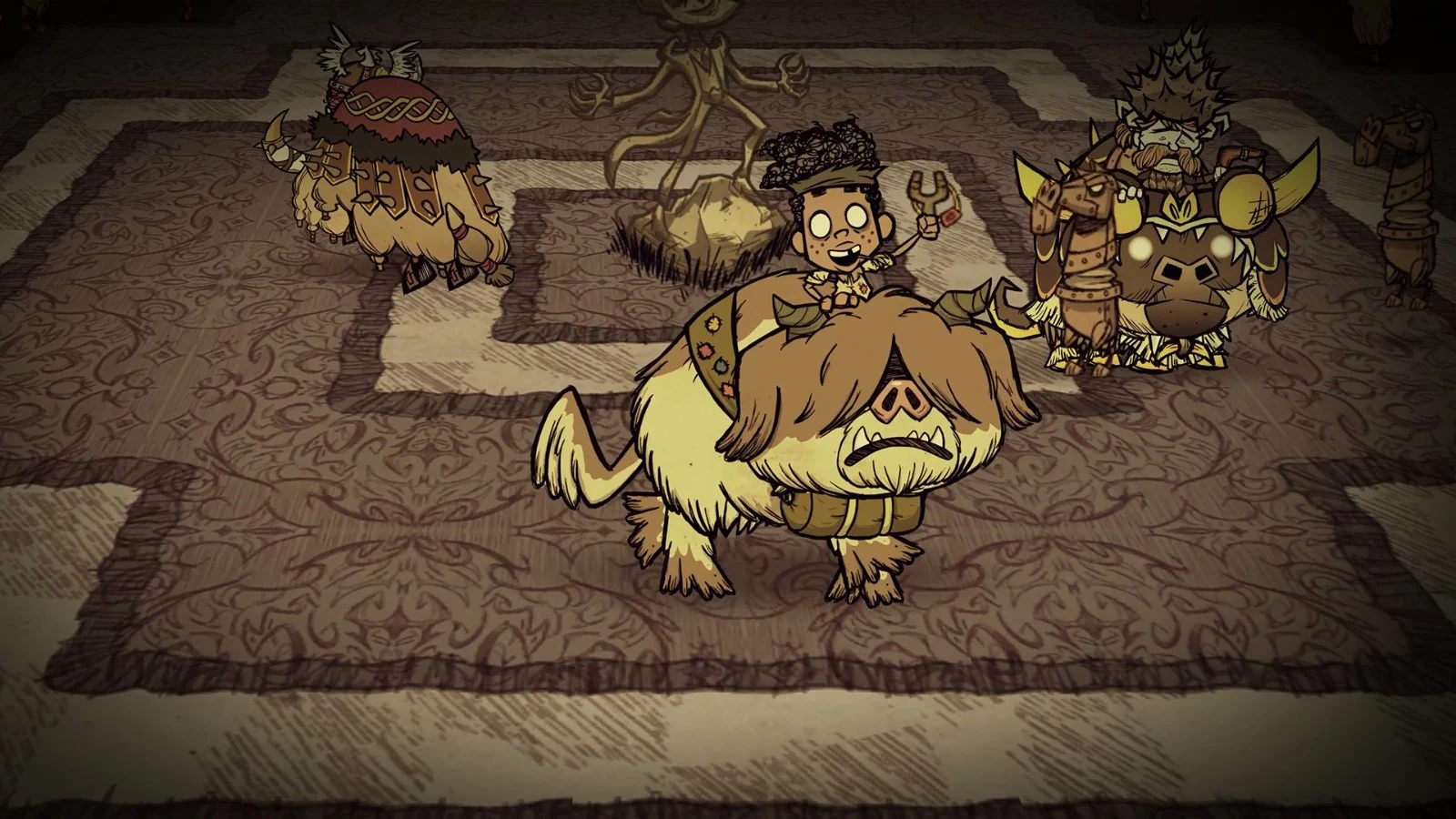
Character selection also matters because each character is described as having unique skills, with experience points used to unlock them. The supplied information does not specify the individual skills or how they alter combat and gathering, so their exact effects cannot be detailed here. What is supported is that character differences and experience-based unlocking sit alongside the shared tasks of managing statistics, collecting materials, crafting, and responding to the day-night and seasonal environment.