

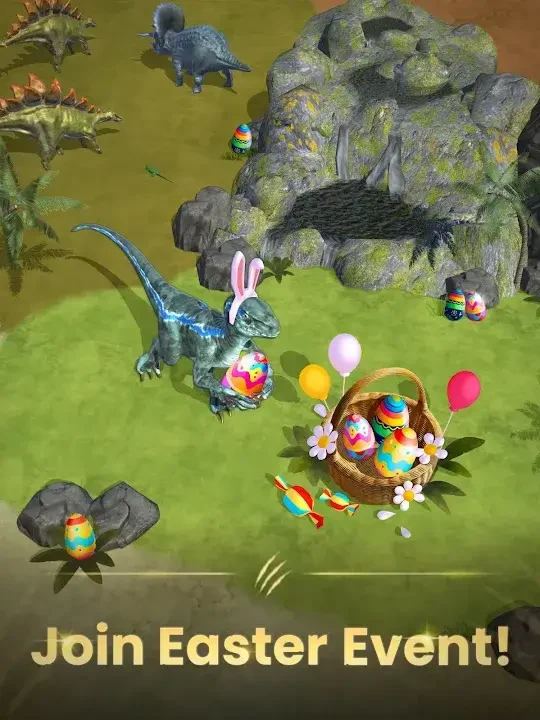
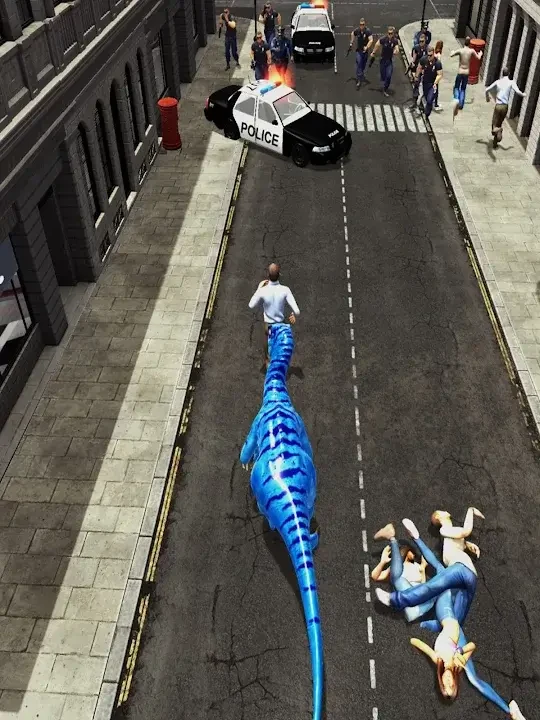


Dinosaur Universe is a prehistoric action-adventure game about leading a dinosaur herd and developing its strength. Players hunt other dinosaurs for meat, explore the surrounding world, and look for eggs to hatch. The central objective is to build a more capable group through combat, new creatures, and evolutionary upgrades, with the longer-term aim of becoming dominant in the ancient world.
Hunting and combat
Hunting provides meat used in the herd’s development, so encounters serve both as combat challenges and as a source of progression resources. The game describes a range of dinosaur species with different fighting abilities and strengths. Choosing which dinosaurs to bring into a group, and matching those choices to their capabilities, is part of the stated strategy. This makes team composition relevant to how players approach fights rather than treating every creature as interchangeable.
The description also mentions dangerous predators and opponents that can provide demanding encounters, as well as boss battles. It advises saving special skills and resources for important fights, suggesting that the timing of those abilities and supplies matters in key encounters. No specific control scheme or detailed combat rules are provided, so the emphasis is on selecting and developing the herd rather than on particular button inputs.
Eggs, species, and evolution
Eggs found during exploration can be hatched to add dinosaurs and increase the herd’s fighting strength. The source recommends prioritizing egg hunts to broaden the available group. Different species are presented as having distinct traits and evolutionary paths, giving players choices about which creatures to develop and how to allocate resources. The description names familiar dinosaurs such as the T-Rex, Brachiosaurus, and Velociraptor, though it does not provide a complete roster or explain each species’ specific abilities.
Evolution is another core progression system. Players spend resources to improve dinosaurs, enhance their genes, and modify their bodies. Each species is said to have its own path, allowing upgrades to follow the player’s chosen strategy instead of applying one identical route to every creature. The source also describes evolution as ongoing, but does not specify its exact limits or the requirements for individual upgrades. It recommends spreading resources across the squad rather than focusing on just one dinosaur.
Exploration and habitats
The prehistoric world is described as open to exploration, with new species, items, resources, and hidden treasures to discover. Traveling through the wilds involves watching for predators and managing supplies. These activities connect exploration to herd development: finds can support progression, while new eggs can expand the group and give players further options for later encounters.
The feature description also includes building a dinosaur park or habitat. Players can create enclosures, arrange food chains, and design environments suited to different species. Resource management and the dinosaurs’ needs are part of this activity; the source notes that hungry or stressed dinosaurs can become dangerous. It does not explain how habitat building relates to the hunting areas or detail the construction rules, so these features are best understood as a separate management aspect of the game.
Facilities and presentation
DNA labs and evolution chambers are named as facilities that can support longer-term development. The supplied tips suggest upgrading these facilities early, using idle rewards with attention to resource events, and keeping supplies for major battles. These are presented as progression guidance rather than detailed instructions about timers, event schedules, or upgrade costs.
The game’s presentation is described through prehistoric environments including jungles and plains, alongside dinosaur-focused sound effects intended to convey encounters with the creatures. Together, exploration, habitat management, hunting, and evolutionary upgrades frame the experience around building and sustaining a stronger dinosaur group.