

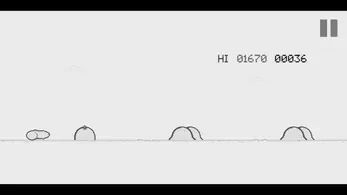

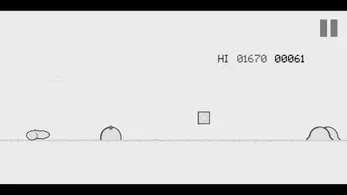

DickRun turns careful listening into a brief endurance challenge: players follow audio and visual cues, respond only when appropriate, and try to avoid the action that ends a round. Its simple touch controls make the basic task easy to understand, while changes in rhythm, tone and timing call for continued attention. Rounds are short, so a session can fit into a spare moment, and clear round boundaries make it easy to see when a run has ended. The focus is on concentration and restraint rather than complex controls or a large set of mechanics.
Listening, timing and touch controls
Each round uses a sequence of auditory cues, accompanied by subtle visual signals, that can increase in intensity and tempo. Players need to distinguish when to act from when to hold back; small changes in sound or cadence can affect the response required. Interactions use a minimal touch input, such as tapping or holding, alongside simple on-screen prompts. This keeps the control task uncomplicated while leaving attention for the timing challenge. Haptic feedback and optional visual hints can reinforce audio signals on devices that support them.
Short rounds and personal progress
Play is organized into short rounds with clear starts and finishes, allowing for repeat attempts without a complex level structure. Progress is based on personal performance rather than a detailed leveling system: the game tracks basic measures such as the longest run and successful rounds. Difficulty increases subtly as play continues, with tighter timing windows, more layered cues and occasional surprises. Together, these features give players a way to compare attempts and work on consistency without relying on complex progression systems.
Presentation and settings
The visual design uses high-contrast shapes and restrained animation, keeping the display relatively simple alongside the sound-led gameplay. Settings allow players to adjust audio levels, switch visual hints on or off, and change sensitivity to suit their preferences and listening environment. Settings persist between sessions, so the same configuration can be used again. The interface is designed for one-handed play, and straightforward onboarding explains the game's central rule to new players.
Replay and practical use
Replay comes from trying to improve timing, restraint and run length across attempts. Cue sequences vary, so players encounter changes from round to round, while outcomes are clear enough to make another attempt easy to start. The downloadable version is described as ad-free and usable with or without a persistent internet connection, depending on device capabilities. The web version can be used for a quick trial, though it may include advertisements and browser-related audio inconsistencies.
What to expect
DickRun is narrowly focused on audio-led timing and endurance. Its minimal approach may not suit players seeking a narrative or more complex mechanics. The source also notes that some devices or browsers may have audio latency, which can affect timing; for web play, adjusting device audio settings or using the downloadable version may help. Optional visual indicators and supported haptic feedback provide additional cues, but listening remains central to the experience.