
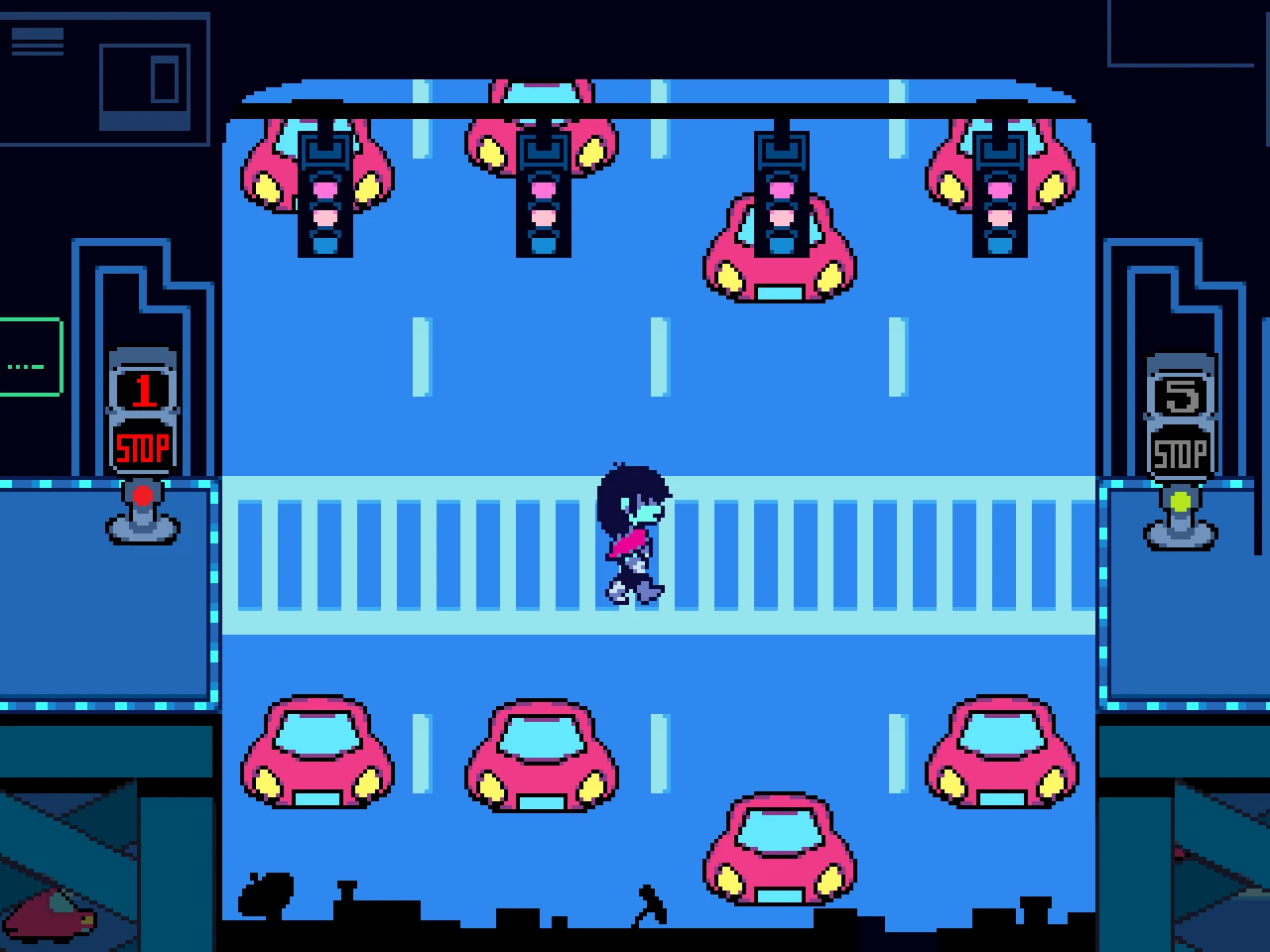
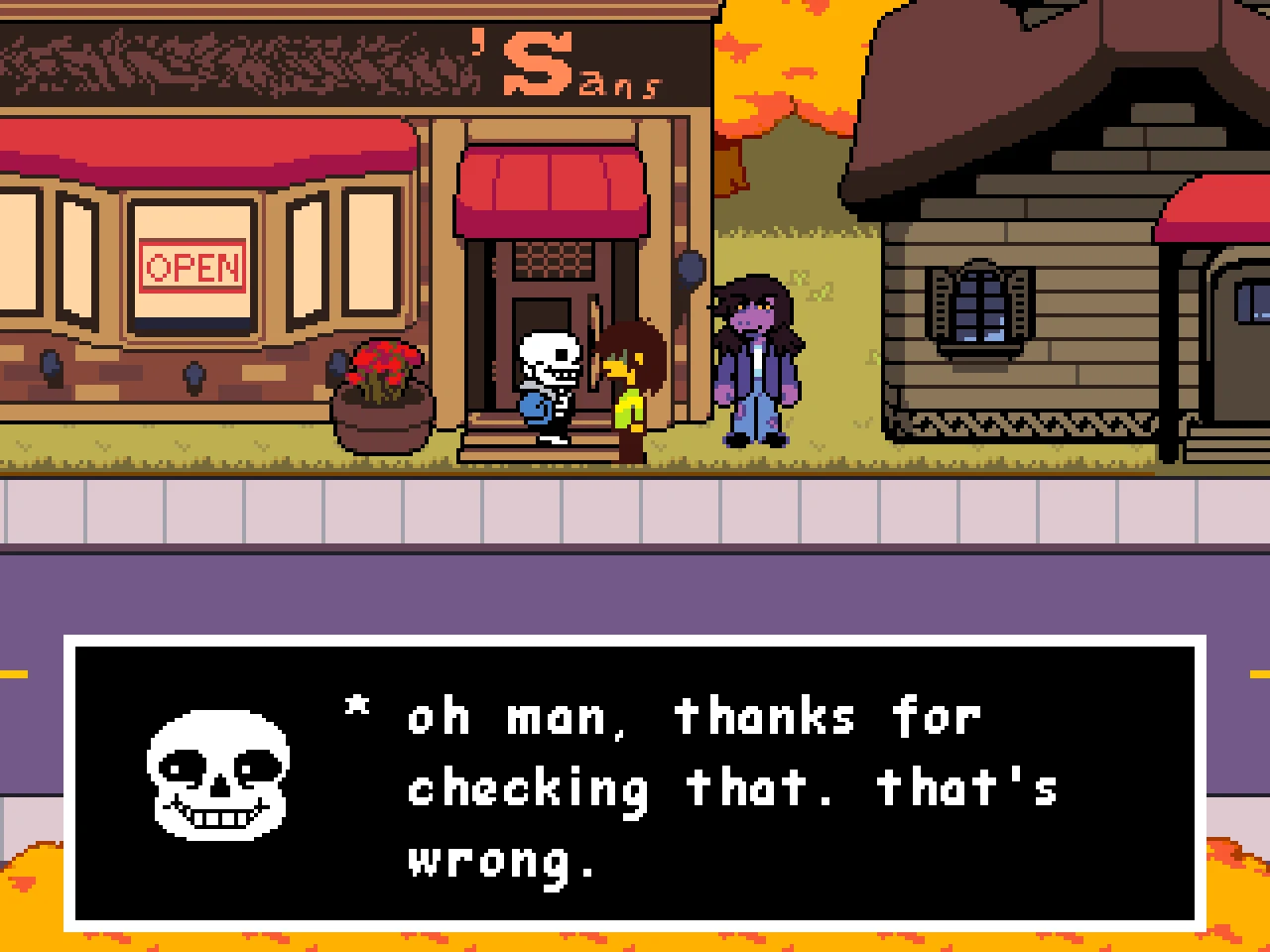
DELTARUNE is an episodic action-adventure role-playing game about Kris Dreemurr and companions Susie and Ralsei as they travel through a mysterious dark world. The game addresses the familiar RPG task of exploring unfamiliar areas, solving puzzles, collecting useful items, and overcoming enemies, but it gives players several ways to approach its battles and interactions. Its clearest supported benefit is the combination of party-based, turn-by-turn decisions with active bullet-dodging, allowing exploration, story scenes, resource gathering, and combat choices to work together rather than feeling like separate systems. The game is presented from a top-down perspective and includes both overworld sections and combat encounters.
What does the adventure involve?
The main journey follows Kris and a party of other characters through a parallel dark world. Kris, Susie, and Ralsei form an unlikely team whose personalities can clash and harmonize as the story develops. Players travel through different areas, interact with characters and the environment, search for items, and solve puzzles to continue their progress. The writing combines humor with mystery, while the pixel-art presentation and cinematic transitions give the locations and story scenes a distinct visual style.
The adventure is episodic, and different chapters can introduce their own ways to move through the environment. Examples include climbing and encounters with statues that change the game into a two-dimensional platforming section with action-based combat. Although the central plot is comparatively direct, exploration remains important because health items, equipment, secrets, and other surprises can be found away from the main route. Some paths close when the story advances, so a player who wants to investigate optional areas needs to do so before moving on.
How does exploration differ from ordinary random encounters?
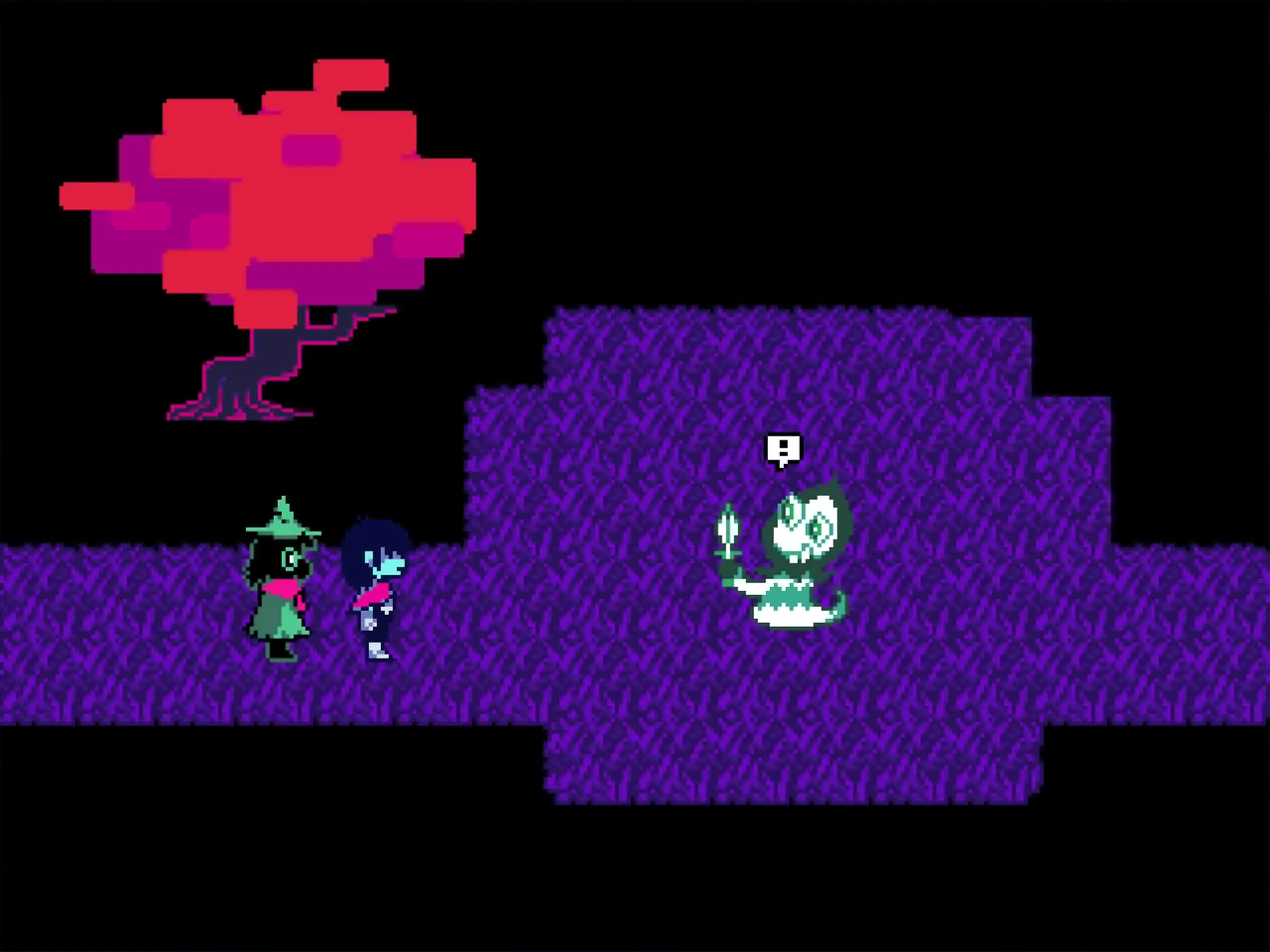
DELTARUNE does not use a random encounter system. Enemies appear in the environment, allowing players to see them before contact. This makes it possible to avoid an encounter or deliberately approach it, depending on the situation and the preferred play style. The overworld therefore supports both careful movement and active searching for battles, while puzzles and environmental interactions provide tasks beyond fighting.
Exploration also connects with optional objectives and secrets. The route to the game’s secret boss requires leaving the most direct path, and some characters can be recruited through activities outside normal combat. Starwalker can be obtained by speaking to the character in the Forest during Chapter 1. Hacker offers an optional request to locate hidden items; completing that request leads to recruitment, while ignoring it leaves Hacker in place and changes how other characters respond.
What choices are available during combat?
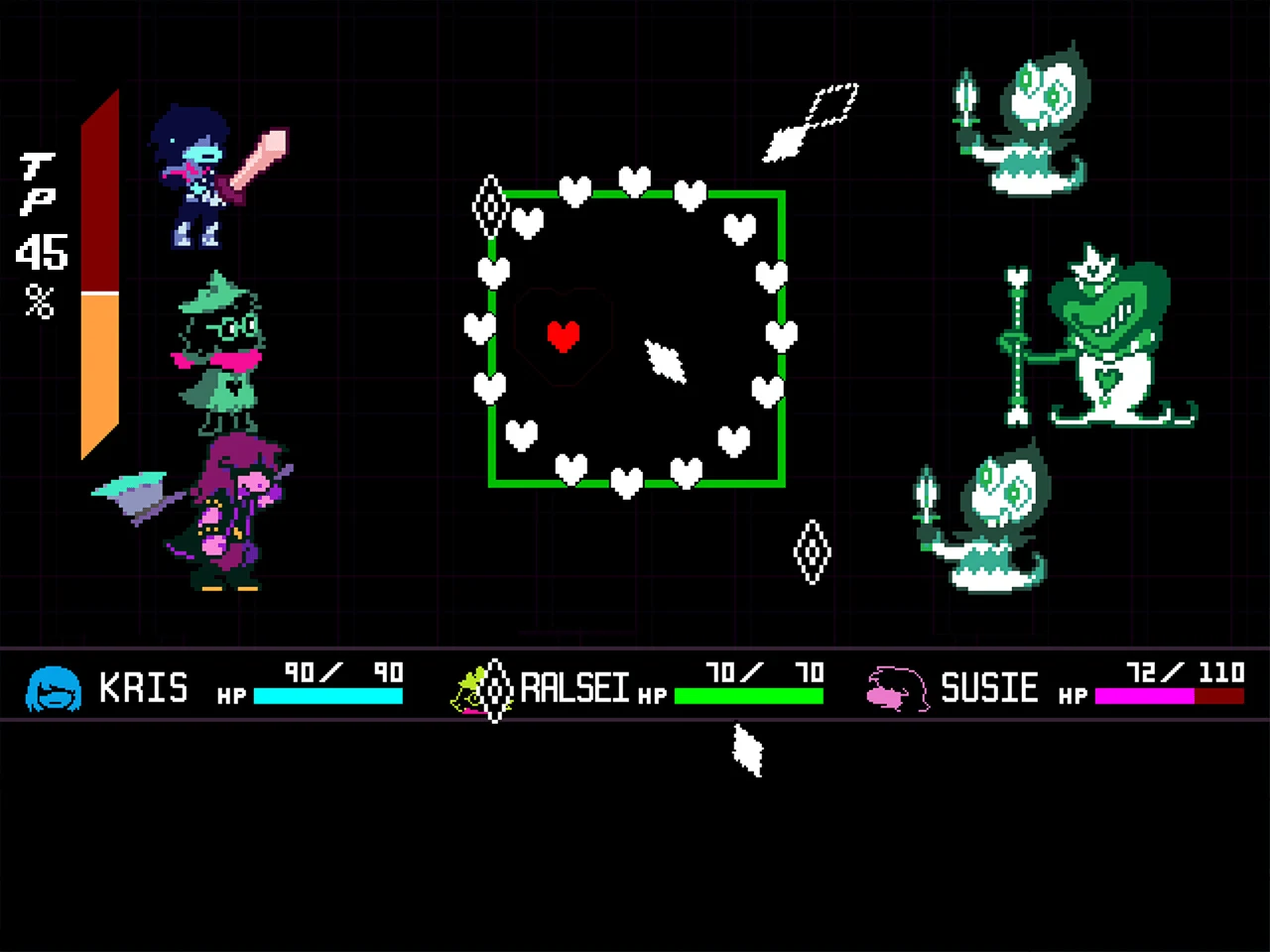
Combat is turn-based, and players select actions for the party members each turn. The available commands include fight, act, item, spare, and defend. Fighting can defeat enemies violently, while acts and spells can create opportunities to spare them without using direct attacks. Defending or grazing an incoming attack increases the tension points, or TP, gauge. Grazing means allowing an attack to come close to the heart-shaped soul without hitting it, and the accumulated TP can be used for spells or special abilities.
During enemy attacks, the player controls the soul inside a fixed area and must dodge incoming bullets. The exact patterns and rules can vary by enemy, so combat combines command selection with reflex-based movement. Ralsei, for example, can use a spell to pacify tired enemies. Fighting can also increase TP, and after a battle party members may gain HP and magic power. This gives players a reason to consider both immediate survival and the longer-term value of each action.
How does sparing and recruiting enemies work?
Some enemies can be spared through suitable acts or spells instead of being defeated. In Chapter 2, spared enemies can be recruited and sent to Castle Town, where they can be visited and interacted with later. Recruitment is more than an alternative battle result: the number of recruited enemies affects the HP of the Thrash Machine used in the final boss battle, so players who recruit fewer enemies may face a harder fight in that encounter.
Players should also distinguish between sparing an enemy and losing one. Choosing an aggressive approach can cause an enemy to become Lost rather than recruited. Once an enemy type is Lost, it cannot be recruited from a later encounter, even if that type was recruited previously. Missing recruitment can remove unique dialogue, reduce the final boss’s health bonus, and leave out some Party Dojo challenges. This makes encounter decisions meaningful for players who want to collect characters and see more optional content.
What optional activities add to the main journey?
Castle Town includes the Party Dojo, an area that provides a tutorial for new players and a set of challenges for more experienced players. Its challenges can provide useful items, making the area relevant beyond basic instruction. Castle Town also serves as a place to interact with recruited enemies, so players who pay attention to non-violent battle options gain additional reasons to return there.
The game rewards thorough searching as well. Exploring every available area can uncover healing items, equipment, hidden details, and easter eggs that are easy to miss when following the story alone. Optional characters such as Starwalker and Hacker further encourage players to speak with people and complete requests rather than simply moving from one objective to the next. Players who prefer a direct story route can continue forward, while those interested in secrets, recruitment, and alternate battle outcomes have more to investigate.
Who may find this game useful?
DELTARUNE may suit players looking for a story-focused adventure that mixes party-based RPG decisions with puzzle solving, environmental exploration, and active dodging. It offers room for different approaches: enemies can be fought, spared, avoided, or recruited when the relevant conditions are met. Players who enjoy discovering optional characters and secrets may appreciate the importance of exploring before story progress closes certain routes. Those who prefer straightforward combat can use the fight command, while players interested in non-violent outcomes can build their strategy around acts, spells, and sparing.
The game is also suited to players who enjoy episodic storytelling, distinctive character relationships, pixel-art presentation, humor, and mystery. Its systems ask the player to manage party actions during turns while also reacting to incoming attacks, and its chapter-specific traversal mechanics add variation to the overworld. Because the source describes the game as continuing to receive updates with additional story content, characters, and gameplay features planned for release, the available journey is part of a larger episodic work rather than a completely closed story.