

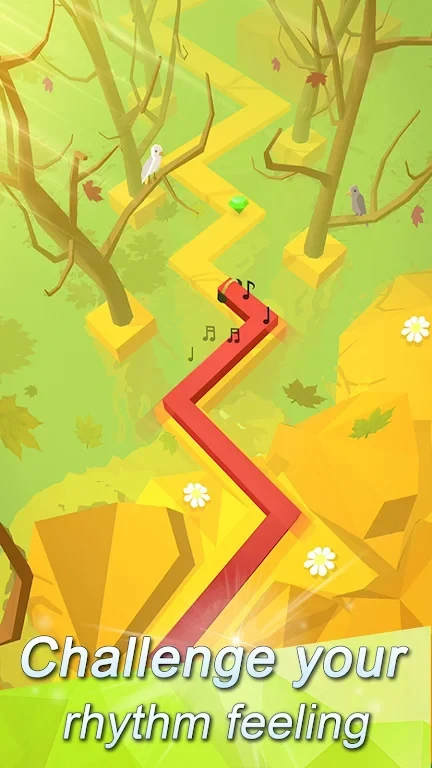
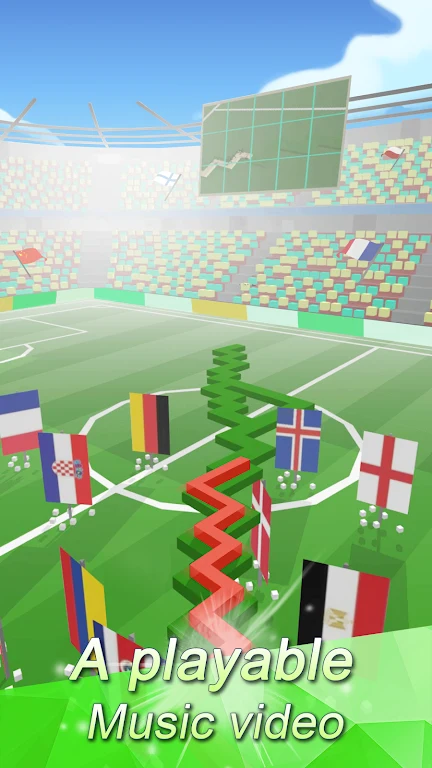
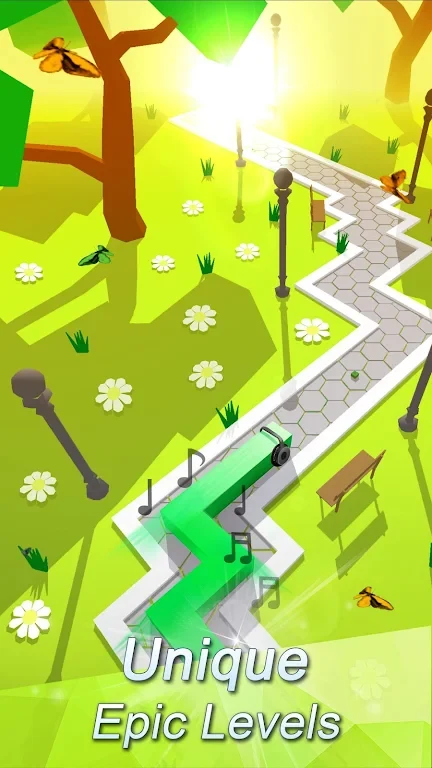
Dancing Line is a rhythm-driven action game that asks players to guide a growing line through a parade of visually distinct worlds, each scored with original background music that shapes how you move. The core challenge centers on listening to beat and melody while timing single taps to make sharp turns, dodge obstacles and adapt to shifting environments. This produces a straightforward control scheme paired with demanding reflex demands that scale with each stage. Players benefit from short, focused sessions that reward concentration on audio cues rather than complex menus or settings, making the game convenient for brief mobile play without requiring constant internet access.
How does the tap-to-turn mechanic connect to each level’s music?
Gameplay centers on converting melodic cues into timed taps. A single tap triggers a turn at the next junction, and repeated taps manage sequences of direction changes. The original compositions determine both pace and obstacle placement, so musical peaks, rests and tempo shifts directly influence when and where turns are needed. This integration means players must anticipate changes in rhythm rather than simply reacting to visible patterns, with precision valued over rapid input in many segments.
What structure guides progression through the worlds?
Levels are grouped into visually themed worlds that introduce new mechanics and denser obstacle layouts over time. Early stages establish basic rhythmic patterns and comfortable turn timing, while later sections add faster tempos, tighter spaces and environmental traps. Completion occurs in sequence, encouraging repeated runs of individual stages to refine timing and accuracy. An included practice mode supports learning layouts at a relaxed pace before attempting main stages.
How do visuals and audio work together during play?
Each world uses a distinct color palette and set of shapes that mirror the mood of its soundtrack. Minimalist presentation keeps the focus on the moving line and upcoming junctions, allowing players to read both visual and aural cues without distraction from extra interface elements. The soundtrack itself is crafted to guide movement through peaks and transitions, turning audio into an active gameplay component rather than background accompaniment.
Which players benefit most from the available modes and controls?
One-finger controls and offline support suit short, repeatable sessions on mobile devices. Practice mode lowers pressure for learning timing, while the internal scoring system encourages attempts to improve personal results. The format trains concentration and reflexes through audio-visual feedback, yet the steep difficulty rise in later worlds and single-button input may limit appeal for those seeking varied mechanics or slower pacing. The game therefore fits players who enjoy music-synced reflex challenges in concise stages that reward careful listening.