
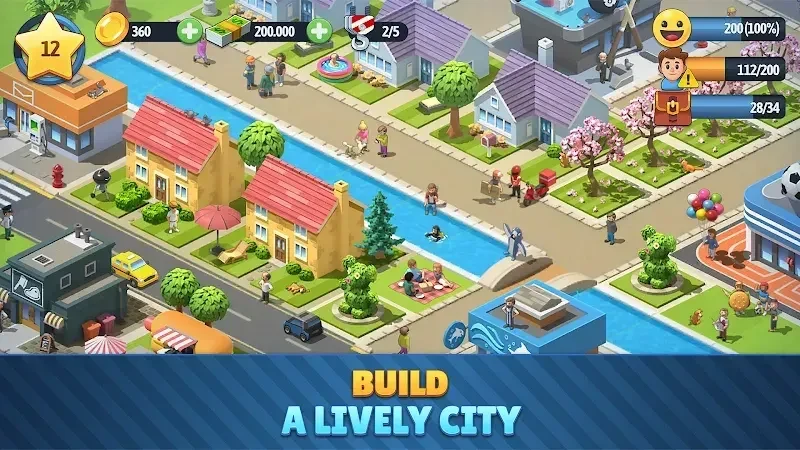

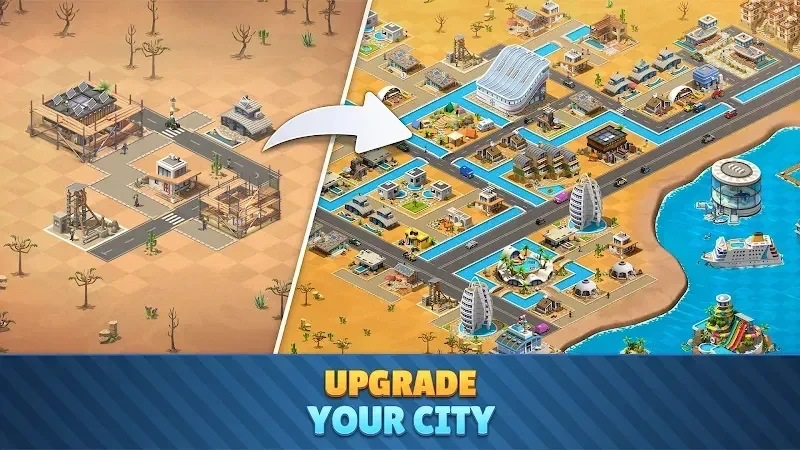
City Island 6 lets you turn a small island settlement into a larger, more developed city by placing buildings, planning roads, managing resources, and improving conditions for residents. The game combines construction with ongoing management: you need to provide residential, commercial, and industrial areas while creating the infrastructure that allows the settlement to grow. As the city develops, you can unlock more building options, explore additional resource islands, complete missions for rewards, and take part in events or club activities. This makes it suitable for players who enjoy gradual progress supported by both creative planning and economic decisions.
Starting with a small island settlement
The game begins with a limited piece of land and room for development. Your early decisions involve placing buildings in planned areas, creating settlement zones, and constructing streets that serve the population. As the city expands, the available space can be used for a mixture of houses, stores, factories, decorations, and other facilities. This combination supports both the visual design of the city and its practical development, since residents need places to live and the economy needs businesses and production buildings.
Infrastructure is an important part of the building process. Roads need to connect different parts of the settlement, while traffic management becomes more significant as the city grows. Developing these systems can help attract additional residents and provide the foundation for further expansion. Rather than treating construction as a one-time task, City Island 6 presents it as an ongoing process in which new buildings and upgrades contribute to the city’s wider development.
Managing income, upgrades, and expansion
City finances support continued construction and land acquisition. The supplied strategies recommend comparing buildings by the money they produce over time and prioritizing upgrades for structures that generate more income. Houses and stores are identified as useful sources of cash, while factories help maintain a broader mix of economic activity. Building new structures and improving existing ones work together: new buildings increase the city’s capacity, while upgrades can make established parts of the settlement more productive.
Land purchases also need to be considered as part of the wider plan. Additional land creates space for more buildings, but expanding too quickly can use funds that might otherwise support infrastructure or upgrades. A balanced city can include residential areas, commercial hubs, and industrial zones rather than relying on one type of building. This approach connects the city’s visual layout with its economic needs and gives you more ways to use newly available space.
Quests, challenges, and city progression
Missions and quests provide objectives beyond free-form construction. They can guide the next stage of development and offer money or other rewards when completed. The source recommends checking for new tasks regularly and choosing objectives that provide worthwhile rewards without requiring excessive time. These activities give the building process a clearer sense of direction, especially when you are deciding which part of the city to improve next.
City Island 6 also includes challenge events in which mayors can compete and work toward additional city areas or building packs. The game presents these events as another route to progression alongside the slower development of the main maps. Completing missions and participating in challenges can therefore support expansion while adding short-term goals to the longer task of developing a complete island city.
Exploring islands and customizing the city
The game includes multiple islands with different environments and terrain. Some are described as tropical, while others have more rugged landscapes, giving exploration a role in the overall experience. New islands can provide further development opportunities and resources, so expansion is not limited to improving the starting settlement. As new areas become available, you can apply the planning experience gained on earlier islands while adapting to different spaces and challenges.
A broad selection of buildings and decorations allows the city to reflect your preferred style. You can place distinctive structures in planned locations and shape separate residential, commercial, and industrial areas. Building variants and different visual styles are also mentioned in player feedback, adding more choice to the appearance of individual parts of the city. This creative layer works alongside management rather than replacing it: the layout must still accommodate roads, residents, resources, and the city’s financial needs.
Clubs, shared ideas, and offline play
Players can join or create clubs to interact with other people, exchange city designs and ideas, and take part in activities that provide additional rewards. Seeing how other players arrange their settlements can offer new approaches to layout and decoration, while sharing your own designs adds a social element to the otherwise individual planning process. Clubs and events provide alternatives to simply expanding through the main maps.
The game is described as supporting play without an internet connection, allowing city management away from a connection. However, player comments raise a specific concern about offline progress: one comment reports that the game continues to run while it is closed but that collected business income does not fully reflect the elapsed offline time. This feedback suggests that offline availability should not automatically be understood as identical to receiving full earnings for every hour away from the game. The source also includes comments about paid designs and event progression, so access to some content or event conveniences may not feel the same for every player.