
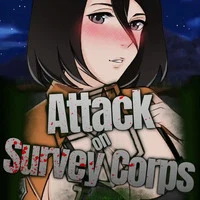



Attack on Survey Corps places the player in the role of a cadet joining an elite survey corps. The game combines a visual-novel presentation with squad-based strategy, story missions, character interactions, and additional challenges. Its central activity is making decisions during the narrative, then following the resulting changes in relationships, events, and story outcomes.
Choices shape the narrative
The main story unfolds through player-driven dialogue choices. Decisions can send the plot along different branches, so a playthrough does not present only one fixed sequence of events. The source describes multiple endings and encourages replaying with different choices to discover additional outcomes.
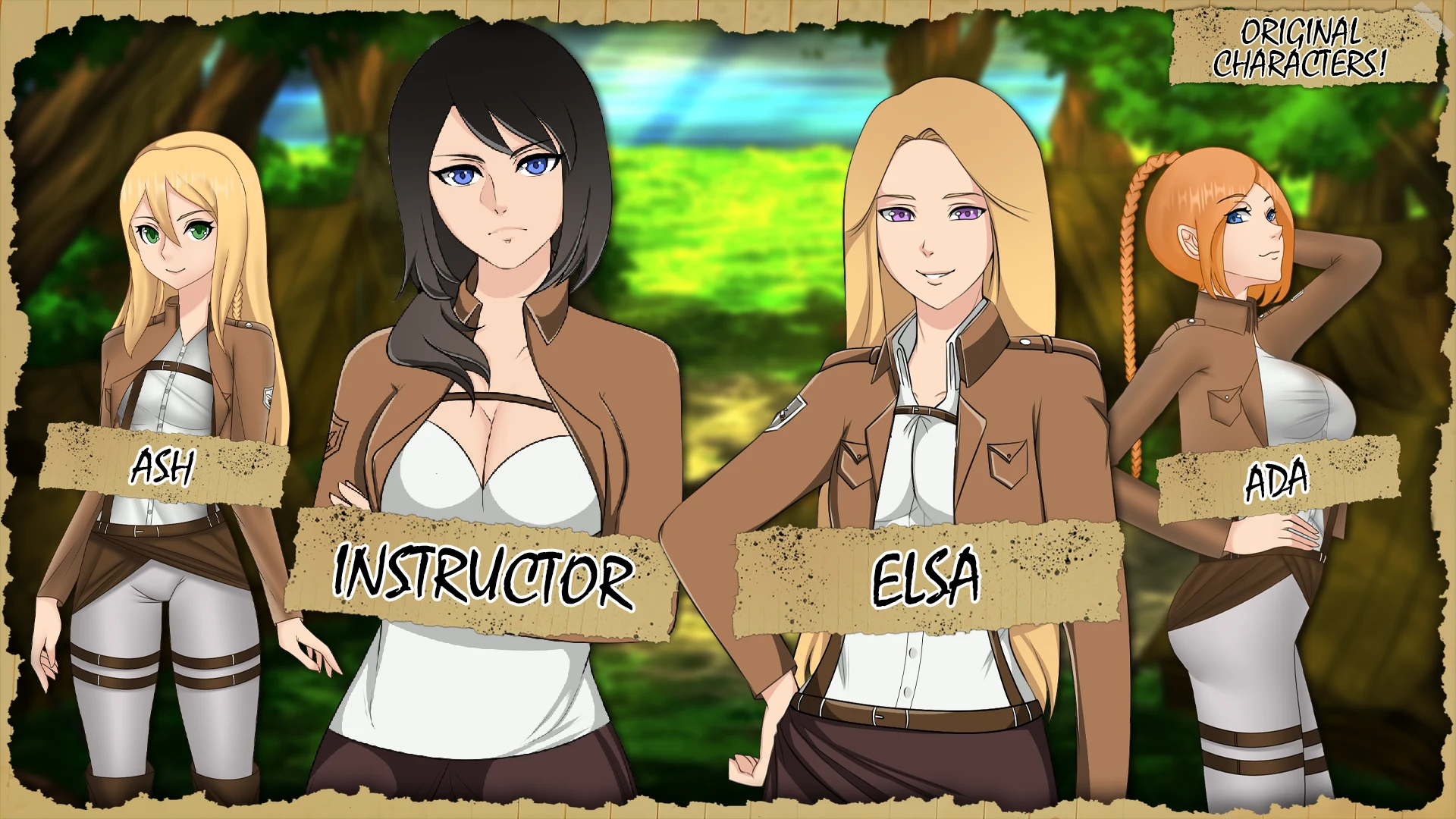
These decisions also affect the protagonist's relationships within the cadet corps. Encounters with familiar characters from the Attack on Titan series, including Mikasa, Eren, and Levi, are presented as part of the story rather than as brief appearances. The characters have their own storylines and reactions, while the source also describes several female recruits whose personalities and relationships contribute to the game's mature romantic themes.
Cadet progression and squad management
Alongside the narrative, the game describes a progression loop based on training soldiers, improving equipment, and unlocking skills. These actions are intended to strengthen the player's forces before they are commanded in battles against powerful enemies. The available description does not specify exact costs, statistics, or upgrade formulas, but it does identify training, equipment upgrades, and skill unlocking as distinct parts of progression.
Squad-based strategy is another stated feature. Players command Survey Corps units during missions, with positioning and timing identified as important considerations in combat. The game presents fast, intense battles against giant enemies, while story-driven and challenge-based levels provide the mission structure. Because the source does not explain specific controls or combat calculations, the article can establish the relationship between squad command and battle outcomes without assigning unverified effects to individual skills or equipment.
Minigames and optional challenges
Minigames and challenges break up the visual-novel sections. The source describes activities that may involve navigating interactions to build rapport with other cadets, as well as faster challenges that test reflexes. These additions provide activities beyond reading dialogue and selecting story responses, although the supplied material does not define every minigame's rules or scoring system.
Some missions and side events are associated with in-game message boards and room notes. The source says these locations can reveal side content, missions, or lore when completed successfully, and it advises checking them while exploring the story. This makes them documented points of interest for players following optional content rather than a confirmed requirement for every main-path ending.
Time-based events and replay tracking
The supplied guidance describes morning, afternoon, and night as separate time cycles. Different events can be triggered at the same location depending on the selected period, so revisiting places across the available times may expose variations or additional scenes. The source also recommends starting a new game because changes to event triggers and flow may not load correctly on older saves.
A gallery is described as a way to track scene unlocks. Icons indicate content that is missing or only partly unlocked, giving players a reference when deciding which choices to revisit. The source also mentions developer notes and patch logs as places where character updates, changed content, and other additions may be documented.
Mature presentation and play context
Attack on Survey Corps includes adult-oriented romantic and erotic elements in addition to its cadet setting and action scenes. The supplied information describes these themes as part of character relationships and optional story content, so the game is not presented as an all-ages experience. Audio, ambient effects, background music, and mature scenes are also identified among its presentation features.
The source states that some single-player missions can be played offline, while multiplayer modes require an internet connection. It does not provide detailed information about the multiplayer rules, so that distinction is the supported extent of the connectivity description. The listed game version is 0.28.0.