

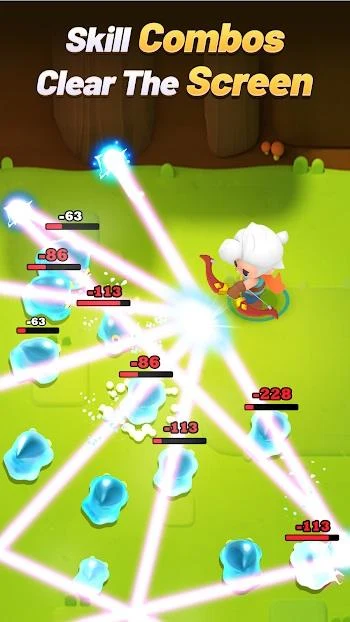


Archero 2 is an action game about moving through dungeons, dodging hazards, and stopping to shoot arrows at enemies. Players can choose different characters and use the map as they work toward defeating the enemies they encounter. Its central control pattern combines movement with deliberate pauses for attacks, so navigating danger and finding opportunities to fire are connected parts of play.
Move, dodge, and take aim
The game describes its core control scheme as “move and stop.” While moving, the hero can avoid enemy projectiles and traps scattered around the board. Stopping allows the character to shoot at enemies. This means that movement serves both to cross the area and to respond to attacks, while firing is tied to choosing a moment to pause. The source also describes one-handed controls, but does not specify a particular button layout or additional control options.
Maps matter to this movement-and-attack pattern. The layout can be used to help deal with enemies, and the environmental interaction system allows arrows to bounce off walls or enemies to be lured toward traps. These are ways the surroundings can affect encounters, alongside direct movement and shooting. The source mentions different characters, but does not detail how their abilities or controls differ.
Level-ups and changing combat choices
During dungeon play, the hero gains experience and levels up. Each level-up presents three random skills to choose from, making skill selection one of the documented decisions during a run. The examples given include multi-shot and ricochet for attacks, as well as life steal and energy shields for survivability. These options can change the approach to later encounters, though the available choices are random and the source does not specify a fixed skill sequence.
The description also refers to reviewing skill choices after a room or wave of enemies. Players can select options that improve survivability or strengthen their current damage type. Together, experience, level-ups, and these choices connect progress within a dungeon to decisions about how to handle enemies. The source presents this structure as roguelike gameplay, with varying skill combinations contributing to different runs.
Chapters, survival, and boss encounters
Chapter play and countdown survival mode are both named as ways to enter combat. The source does not explain how their rules differ, so they are best understood as separate named modes rather than assumed to share identical structures. Dungeon encounters include enemies, projectiles, traps, and boss battles. When a boss appears, the described approach is to watch its attack patterns and use safer openings to fire; later skill selections can also be adjusted in light of what has worked.
Other named activities are Boss Seals, Trial Towers, and Golden Caves. The source describes entering these activities to collect gold and materials and to practice, then returning to chapters with improved attributes. It does not provide separate rule details for each activity. Their stated role is to offer additional places to play and gather resources alongside chapter and survival play.
Equipment and lasting upgrades
Progression also continues outside dungeons. Gold and materials gathered during play can be used for permanent advancements in a talent tree, while equipment can be upgraded and fused. The source describes this as a longer-term way to strengthen the character, with attributes improving through these upgrades. It does not specify the quantities of resources required or the exact effects of individual talent choices.
Several weapon types are mentioned: daggers, crossbows, and magic staves. Each is described as changing attack patterns and combat rhythm, so choosing a weapon is another way to influence how the archer fights. Equipment can be selected to match tougher enemies, according to the source. These options sit alongside character choice and the temporary skills selected during play, giving players multiple documented ways to shape combat without a single prescribed build.
Visual and audio presentation
The source describes the game as featuring detailed graphics, varied maps, and sound effects. It also refers to different terrains and obstacles. These presentation details accompany the dungeon action, while the map itself has a practical role in positioning, arrow interactions, and the use of traps. No device requirements beyond the supplied, unclear “Android Votes” entry are established in the source.