


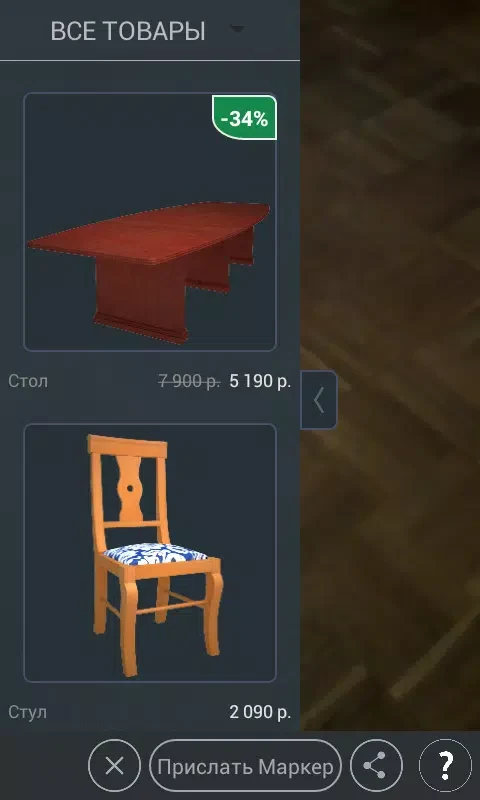

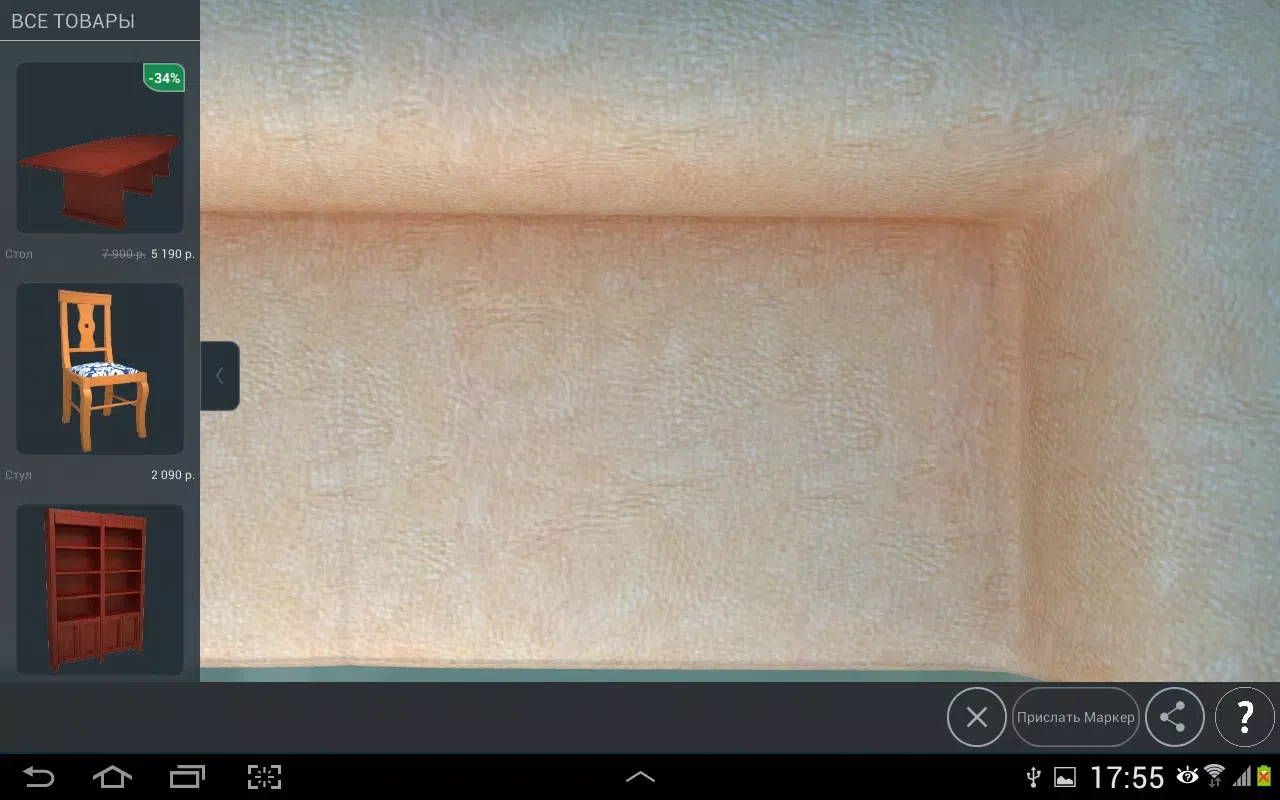


AR Demo is a compact augmented reality application for previewing furniture and decor directly in your own room. It overlays 3D models on a live camera feed, allowing you to place sofas, tables, or lamps and examine how they fit and look before making a purchase decision. You can move, rotate, and resize virtual items, while marker-based tracking helps anchor them in the space. The app also generates printable markers within the app, creating a straightforward print, scan, and place workflow for practical demonstrations.
How does AR Demo preview furniture?
The app places 3D furniture models over the device camera view in real time. This gives shoppers and designers a spatial view of pieces in their intended room instead of relying only on static images.
Virtual items can be moved, rotated, and resized, so you can test their position, proportions, and composition. These controls are useful for checking whether a sofa, table, or lamp appears suitable for the available space.
How does marker-based tracking work?
AR Demo uses printed markers as anchors for placing virtual objects. The markers can be generated from within the app, after which the basic workflow is to print them, scan them with the camera, and place the selected item.
This marker-based approach is part of the demonstration design and requires printed anchors to operate. The source describes the release as a proof-of-concept rather than a full-featured commercial application.
Can you inspect an item from different angles?
Yes. Multi-perspective viewing lets you walk around virtual furniture and inspect it from different angles. Combined with the ability to move, rotate, and resize objects, this helps users examine both placement and overall composition in a room.
Who may find this AR demonstration useful?
AR Demo may be useful to shoppers and designers who want a visual preview before buying or planning a room. Seeing approximate placement and scale can help reduce sizing surprises and provide a more tangible reference than product photos alone.
Retailers and other businesses can also use it to demonstrate practical augmented reality integrations for in-store or online buying experiences. Its limited demonstration scope and reliance on printed markers make it primarily a way to explore this workflow rather than a complete commercial retail system.