


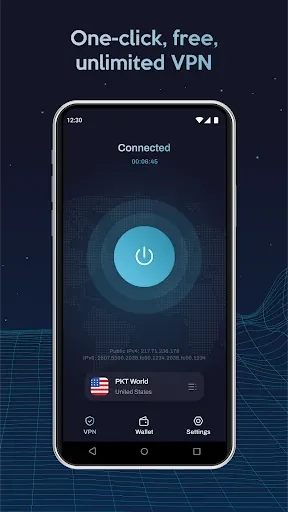
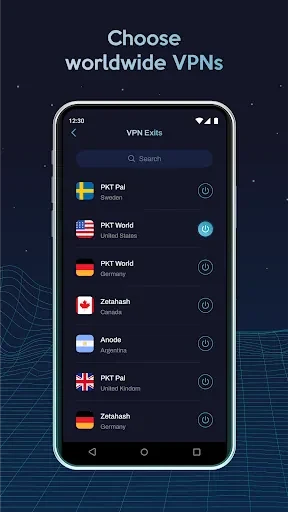
AnodeVPN is an Android app for routing internet traffic through an encrypted connection while also providing a PKT wallet. Its listed functions address two separate needs: privacy features for browsing and basic PKT management on an Android device or ARM-based Chromebook.
What privacy functions does AnodeVPN provide?
The app is described as encrypting internet traffic and hiding the user's IP address, which is intended to reduce the exposure of an exact location during online activity. It is also presented as a way to help protect personal information such as passwords, login credentials, and credit card details when browsing.
Can it be used on public hotspots?
AnodeVPN specifically includes public-hotspot use among its stated purposes. Its description says the encrypted connection can help safeguard browsing data when using public Wi-Fi, including against websites that may attempt to obtain private information. This describes the app's intended protection function rather than a guarantee about every network or website.
What controls or access terms are listed?
The source describes the VPN as offering unlimited access without advertisements. It also claims that the app does not keep user data logs. These are listed product claims, and the supplied information does not provide further detail about logging scope, connection controls, or account requirements.
How does the PKT wallet work within the app?
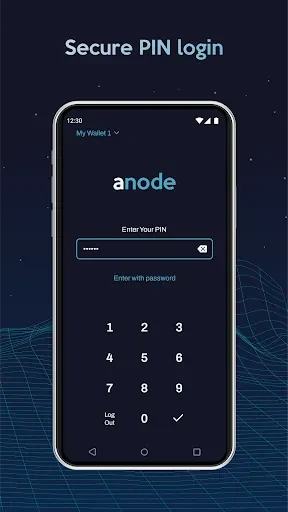
Alongside its VPN role, AnodeVPN is described as a PKT wallet. It supports storing, sending, and receiving PKT on Android devices and ARM-based Chromebooks, making the wallet functions relevant to users who need to manage those tokens from either supported device type.
What technology is identified?
The app description identifies the open-source encrypted routing protocol cjdns and PLD as the technologies powering AnodeVPN. The supplied material does not specify server locations, connection protocols beyond these references, or additional configuration options.