

4English is an English-learning app built around reading, listening and vocabulary practice. Its main task is to help learners understand English content without leaving the material they are studying to look up unfamiliar words. In news articles and books, users can tap a word for a definition, translation, audio pronunciation and usage examples. The app also offers videos with dual-language subtitles, a digital book collection and activities for reviewing vocabulary. Daily updates to news and vocabulary provide new material for learners who want to make English practice part of their routine.
How does reading the news help with vocabulary practice?
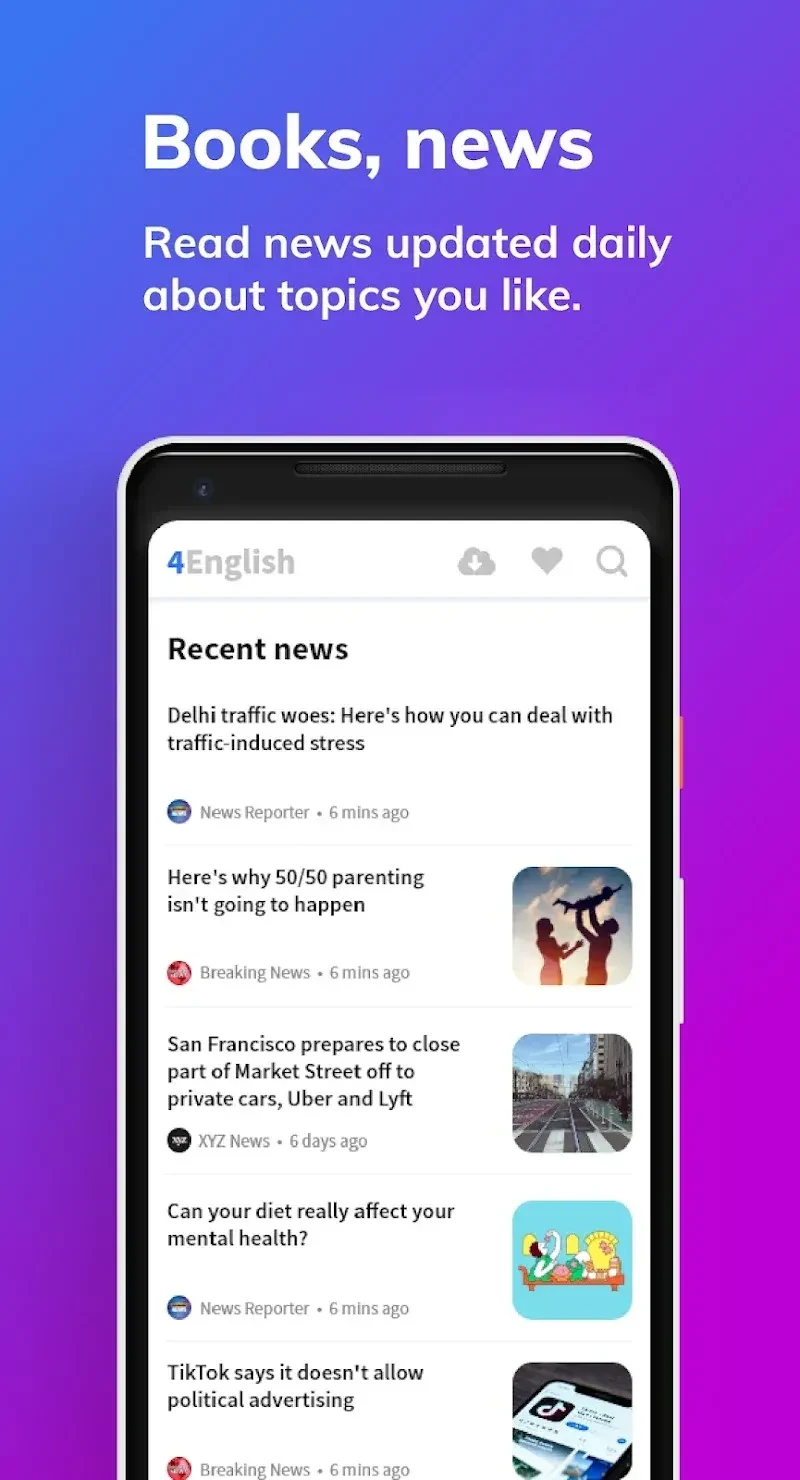
4English brings news articles into the learning experience, so users can follow current stories while encountering words in context. Tapping an unfamiliar word in an article opens its explanation and translation. This lets a reader pause at a specific word, check its meaning and continue with the story rather than treating vocabulary study as a separate task.
The source says the app adds fresh news stories daily and updates its vocabulary content daily. That makes the news section a way to find new reading material as well as new words to study. Learners interested in current events may find this approach more relevant to their day-to-day reading than working only from isolated word lists.
What can users do with the videos and subtitles?
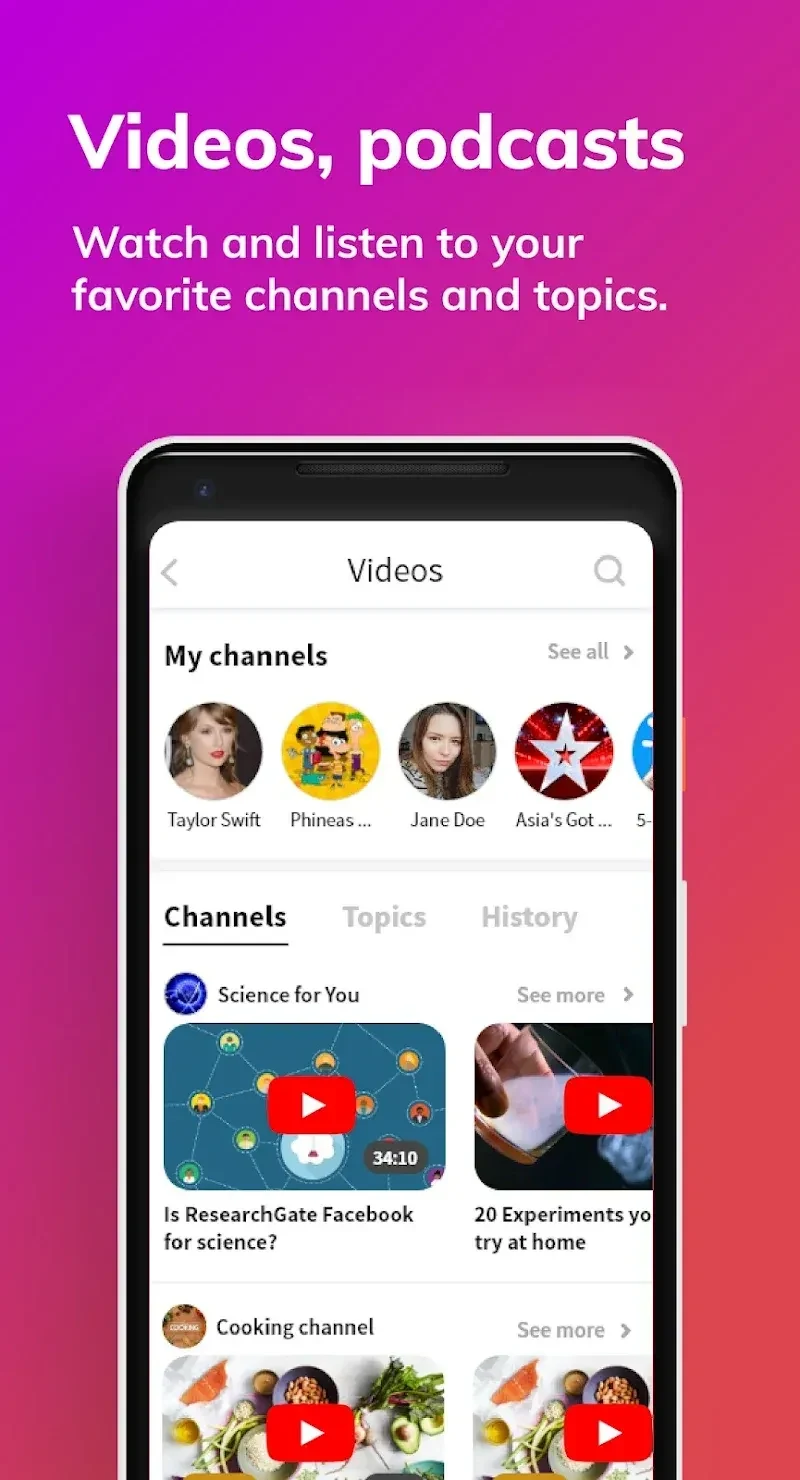
The video section provides access to YouTube videos with dual-language subtitles. Users can switch between English and their native language while watching, using the two subtitle languages to check the meaning of a phrase and then return to the English wording. This gives learners a way to connect written language with speech, including expressions that may be difficult to understand from individual words alone.
Video practice complements the app’s reading features: news and books place vocabulary in written passages, while videos provide spoken English with subtitle support. Someone focusing on listening can use the subtitles to follow the content; someone focusing on vocabulary can note how familiar words appear in a spoken sentence.
Can books be used for reading and word lookup?
4English includes a digital collection described as containing classic literature and modern stories. Users can read and translate within the book section, and they can tap individual words there for definitions, audio pronunciations and examples of usage. The same lookup approach available in news therefore carries over to longer reading sessions.
Books offer a different kind of context from daily news. A learner can follow a story over more than a single article while checking words that interrupt their understanding. The available description does not identify particular titles, so readers looking for a specific book would need to check the collection itself.
How can learners keep and review new words?
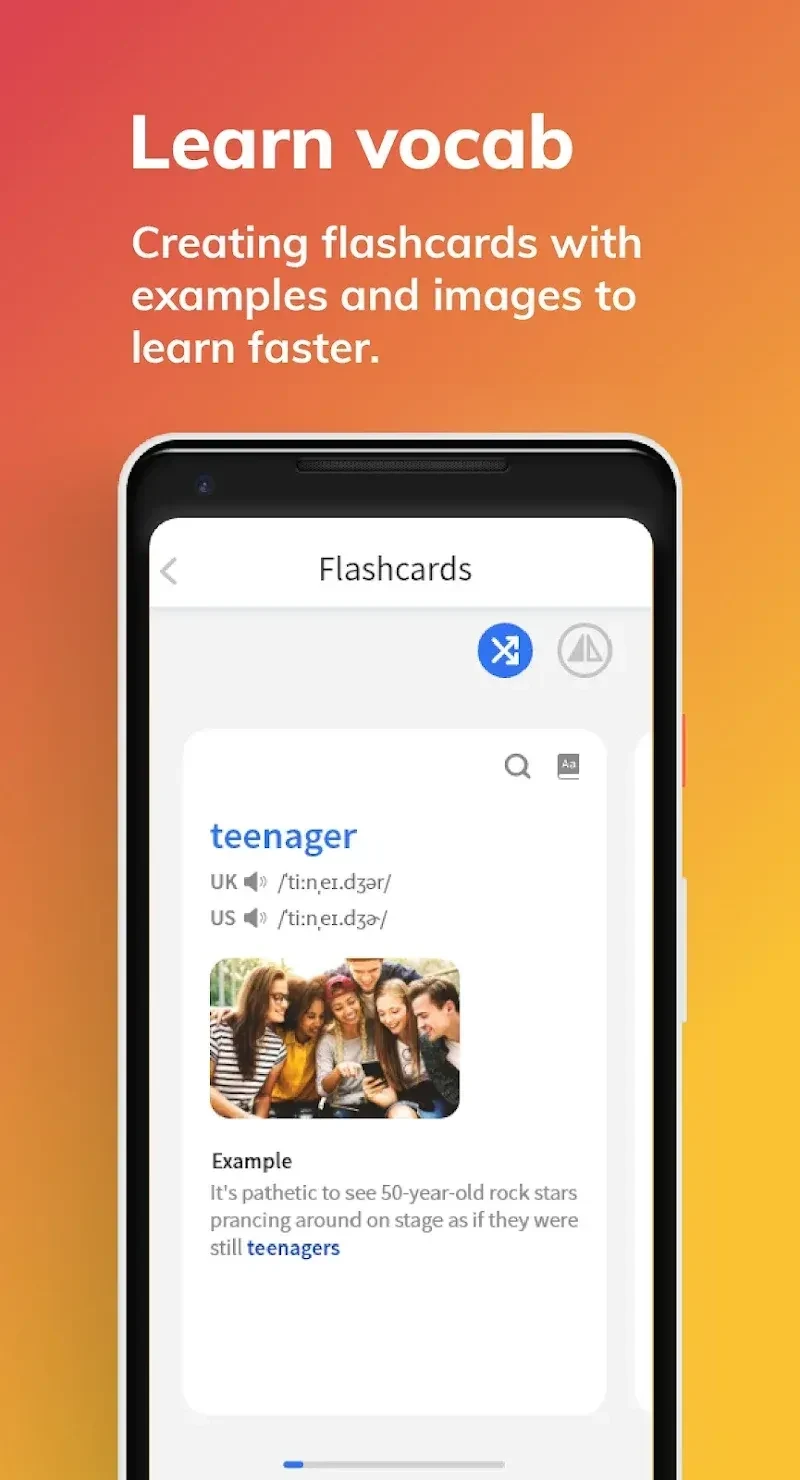
The app lets users save words, examples and images for later study. Its vocabulary activities include flashcards and gamified exercises described as using spaced repetition and contextual learning. Together, these features give learners a path from noticing a word in content to revisiting it through an exercise, rather than relying on a single lookup to remember it.
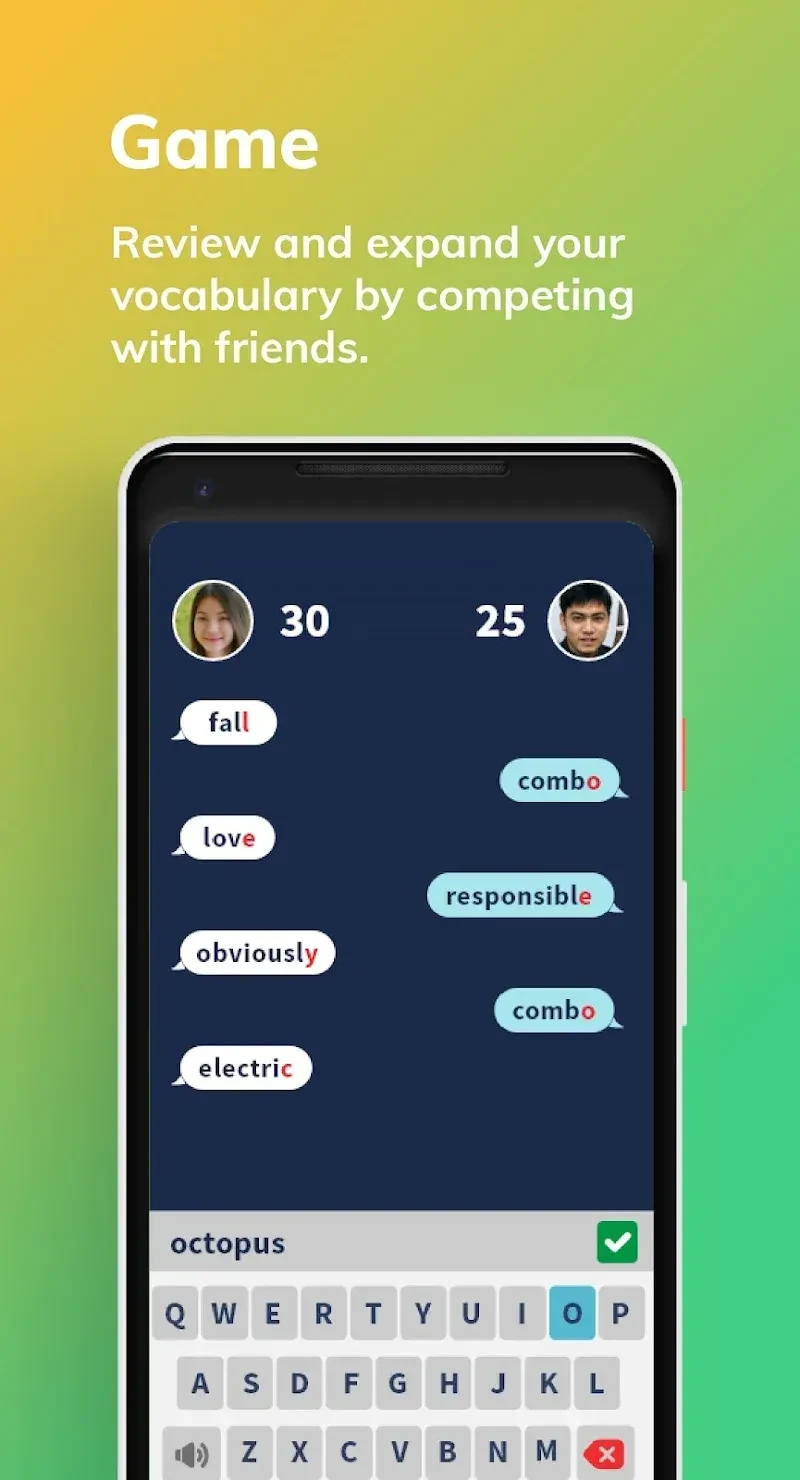
4English also includes word chain games and competition with friends. These add a social and game-based option alongside reading, watching and flashcard review. Users can choose between engaging with new material and returning to vocabulary they have already collected, depending on what they want to practice that day.
Who might find this mix of activities useful?
4English may fit learners who want English practice tied to content they can read or watch, especially those interested in news, stories and subtitled videos. Its word lookup tools support reading when an unfamiliar term appears, while saved material and exercises support later review. The games provide another way to work with vocabulary.
The app covers several study activities, but they serve different purposes: news supplies frequently refreshed reading, books offer longer passages, videos support listening, and flashcards help revisit words. A learner looking for that combination can use the parts that match their current focus rather than following a single type of lesson.